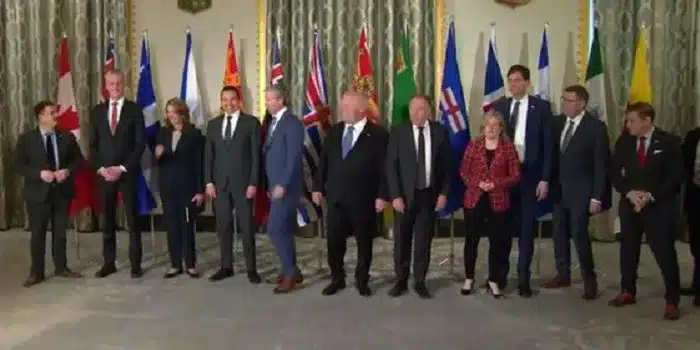
Canadian provincial and territorial leaders convened in Charlottetown, Prince Edward Island, for their annual First Ministers’ Meeting. The summit, held against the backdrop of potential U.S. tariffs, saw premiers discuss critical national issues, including economic challenges and interprovincial trade barriers. While the meeting produced a notable agreement on alcohol sales, it offered little in the way of a unified strategy to counter the looming threat of significant U.S. trade actions.
Premiers Convene in Prince Edward Island
The gathering in Charlottetown brought together leaders from across Canada to address pressing concerns facing the nation. Discussions reportedly covered a range of topics, from federal health transfers and major infrastructure projects to the rising cost of living and affordability issues impacting Canadians. The meeting aimed to foster collaboration and present a united front on key policy areas.
Interprovincial Alcohol Trade Agreement Reached
A significant outcome of the meeting was a Memorandum of Understanding (MOU) signed by nine provinces and territories. This agreement aims to facilitate the direct purchase of alcoholic beverages from other Canadian jurisdictions. For decades, interprovincial trade in alcohol has been hampered by complex regulations and barriers, which critics argue have stifled economic activity and consumer choice. This new accord represents a step towards dismantling some of these long-standing restrictions.
However, Quebec notably did not sign the MOU. The province’s decision to abstain from the agreement has drawn attention, with some observers suggesting it reflects a reluctance to alter existing trade arrangements.
Addressing U.S. Tariff Threats
A major point of concern leading into the meeting was the potential for substantial tariffs imposed by the United States, reportedly as high as 50%, under a Trump administration. The prospect of such measures has raised alarms about the impact on Canadian exports and the broader economy. Despite the gravity of this economic threat, the Charlottetown summit did not appear to yield a concrete, unified plan to address the situation.
Sources indicated that discussions on the U.S. tariffs were characterized by calls for continued negotiations and a general sense of urgency. Premier Doug Ford of Ontario was reportedly among those advocating for a more assertive stance, emphasizing the need for vocal opposition. Nevertheless, the outcome suggests a reliance on diplomatic channels and ongoing discussions rather than a pre-emptive strategy to mitigate potential economic fallout.
Vague Promises and Projected Confidence
Critics have characterized the meeting as a symbolic event, highlighting a perceived gap between the projected confidence of the leaders and their ability to deliver tangible solutions to pressing economic challenges. While the premiers presented a united front with declarations of “Team Canada” solidarity and “new urgency,” the tangible results, beyond the alcohol trade agreement, remain limited.
The focus on interprovincial alcohol sales, while a step towards market liberalization, has been viewed by some as a distraction from the more significant economic risks posed by potential U.S. trade actions. The timeline for addressing these U.S. tariffs, with a critical date of August 19 approaching, adds a layer of urgency that many feel was not adequately met by the summit’s outcomes.
Looking Ahead: Economic Uncertainty and Premier Actions
As the premiers depart Charlottetown, the economic landscape remains uncertain. Canadians are grappling with rising prices and economic pressures, and the effectiveness of the leaders’ discussions in alleviating these concerns is yet to be seen. The annual First Ministers’ Meeting, while a crucial forum for dialogue, has once again raised questions about the capacity of Canada’s provincial and territorial governments to enact decisive measures in the face of significant national and international challenges.
The agreement on alcohol sales, though a positive development for interprovincial commerce, underscores the challenge of translating high-level discussions into broad-based economic solutions. The coming weeks will be critical in determining how Canada navigates the potential economic headwinds, particularly concerning its relationship with the United States.