Concerns are mounting over the governance practices at registered clubs in New South Wales, particularly regarding their oversight of high-stakes gambling and potential money laundering risks. While casinos face stringent regulations, a perceived “Wild West” environment persists in many clubs, where significant sums are wagered with less scrutiny.
The Diamond Suite: A High Roller Haven
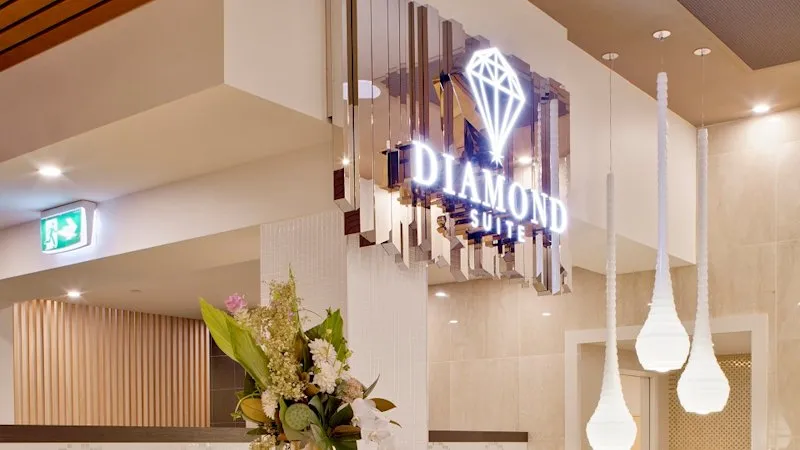
Club Marconi, a prominent registered club in Bossley Park, offers a luxurious members-only lounge known as the Diamond Suite. Entry requires an annual turnover of at least $500,000 on poker machines, granting access to a private space where patrons can gamble without the rigorous source-of-funds checks mandated for casino high-roller rooms like Crown’s Sky Salons or The Star’s Sovereign Room. This setup has drawn attention due to the apparent disparity between some members’ financial circumstances and their gambling expenditure.
One such member, identified as Patricia Zalavros, a 62-year-old pensioner residing in government housing, has reportedly been a regular at the Diamond Suite since its inception a decade ago. She is said to frequent the lounge six to seven nights a week, often until the early hours of the morning. Her domestic partner, Angelo Ruisi, is a director on Club Marconi’s board and serves on its gaming committee. Ruisi’s membership was recently suspended following allegations of racial abuse, though he has continued to attend board meetings.
Regulatory Gaps and Industry Concerns
The scrutiny applied to casinos following major money laundering scandals has led to significant reforms, including board restructures, prosecutions, and enhanced oversight by the NSW Independent Casino Commission. These institutions are also guided by ASX corporate governance principles emphasizing board effectiveness and avoiding conflicts of interest. However, registered clubs, many of which rely heavily on gambling revenue, have not been subjected to similar mandated cultural or regulatory changes.
Recommendations from Adam Bell, KC, in his review of The Star, to extend harm minimization obligations to all gambling venues, and the NSW Crime Commission’s call for mandatory cashless gambling in pubs and clubs to combat money laundering, have yet to be acted upon by the Minns government. This regulatory lag occurs while financial crime watchdogs allege serious and systemic non-compliance with anti-money laundering and counter-terrorism financing (AML/CTF) laws by major club groups, such as Mounties. Allegations include failing to vet customers who wagered millions, with occupations listed as ‘housewife’ or ‘retiree’.
Allegations of Misconduct at Club Marconi
Club Marconi itself has faced multiple complaints regarding the conduct of its executives and directors. In 2023, an independent investigation commissioned by the board substantiated numerous allegations against its president, Morris Licata. These included undisclosed conflicts of interest, accepting favors from club contractors, and excessive spending of club funds. Despite the findings, a majority of the board voted against sanctioning Licata, opting instead to refer the report to NSW Liquor and Gaming, which was already investigating other club matters.
The situation at Club Marconi has also seen allegations of intimidation. Frank Olivieri, a director who had pushed for the investigation into Licata, resigned in protest. His replacement on the board, Dean Zonta, has been accused by witnesses of intimidating a witness involved in the investigation and making threats. One account details an incident where Zonta allegedly threatened an executive assistant, confiscated her phone, and threw it over a fence, reportedly stating, “Charge me for that you f—in’ bitch, interview me over that, I don’t give a f—, I’ve got you now, you’re gone, you snitch.” The executive assistant was later suspended and negotiated an exit settlement. Zonta was elected to the board eight months after this alleged incident, and his tiling business now sponsors the club’s football team.
The NSW Liquor and Gaming agency concluded a 4.5-year investigation into Club Marconi this year, deciding not to take action against current directors or staff, citing insufficient evidence. However, the agency did refer a disciplinary complaint about the club’s former chief executive to the Independent Liquor and Gaming Authority (ILGA). ILGA found the former CEO had defrauded the club through a kickback, resulting in a 12-month ban and an $11,000 fine.
Broader Implications for Club Governance
The case of Club Marconi highlights broader issues within the registered club sector. While casinos are under intense regulatory pressure, clubs with significant gaming revenue appear to operate with less stringent oversight. This disparity raises questions about the effectiveness of current regulations in preventing financial misconduct and ensuring robust corporate governance across all gambling venues.
Club Marconi stated that it takes its AML/CTF, safe gambling, and corporate governance obligations seriously and operates in accordance with legislative requirements. The club declined to comment on specific member or director matters due to privacy and confidentiality obligations.
In June, several Club Marconi directors, including Licata, Ruisi, and Zonta, were recognized by the NSW parliament for community spirit. This event occurred amidst reports of a brawl in an outdoor area of the clubhouse, though no directors were implicated in the incident.