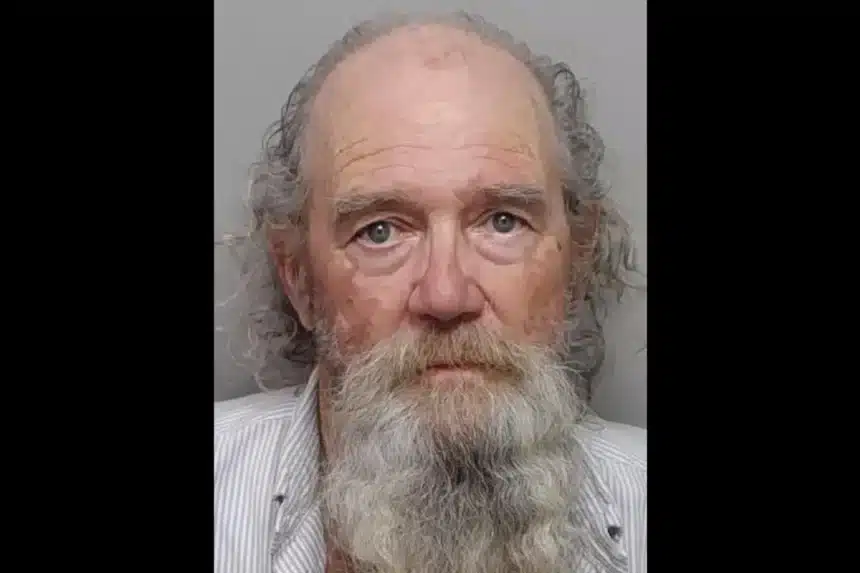
A discarded Coors Light can has become the crucial piece of evidence leading to an arrest in the 1981 murder of Yolanda Herrera, a 23-year-old woman whose case remained unsolved for over four decades. Kelly Lee Brower, now 65, has been charged with capital murder in connection with Herrera’s death, which occurred in Universal City, Texas. The breakthrough in this cold case highlights the power of advanced forensic DNA technology and persistent investigative work.
The Discovery and Initial Investigation
Yolanda Herrera vanished on April 11, 1981, after leaving a local bar. Her body was discovered two days later by children on their way to school in a nearby field. The autopsy revealed that Herrera died from multiple blunt force injuries, indicating a homicide. Investigators also determined she had been sexually assaulted prior to her death. The initial investigation yielded some forensic evidence, including fingernail clippings and a sperm sample, which produced partial DNA profiles in the early 2000s. However, these partial profiles were insufficient to identify a suspect, and previous leads and potential suspects were eventually cleared.
Advancements in Forensic Science
The case remained dormant for years until late 2020, when it was selected for the Texas Department of Public Safety’s Sexual Assault Kit Initiative. This program provided funding for advanced forensic testing on older evidence. In 2021, genetic testing on the collected samples generated a more robust male DNA profile. This profile was then utilized in genealogical databases, specifically FamilyTreeDNA, which allows for familial DNA searching.
Investigators were able to build a DNA profile that pointed toward Kelly Lee Brower. Further investigation revealed that Brower had resided in Universal City at the time of Herrera’s murder. He had relocated to Seattle in early 1982 and eventually settled in Cottonwood, Arizona. Records indicated Brower had a prior larceny charge but no other significant criminal history.
The Critical Evidence: A Beer Can
To obtain a DNA sample from Brower, investigators traveled to Arizona. They conducted surveillance and, on February 5, 2026, recovered a discarded Coors Light can from Brower’s trash. This seemingly ordinary item would prove to be the key to unlocking the mystery.
Forensic analysts at a specialized laboratory were able to test the minute DNA sample found on the beer can. The results, confirmed in February 2026, showed a definitive match to the male DNA profile that had been extracted from Yolanda Herrera’s fingernail clippings decades earlier. This match provided investigators with the probable cause needed to proceed with an arrest.
Confession and Arrest
Brower was interviewed by the Cottonwood Police Department on August 13, 2026. Initially, he denied any knowledge of Yolanda Herrera. However, during a subsequent interview a few days later, Brower confessed to the murder. He reportedly stated, “I’m sorry for what I did.” Following his confession, authorities extradited Brower from Arizona back to Texas to face the capital murder charge.
Law enforcement officials emphasized that there was no evidence to suggest that Brower and Herrera knew each other prior to the attack, indicating it was likely a crime of opportunity.
Justice After 45 Years
Lieutenant Stephen Rios of the Universal City Police Department spoke at a press conference on August 25, 2026, highlighting the significance of the arrest. “This is a testament to the commitment that is involved that after 45 years, we have made an arrest in the murder of Yolanda Herrera,” he stated. The successful resolution of this decades-old case underscores the advancements in DNA technology and the dedication of law enforcement to bringing closure to victims and their families, even after a significant passage of time.
The arrest of Kelly Lee Brower marks a significant moment in the pursuit of justice for Yolanda Herrera, bringing a long-awaited conclusion to a case that had haunted the community for nearly half a century. The use of familial DNA searching and the analysis of trace evidence from a discarded beverage container demonstrate how modern forensic techniques can revitalize and solve even the most challenging cold cases.