Defence Secretary Steps Down Amid Funding Disagreements
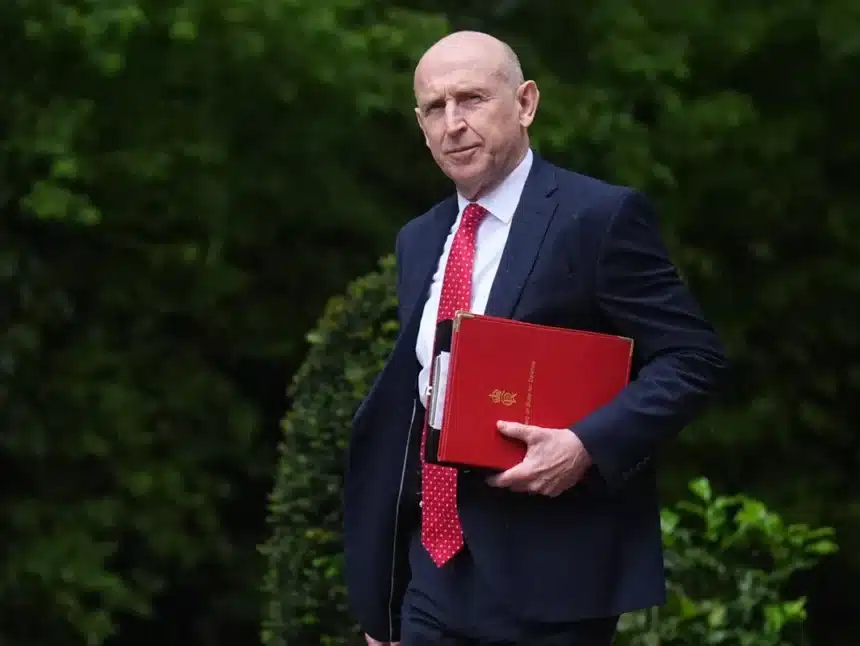
A significant shift has occurred within the government as the Defence Secretary has submitted his resignation, citing irreconcilable differences over the allocation of resources for national defense. The decision comes after extensive deliberations regarding the delayed Strategic Defence Review, originally proposed nearly a year ago.
Concerns Over National Security Funding
In a letter addressed to Prime Minister Keir Starmer, the departing Defence Secretary expressed his deep reservations, stating, “The Prime Minister has been unable, and the Treasury has been unwilling, to commit the resources that the nation needs to defend the country at this time of rising threats.” This statement underscores a fundamental disagreement on the level of financial commitment required to address contemporary security challenges.
A Record of Accomplishment in Defence
The outgoing Defence Secretary reflected on the achievements of the government during his tenure, highlighting a period of extensive reform and international engagement. He noted significant strides in supporting Ukraine through international coalitions, establishing Britain as a prominent voice within NATO, and accelerating defense investment to 2.5% of GDP. Furthermore, he pointed to the initiation of the most profound defense reforms in fifty years, securing substantial export deals, and launching a comprehensive Strategic Defence Review.
Other accomplishments cited include substantial pay increases for the armed forces, improvements in military morale, and the resolution of over 1,200 issues with forces’ family housing. Resetting relations with European allies and signing key defense agreements with Germany, Norway, and France were also mentioned as significant diplomatic successes.
A New Era of Threats Requires New Investment
The Defence Secretary emphasized that the government entered office with a clear understanding of a new era of threats demanding a corresponding evolution in defense strategy. The commissioned Strategic Defence Review was intended to provide a ten-year roadmap for transforming the armed forces, strengthening alliances, investing in advanced technology, and fostering defense industry growth.
The need for sustained investment through a Defence Investment Plan was identified early on. Cross-government work concluded in January confirmed the scale of the challenge and the increasing demands on the defense sector.
Escalating Global Commitments and Threats
The letter detailed a significant increase in demands on defense capabilities and international commitments. These include leading multinational military missions in the Middle East, such as the Strait of Hormuz operation, and assuming leadership of NATO’s Arctic Sentry mission in the High North. Heightened Russian activity towards the UK and NATO nations, alongside increased attacks in Ukraine, including a confirmed British deployment post-ceasefire under the Paris Agreement, were also cited as critical factors.
Discrepancies in Funding Projections
The Defence Secretary outlined efforts to secure a Defence Investment Plan that would address immediate operational demands and prepare for escalating threats, while also charting a course to meet the new NATO commitment of 3.5% of GDP by 2035. He expressed certainty that a target of 3% of GDP for defense by 2030 would garner broad cross-party support and noted that other European allies were making similar commitments.
While acknowledging the considerable effort involved in reaching funding agreements and the sacrifices made by colleagues in other departments, the Defence Secretary stated that the recently finalized Defence Investment Plan falls significantly short of what is required. He highlighted that the additional support is backloaded, when urgent operational needs and readiness are paramount in the initial years. The plan projects defense spending rising to only 2.68% of GDP in 2030, a marginal increase from the 2.6% expected next year with existing investments.
Readiness and Risk Concerns
Referencing intelligence assessments predicting potential Russian attacks on NATO as early as 2030, the Defence Secretary warned that without a sufficient Defence Investment Plan, he would be compelled to make decisions that could compromise the readiness of forces, increase risks to personnel on operations, and ultimately diminish national security.
Having previously communicated his inability to accept a funding settlement that fails to provide adequate resources for the armed forces, the Defence Secretary concluded that he has been left with no alternative but to resign. He conveyed his best wishes to the Prime Minister for navigating the exceptional challenges ahead and affirmed his continued support for the Labour government.