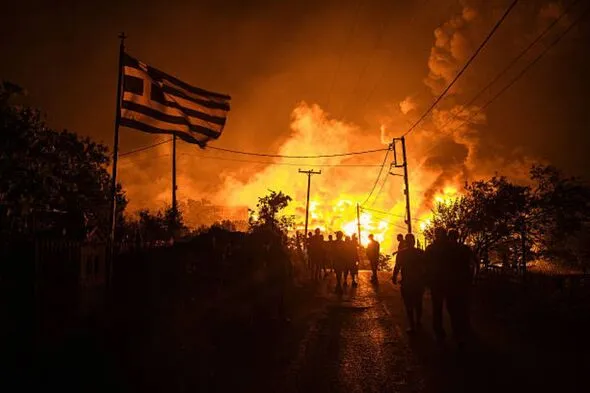
Europe faces an unprecedented wildfire threat, with the potential for blazes to spread across the continent within days, according to a senior official from the European Union’s emergency response agency. The warning comes as several Mediterranean countries grapple with intense wildfires, exacerbated by a relentless heatwave and dry conditions.
Escalating Wildfire Crisis Across Europe
Maria Zuber, head of the EU’s Emergency Response Co-ordination Centre, has issued a stark alert, suggesting that if current fires in countries like Portugal and Spain are not contained, the situation could escalate to engulf “all of Europe.” This dire prediction highlights the severity of the ongoing wildfire season, which is already impacting nations including France, Spain, Greece, and Portugal.
Ms. Zuber indicated that the current year could potentially surpass 2023 as the most severe fire season in European history. She described the coming days as “very difficult” and noted a concerning eastward shift in the wildfire threat. After devastating significant areas in France and the Iberian Peninsula, the risk is now moving towards Greece and Central Europe.
Shifting Fire Fronts and Future Risks
“The next risk, it’s already moving to Greece and also Central Europe,” Ms. Zuber stated. “Greece for the moment was spared, and now we see that it will go to Greece.” She further elaborated on the projected timeline and geographical spread of the danger:
- Early August: Italy is expected to face significant wildfire risks.
- Iberian Peninsula: The situation in Spain and Portugal remains critical, with a major concern that if fires persist there, the entire continent could be affected.
Last year, Europe experienced its most destructive wildfire season on record, with over a million hectares of land consumed by flames. While the current season’s figures are not yet finalized, the trajectory suggests it could set new, alarming records.
Contributing Factors: Heatwaves and Climate Conditions
The escalating wildfire danger is closely linked to a severe heatwave currently affecting western Europe. Meteorologists report that temperatures are set to climb again across France starting Tuesday and in Spain from Wednesday. These extreme temperatures, combined with dry air, strong winds, and a lack of rainfall, create a perfect storm for fires to ignite and spread with alarming speed.
The conditions are a stark reminder of the impact of climate change on weather patterns, leading to more frequent and intense extreme weather events. The prolonged dry spells and record-breaking heat contribute significantly to the tinderbox conditions observed across the continent.
Wildfires in the United Kingdom
The wildfire threat is not confined to Southern Europe. In the UK, firefighters have been battling a significant “forest fire” at Dunwich Heath in Suffolk, a nature reserve managed by the National Trust since 1968. Approximately 70 firefighters were deployed to the scene, leading to the declaration of a major incident.
The UK has been experiencing high-pressure systems, which have resulted in dry, warm, and calm weather conditions. This has contributed to the ignition and spread of the blaze in Suffolk. According to the Met Office Chief Forecaster Paul Gundersen, the UK has already recorded seven days with temperatures reaching or exceeding 35°C in the current year. This figure surpasses the previous record of five such days, set in 1976.
“A temperature value of 35°C today will be the seventh day of 2026 when the UK has recorded a value of 35°C or higher,” Mr. Gundersen noted. “Prior to this year, the record was five days of 35°C or above in a single year set in 1976.” While the UK is expected to see a change in weather by the end of the week, bringing cooler conditions, the ongoing heatwaves and dry spells across Europe underscore the persistent and growing threat of wildfires.
Looking Ahead: Preparedness and Response
The EU’s Emergency Response Co-ordination Centre is actively monitoring the situation and coordinating efforts to support affected member states. The scale of the current crisis necessitates robust preparedness measures and rapid response capabilities. As climate patterns continue to evolve, the risk of such extreme wildfire events is likely to increase, demanding sustained attention and investment in prevention, mitigation, and firefighting resources across the continent.