Hundreds of Pilot Whales Slaughtered in Faroe Islands Tradition
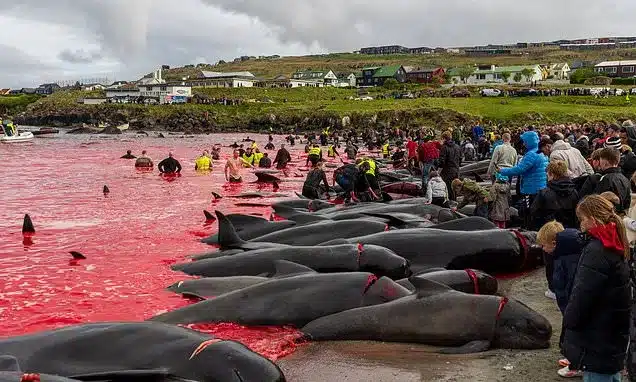
The waters surrounding the Faroe Islands have turned a striking crimson red following the annual slaughter of hundreds of pilot whales, a practice deeply rooted in the region’s 1,000-year-old traditions. Large crowds, including families with children, gathered to witness the event, known locally as the ‘grindadrap’ or ‘grind’.
The ‘Grindadrap’ Ritual Explained
The ‘grindadrap’ involves driving pods of pilot whales and dolphins into shallow coastal waters using boats. Once beached, fishermen then use knives to kill the animals. The meat and blubber are subsequently consumed by the local community.
This year’s event saw numerous carcasses lined up along the shore, with their blood visibly mixing with the ocean waves. Fishermen were observed wading in the blood-tinged water, surrounded by the fins of the slaughtered whales.
Cultural Significance vs. Animal Welfare Concerns
Officials in the Faroe Islands, an autonomous territory of Denmark, assert that the ‘grindadrap’ is a crucial element of their cultural identity and provides a sustainable source of food. They emphasize its historical significance as a Viking tradition.
However, the practice faces strong condemnation from animal welfare organizations worldwide, who label the ritual as barbaric. Images from the annual hunt consistently draw outrage from critics who view the mass slaughter as inhumane.
Scale of the Hunt
While there are no official quotas for the number of animals killed, estimates suggest that over 1,000 marine animals are culled annually through this tradition. Last year, reports indicate that 814 long-finned pilot whales and white-sided dolphins were killed.
Ecological Role of Pilot Whales
Long-finned pilot whales are long-lived marine mammals, with females potentially reaching 60 years and males up to 45 years. As cetaceans, they play a vital role in maintaining the health and balance of ocean ecosystems. They typically breed between April and September, with females giving birth to a single calf every three to six years. Older females within the pod often assist in caring for the young.