Businesses across the U.S. begin implementing fuel surcharges on deliveries as oil prices climb sharply due to the ongoing Iran conflict. President Donald Trump’s military operations alongside Israel in the Middle East drive up costs that now impact American consumers directly at the pump and beyond.
Gas Prices Reach Multi-Year Highs
Oil prices surge both domestically and internationally, pushing the national average for regular gasoline above $4 per gallon—the highest level since 2022, according to the American Automobile Association. Diesel fuel averages around $5.45 per gallon, exacerbating transportation expenses.
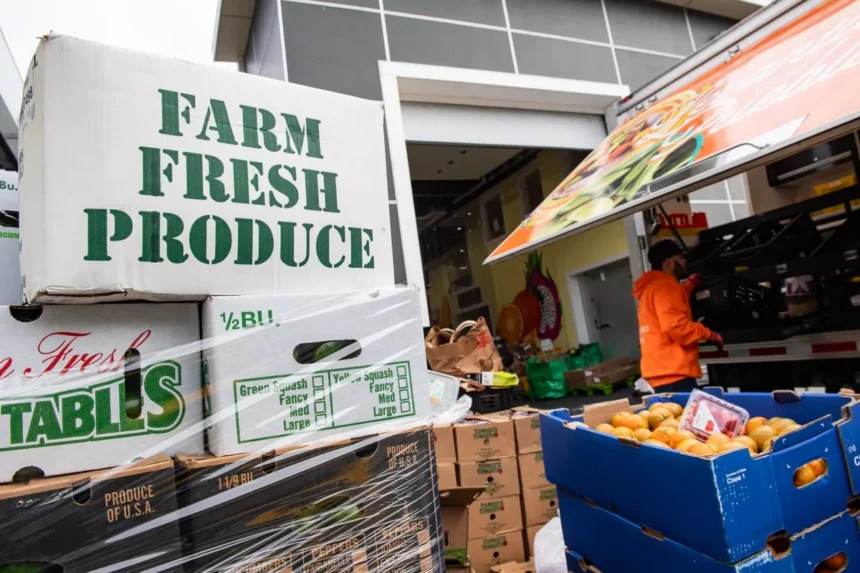
Food Costs Climb with Fuel Dependency
Grocery prices rise as fuel powers every stage of food production, from farming and livestock rearing to transporting goods to stores and restaurants. Wholesale prices for fresh salmon, for instance, increase from $6.25 per pound in February to $6.48 per pound.
U.S.-Israeli strikes, which started late February and persist into March, target at least 10,000 sites, according to Central Command. With no resolution in sight, these disruptions ripple through supply chains.
Janice Schreiber, from market data provider Expana for agriculture and food industries, highlights multiple fuel surcharges added during salmon transport. “It all has to be done rather quickly, and at each of the different points, there is a fuel surcharge being added,” she states. This occurs amid peak demand ahead of Easter.
Small Businesses Bear the Brunt
Small operations face acute pressure from escalating fuel costs, compounded by recent Supreme Court rulings overturning broad import tariffs that had already strained global supply chains.
Jesse Filion, who raises chicken, pigs, and cattle on his family farm in Walterboro, South Carolina, adds a $5 fuel surcharge to deliveries serving homes and 20 local restaurants. “The surcharge is a way to be transparent, but also to cover some of the increased fuel prices that we’re seeing,” Filion explains.
The Grocers Alliance notes that fuel-related expenses comprise 15 to 30 percent of total costs for some food products. Historical data shows a 10 percent fuel cost increase leads to 2 to 3 percent higher food prices.
Beyond Food: USPS Adjusts Rates
Food sectors are not alone; the U.S. Postal Service introduces temporary rate hikes of 8 percent on Priority Mail Express, Priority Mail, USPS Ground Advantage, and Parcel Select to match rising transportation costs.