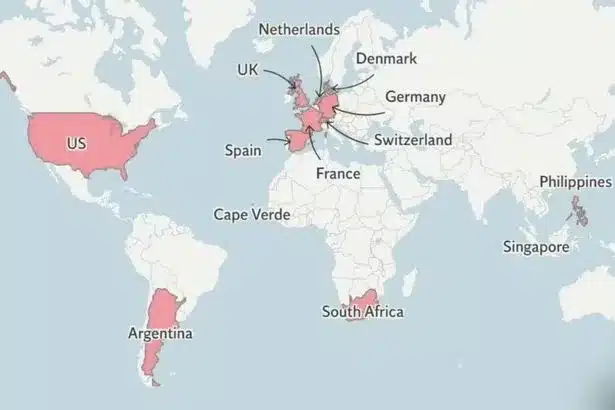
Suspected hantavirus infections have surfaced in 13 countries across four continents, all linked to the MV Hondius cruise ship that departed from Argentina. Health authorities confirm two British nationals carry the virus, while a third British case remains suspected on Tristan da Cunha in the remote South Atlantic.
British Nationals Impacted
One patient stays on Tristan da Cunha, as the other two receive hospital care in the Netherlands and South Africa. On April 24, 29 passengers—including seven Britons—disembarked at St Helena. Among them, a Dutch woman fell ill during subsequent travel and later died. Three fatalities connect directly to this cruise ship outbreak.
Currently, the vessel heads to Tenerife with no symptomatic British nationals aboard, though monitoring continues closely. In total, 19 British passengers and four crew members traveled on the MV Hondius from Argentina toward Cape Verde.
Outbreak Timeline and Tracing Efforts
Health officials confirmed the first hantavirus case aboard on May 2. Contact tracing now occurs in nations including South Africa, Singapore, and the Netherlands. The initial Dutch couple, both confirmed cases, had journeyed through Argentina, Chile, and Uruguay prior to boarding.
Two Britons self-isolate at home in the UK after departing St Helena via Johannesburg. Four more remain on South Atlantic islands, and a seventh stays outside the UK. Follow-up targets contacts who returned to the UK or UK Overseas Territories.
Repatriation and Support Plans
The ship arrives in Tenerife on Sunday. UK Government staff stand ready to assist disembarking British nationals. Asymptomatic British passengers and crew receive escorts to the airport with free return flights to the UK. A dedicated repatriation flight organizes for others, with ongoing Foreign Office and UK Health Security Agency (UKHSA) support.
All returning British passengers and crew must isolate for 45 days under UKHSA oversight.
Public Health Risks and Outlook
Hantavirus spreads mainly through inhaling contaminated rodent droppings and rarely transmits person-to-person. The World Health Organization (WHO) assesses general public risk as low.
“We believe this will be a limited outbreak if public health measures are implemented and solidarity is shown across all countries,” stated Dr. Abdirahman Mahamud, WHO’s alert and response director.
UKHSA confirms: “Follow-up is already under way for individuals who may have been in contact with cases and have since returned to the UK or are in UK Overseas Territories.”