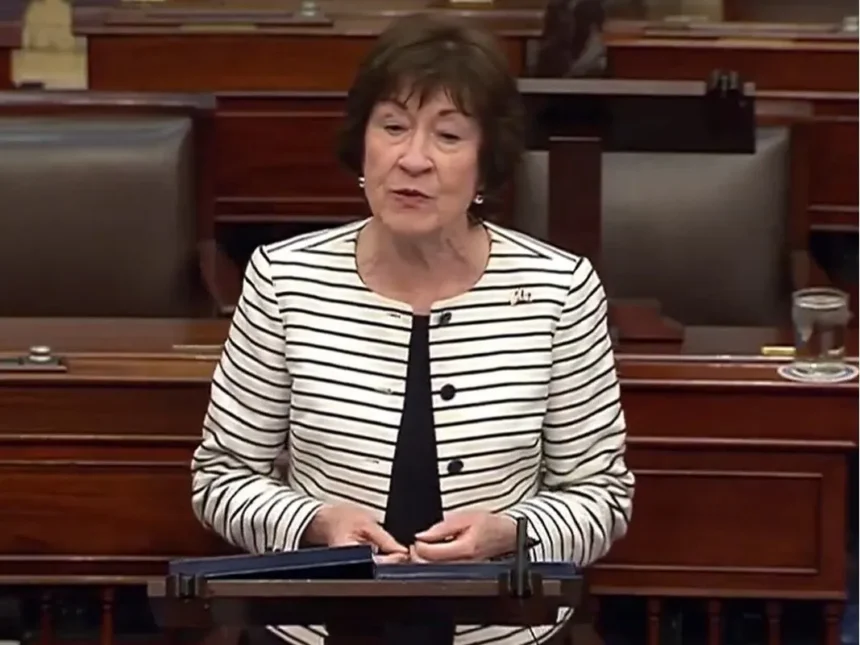
Maine’s Republican Senator Susan Collins has successfully lobbied the Trump administration to remove Canadian rock salt and cement from an import tariff list, a move that will take effect on September 15. This exemption is particularly crucial for U.S. communities bordering Canada that depend on these imports, especially rock salt for maintaining safe winter roads.
Senator Collins’ Advocacy for Key Imports
Senator Collins, a five-term incumbent, stated that she actively engaged with U.S. trade officials, including U.S. Trade Representative Jamison Greer and Commerce Secretary Howard Lutnick, to highlight the significant impact these tariffs would have on Maine. She emphasized that both road salt and cement are vital products for the state’s economy and infrastructure.
The senator provided specific examples of how the tariffs would affect local entities. Frenchville, a small Maine town situated on the Canadian border, faced an estimated additional cost of $10,000 for its road salt supply. Similarly, a Maine-based cement company owner reported that the tariffs would impose an extra $150,000 in costs each month.
In exchange for removing rock salt and cement from the tariff list, the administration has reportedly agreed to impose new duties on other Canadian goods, such as all-terrain vehicles, certain cheeses, and motorboats.
Broader Trade Relations and Economic Interdependence
Beyond the specific exemption for salt and cement, Senator Collins has consistently advocated for improved trade relations between the United States and Canada. She has underscored the deep economic ties that bind the two nations, particularly in border regions.
In a statement released on August 27, Collins expressed her appreciation for Canada’s decision to lift retaliatory tariffs on U.S. seafood and fish products. She noted that these tariffs would have severely impacted Maine’s lobstermen, jeopardizing access to a critical market during the fall fishing season.
Collins has been a vocal critic of the broader trade war initiated by the Trump administration, arguing that it demonstrates a misunderstanding of the specific economic consequences for states like Maine. In an interview with Politico, she stated, “I think the administration has very much underestimated the impact on Maine families, on small manufacturers, on our agricultural products. And that’s what I’m trying my best to educate them about. They look at this issue as a macro issue. And in fact, the micro impact on a state like Maine is considerable.”
She has previously voiced concerns on the Senate floor regarding the close economic relationship between Maine and Canada, especially ahead of a symbolic vote against earlier tariffs. Collins, along with other Maine Republicans, had expressed opposition to the administration’s decision to impose significant tariffs on Canadian goods in July.
Maine’s Economic Ties with Canada
Canada stands as Maine’s largest trading and investment partner, according to the Maine International Trade Center (MITC). Approximately 40 percent of all goods exported from Maine are destined for Canada, encompassing sectors such as agriculture, pulp, and paper. Businesses in these industries have anticipated substantial declines in demand due to the ongoing trade disputes.
The successful negotiation to exempt rock salt and cement from tariffs could potentially bolster Senator Collins’ prospects in the upcoming U.S. fall midterm elections. Analysts and pollsters had previously speculated that the trade war could negatively affect Republican candidates in border states, particularly in Maine, where Democrats have focused their campaign messaging on affordability, a key issue for voters.
Conclusion
Senator Collins’ persistent advocacy has resulted in a significant win for Maine and other border states by securing the exemption of essential goods like rock salt and cement from U.S. import tariffs. This development highlights the intricate economic interdependence between the U.S. and Canada and underscores the importance of targeted diplomacy in mitigating the adverse effects of broader trade policies on local economies and communities.