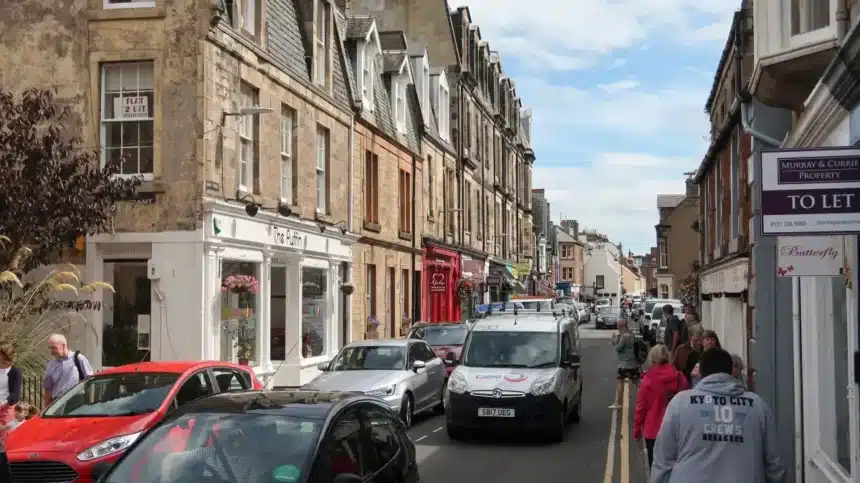
Locals from Paisley Town Hall in the west to Dunbar’s clifftops in the east and Inverurie on the River Don in the north share a common concern: council-imposed and escalating parking charges threaten to devastate their town centers. Thousands have signed petitions, attended heated meetings, and commissioned reports, yet charges continue to rise.
Widespread Protests and Vandalism
In affluent North Berwick, around 30 new parking meters recently fell victim to glue and protest stickers. Research reveals that 17 local authorities have hiked charges over the past four years, with at least six introducing new fees since 2022-23 or planning to do so.
Garry Clark, development manager for East, Mid, and South Scotland at the Federation of Small Businesses (FSB), described a meeting on Haddington parking fees near Edinburgh. “There was a real sense of anger in the room,” he said. “People felt their concerns were not being listened to. Evidence was provided to the council and it was all pooh-poohed.”
Council Profits Surge Amid Restrictions
The 22 councils managing their own parking restrictions generated £76.9 million in profit for 2024-25, up from £47.5 million in 2022-23, according to Transport Scotland data. By law, these funds must support transport projects, not schools or social care, though details on spending remain limited.
East Lothian Council reported £325,099 in surplus for 2024-25, a 68 percent increase, allocated to coastal car park facilities like toilets. The council now advances charges in Haddington, North Berwick, and Dunbar despite retailer campaigns featuring Monopoly’s free parking square.
Business Owners Sound the Alarm
Helen Muir, manager of Crunchy Carrot greengrocers in Dunbar, noted public meetings felt predetermined. With fees at £1 after 45 minutes and £2 for 90 minutes, she predicts shoppers will favor free supermarket parking. “They are not going to pay to come here to get their kimchee which they cannot get at the supermarket,” she said. “It will totally destroy the high street … it’s just so short-sighted. At the moment we get tourists who come and say ‘My goodness this high street is still alive’.”
In Falkirk and Stirling, higher costs already prevail. Inverurie car parks stand largely empty since 116 spaces turned pay-and-display last January. Edward McMaster, owner of Fork and Mustard café in Falkirk, reports declining customers. “It’s killing the town,” he said. “I’ve found a decline in customers, and it’s solely down to parking charges. We get lots of customers coming in saying that they’ll stop coming into town because it’s far too expensive.”
Nearby, Louise McMaster runs 4 Coo Wynd brunch spot and observes illegal parking surges. “The other day, somebody had parked and just left their car, and an ambulance couldn’t get through,” she added. Doris Lenaghen, owner of gift shops The Lonely Broomstick and Whimsic Alley, likened enforcement to a “hunt” with six wardens patrolling.
Paisley’s Free Parking Scrapped, Footfall Plummets
Paisley abandoned its three-hour free scheme, enraging retailers where £4 buys two hours and 60-minute overstays draw fines. Justin Milgrove-Mackay of Summits Outdoors recalled calming tensions at a meeting. Paisley First commissioned a report showing March 2024 footfall at 64 percent of 2023 levels post-February charges. It highlighted up to 12 business closures or relocations, risks to women juggling duties, and delays in charity support like Renfrewshire Bereavement Network.
Elaine Templeton, chair of Paisley First Business Improvement District, stated: “We submitted this report almost eight months ago and we’re still waiting for meaningful and productive discussions with the council to address the issues we’ve raised … we urgently need a review of parking charges in Paisley town centre before any further economic damage is done.”
Contrasting Policies and Future Plans
Free parking persists in Johnstone and East Renfrewshire, while Angus scrapped £1 hourly fees after low revenue. Danielle McRorie-Smith of the Scottish Improvement Districts program flagged parking as a key issue across 36 communities. FSB members echo concerns citywide.
Edinburgh nets £33.9 million post-costs, with high permits hindering window cleaners and dog walkers. Glasgow eyes expanding charges to neighborhoods like Shawlands for £8 million to promote sustainable transport.
Council Perspectives on Funding Pressures
Councils face budget shortfalls from cost-of-living crises, inflation, and aging populations, with a £1 billion gap projected. A Cosla spokesperson explained: “As budgets continue to deteriorate year on year, the only way to avoid more harmful cuts is to take difficult decisions to increase income through the limited means councils have; predominately increasing council tax and raising charges.” Further hikes loom without aid.
East Lothian aims to boost turnover and footfall in North Berwick. Proposals for Dunbar, Haddington, Tranent, and Musselburgh advance via Traffic Regulation Orders with public consultation. Falkirk held short-stay rates steady, raised long-stay 2-3 percent, and pursues a ten-year strategy balancing economy, access, and sustainability, benchmarking competitively.