Leaders from major global powers, including China, Russia, and India, are convening in Bishkek, Kyrgyzstan, for the Shanghai Cooperation Organisation (SCO) summit. This gathering of heads of state is taking place against a backdrop of evolving international relations, with the SCO often viewed as a platform for nations seeking to strengthen ties outside of Western-dominated alliances. The summit provides a crucial opportunity for member states to engage in discussions and bilateral meetings, addressing a range of regional and global issues.
Key Leaders and Bilateral Engagements
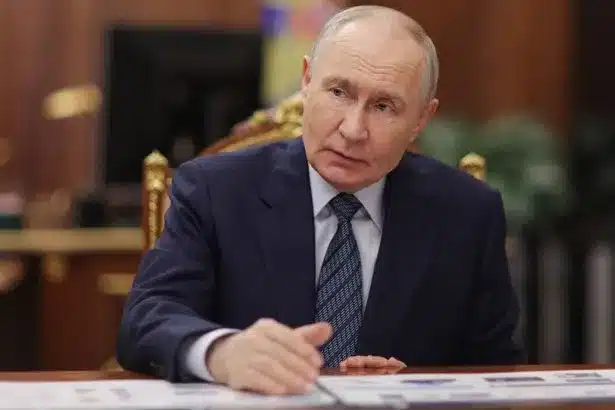
Prominent figures attending the summit include Chinese President Xi Jinping, Russian President Vladimir Putin, and Indian Prime Minister Narendra Modi. The agenda includes several significant bilateral meetings on the sidelines of the main proceedings. Notably, President Putin is scheduled to meet with President Xi on Monday, followed by discussions with Iranian President Masoud Pezeshkian on Tuesday, the day of the official SCO sessions. These interactions underscore the strategic importance of the summit for fostering direct diplomatic engagement between key players.
The SCO’s Evolving Role and Membership
Established in 2001 by China, Russia, and four Central Asian nations, the SCO initially began as a security forum. Over the past two decades, it has expanded its scope and membership, now encompassing ten member states: Russia, China, India, Iran, Pakistan, Belarus, Kazakhstan, Kyrgyzstan, Tajikistan, and Uzbekistan. Numerous other countries hold the status of “dialogue partners,” further extending the organization’s reach. China, in particular, has actively promoted the SCO as an alternative to Western-aligned bodies like the G7, aiming to broaden its influence in development and finance. Beijing has consistently advocated for a new global order, with support from Russia.
The organization’s stated objective is to promote cooperation among member states. China’s Ministry of Foreign Affairs has highlighted the SCO’s success in “exploring a new path for regional cooperation.” However, the precise objectives and operational programs of the SCO have been described as not always clear, and its public recognition remains somewhat limited.
Strategic Significance for Member States
For many SCO members, the summit serves as a vital platform to demonstrate their continued engagement on the international stage, particularly amid strained relations with Western countries. Russia, currently involved in a protracted conflict in Ukraine, and Iran, facing complex geopolitical challenges, view the SCO as an essential venue for reinforcing connections with non-Western partners. The summit offers these nations a chance to solidify alliances and explore avenues for mutual support.
India’s Strategic Positioning
For India, the SCO summit presents a complex strategic landscape. As a member nation that also has significant geopolitical and economic competition with China and Pakistan, both of which are SCO members, the summit requires careful navigation. Experts suggest that for India, the event is likely to focus more on strategic messaging and maintaining visibility rather than achieving concrete policy breakthroughs.
Dinakar Peri, a fellow in security studies at Carnegie India, explained that the SCO provides India with a critical presence in a region increasingly characterized by major power rivalries. This engagement allows New Delhi to safeguard its interests, stay informed about shifting geopolitical trends, and project an image of reliability. “While it may not entirely shape the agenda, it gives New Delhi a first-hand view of the region and allows it to hedge its position with others,” Peri stated. This strategic positioning enables India to balance its relationships and maintain flexibility in its foreign policy.
Turkey’s Ambitions within the SCO Framework
Turkey, participating as a dialogue partner, also seeks to leverage the SCO summit to enhance its regional standing. The country views its involvement with the SCO as part of a broader foreign policy strategy aimed at balancing its traditional ties with the West, including its role as a NATO member, with an increased influence in Eurasia. President Recep Tayyip Erdogan, who initiated Turkey’s dialogue partner status in 2012, has expressed a long-standing aspiration for permanent membership in the organization.
Despite maintaining robust trade relations with the European Union through a 1995 trade agreement, Turkey’s bid for full EU membership has faced prolonged stagnation. Its pursuit of a more prominent role within the SCO framework reflects its ambition to diversify its international partnerships and strengthen its geopolitical footprint in Central Asia and beyond.
Challenges and Divergent Interests
Despite the outward appearance of unity, analysts point out that the SCO is not a monolithic political or military bloc. Member states often harbor divergent interests and face considerable internal disagreements. This heterogeneity means that the organization’s effectiveness can be limited by the individual priorities and geopolitical calculations of its diverse membership. The summit, therefore, represents a complex interplay of cooperation and competition, where strategic signaling often plays as significant a role as substantive policy coordination.
The gathering in Bishkek highlights the ongoing shifts in global power dynamics, with organizations like the SCO playing an increasingly visible role in shaping international discourse and fostering alternative frameworks for cooperation. The outcomes of the summit will likely be analyzed for their implications on regional stability and the broader trajectory of international relations.