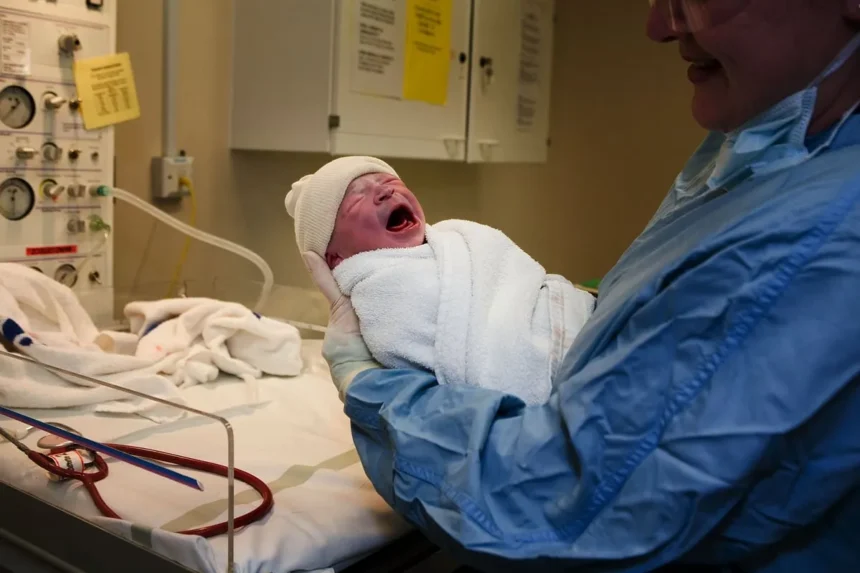
Fifty years ago, a young woman lay in a sweltering hospital bed, facing a high-risk pregnancy alone and far from home. Her experience, marked by severe pre-eclampsia and a prolonged labour, serves as a stark backdrop to a contemporary debate about the state of Scotland’s maternity services. Despite the passage of half a century, concerns persist that significant improvements remain elusive, with a recent report highlighting widespread issues and tragic outcomes.
A Personal Account of Past Maternity Care
In July 1976, a 19-year-old university student, diagnosed with severe pre-eclampsia, was placed on strict bed rest for six weeks in Dumfries. Her days were filled with sedatives, medical examinations by consultants and students, and the meticulous monitoring of her fluid intake and output. In an era without smartphones, her distractions were limited to jigsaws and magazines. The ward sister, described as sharp-tongued, reportedly viewed her unmarried pregnancy with disapproval, her only saving grace being the decision not to give the baby up for adoption.
The birth itself was dramatic. Her son was born with the umbilical cord wrapped twice around his neck, a situation that could have been fatal had she been alone at home. Reflecting on the experience, the author expressed gratitude for the care received, despite its impersonal nature, acknowledging that chronic high blood pressure was the only lasting physical legacy of her difficult pregnancy. The recent celebration of her son’s 50th birthday underscored the profound impact of that experience and the relief that both mother and child survived a potentially life-threatening situation.
Contemporary Challenges in Scottish Maternity Services
Fast forward to the present, and maternity services in Scotland are a major focus of health policy. Between 2019 and 2024, approximately 500 mothers and babies reportedly died. Health Improvement Scotland (HIS) has identified systemic problems, including bullying among staff, inadequate training, understaffing, and delays in medically indicated inductions of labour. These issues disproportionately affect women in remote areas, such as Caithness and Wigtownshire, who, like the author 50 years prior, must still travel considerable distances to access consultant-led maternity care.
Independent Reviews and Patient Safety Concerns
In response to mounting pressure from patient advocates, the Scottish Government has commissioned an independent review of maternity services. This review, led by Professor Christine McCourt, a prominent figure in UK maternity care, is expected to take ten months and will investigate a broad spectrum of concerns, from workplace culture to the provision of services in rural locations. However, not all stakeholders are optimistic. Karen Titchener, the recently appointed independent Patient Safety Commissioner, has voiced strong concerns, describing Scotland’s maternity services as being “in crisis.”
Titchener has publicly supported calls to broaden her own remit to encompass maternity care. She argues that simply understanding what constitutes good maternity care is insufficient. According to Titchener, an independent body is needed to systematically scrutinize current practices and report findings to the Scottish Parliament without fear or favour. This underscores a perceived gap in oversight and accountability within the current system.
The Broader Context of Women’s Health
The discussion around maternity services is intrinsically linked to the wider landscape of women’s health in Scotland. Experts emphasize that women, comprising 2.85 million of Scotland’s population, have distinct health needs due to their complex reproductive systems. These differences extend across various medical fields, influencing how conditions like heart disease and cancer manifest and are treated. A 2025 study further suggests that women’s bodies may be more adversely affected by hot weather than men’s, placing a greater strain on their cardiovascular systems.
Political Decisions and Their Impact
Critics have pointed to recent political decisions as potentially undermining efforts to prioritize women’s health. Following the May elections, the new First Minister, John Swinney, reportedly abolished the dedicated post of Minister for Women’s Health. Responsibility for women’s health, alongside abortion, child and maternal health, sexual and reproductive health, mental well-being, public health, and alcohol and drugs policy, has been assigned to a junior minister, Maree Todd. This expanded portfolio, which also includes sport, has been criticized as suggesting that women’s health is an afterthought, potentially reflecting a lack of interest from the First Minister.
This move has drawn criticism from various quarters. Kirsteen Sullivan, MP for Bathgate and Linlithgow and chair of Westminster’s cross-party group on endometriosis, has raised the loss of a “single dedicated voice on women’s health” in the House of Commons. Furthermore, a coalition of healthcare and women’s organizations, spearheaded by the British Pregnancy Advisory Service, has formally urged Swinney to reinstate the dedicated ministerial post. However, as of the latest reports, there has been no indication of a change in the government’s stance.
Debates on Sex-Based Rights and Identity
The article also touches upon the ongoing debates surrounding sex-based rights and gender identity in Scotland. It notes that for the past decade, women have reportedly had to assert their sex-based rights up to the UK Supreme Court. Campaigners who argued that biological sex is not merely an ‘identity’ but a fundamental aspect of a person’s life, particularly concerning reproductive health, have faced accusations of bigotry. While the author suggests a potential recovery from a period where terms like “pregnant women” were deemed divisive in favour of “birthing people,” the underlying tensions in these discussions remain.
Conclusion: A Call for Genuine Improvement
In conclusion, the author posits that fifty years after her own challenging childbirth experience, Scotland’s maternity and broader healthcare services for women have seen minimal substantive improvement. Drawing on observations from the World Health Organization, which regards maternal health as a key indicator of a nation’s healthcare quality and women’s socio-economic status, the article suggests that women in Scotland may still be treated as second-class citizens. The persistent issues of safety, access, and political prioritization underscore the urgent need for tangible reforms to ensure that contemporary maternity care meets the standards expected in the 21st century.