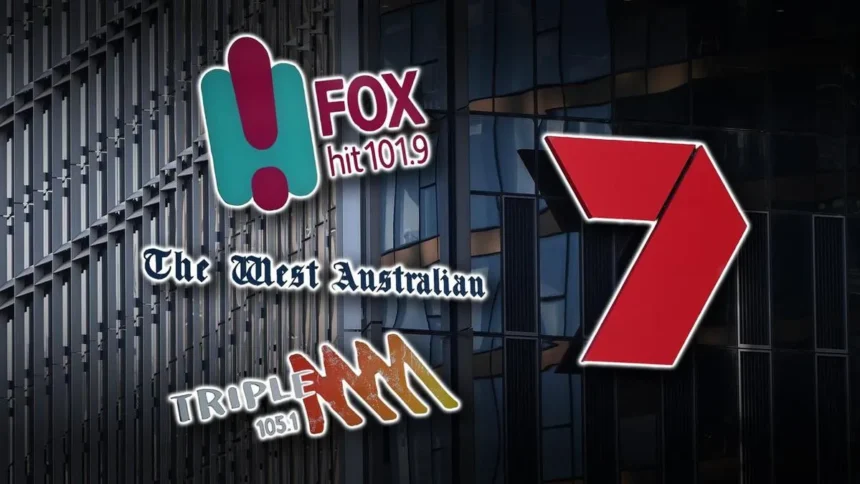
Southern Cross Media, the newly formed entity following the significant merger with Seven West Media’s television assets and its own extensive radio operations, has reported a full-year net loss of $13.1 million. This result marks a substantial shift from the previous financial year’s profit of $9.2 million, underscoring the financial adjustments and integration challenges inherent in such a large-scale corporate combination.
Navigating the Post-Merger Landscape
The company’s chief executive, Rohan Lund, characterized the reported figures as the “first full-year results of our merged business.” He highlighted the expanded reach of the consolidated entity, stating that it now connects with over 20 million Australians monthly across its diverse portfolio. Lund emphasized that each of the three core divisions – television, audio, and publishing – demonstrated an improved market standing during the financial year ending June 30, 2026. Despite these divisional strengths, the overarching financial outcome reflects the complexities of merging operations and market dynamics.
Merger Details and Strategic Rationale
The pivotal merger, which united Australia’s premier television network with Southern Cross Austereo, a major player in the national radio landscape operating the popular Triple M and Hit networks, was officially finalized in January. This strategic alignment aimed to create a more robust media conglomerate with a broader audience base and diversified revenue streams. The integration process, however, has coincided with a challenging economic climate, particularly impacting the television segment.
Subdued Market Conditions Impact Performance
Mr. Lund acknowledged that trading conditions had been “difficult,” with the fourth quarter of the financial year proving especially demanding for the television division. “Revenue came in below where we expected,” he stated, pointing to a 4.5 percent decline in overall revenue, which settled at $1.9 billion. This revenue shortfall, while significant, was partially offset by the company’s underlying earnings before interest, tax, and depreciation (EBITDA). These group underlying earnings reached $191 million, surpassing the company’s own guidance range of $185 million to $190 million.
Focus on Content and Audience Engagement
Looking ahead, Southern Cross Media anticipates that market conditions will remain “subdued.” However, the company’s strategic focus remains steadfast. “Our focus doesn’t change – bring Australians together through content they love and trust, turn that connection into audiences that work for advertisers and run the business with discipline and unity,” Mr. Lund articulated. This strategy underscores a commitment to leveraging content as the primary driver for audience engagement and, subsequently, advertiser value. The company’s assets now span national television broadcasting, a wide-reaching radio network, and significant publishing interests, including ownership of The West Australian newspaper.
Operational Adjustments and Financial Provisions
In response to the evolving market and integration demands, Southern Cross Media implemented significant operational adjustments. In June, the company announced plans to reduce its workforce by 250 to 350 employees. These redundancies were primarily targeted at mid- and back-office functions, as well as corporate staff, reflecting an effort to streamline operations and reduce overheads. Furthermore, the company recorded an onerous contract provision amounting to between $65 million and $70 million. This provision is related to legacy television contracts, indicating potential future liabilities associated with agreements predating or established under different market conditions prior to the full integration.
Future Outlook and Strategic Priorities
Despite the reported net loss and the acknowledgment of subdued market conditions, Southern Cross Media’s leadership remains committed to its strategic vision. The company aims to consolidate its market position by fostering strong connections with Australian audiences through compelling content across its television, radio, and publishing platforms. The emphasis on operational discipline and unity is intended to navigate the current economic climate effectively, ensuring that audience engagement translates into tangible value for advertising partners. The successful integration of Seven West Media’s television assets and the ongoing management of its established radio and publishing businesses remain central to the company’s long-term strategy for growth and profitability.
The company’s ability to adapt to market fluctuations, manage integration costs, and capitalize on its expanded reach will be critical in the coming financial periods. The focus on core strengths – content creation and audience connection – is designed to build resilience and foster sustained performance in a dynamic media landscape.