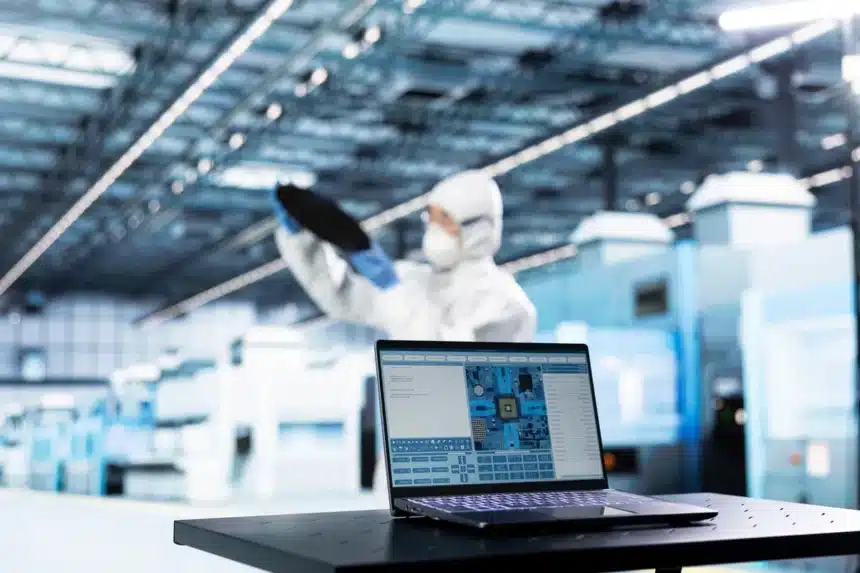
Teradyne, a key player in the semiconductor testing industry, is strategically positioned to capitalize on the burgeoning demand driven by artificial intelligence. The company reported that 70% of its demand in the first quarter originated from AI-related applications, underscoring the sector’s growing importance. Furthermore, semiconductor testing constitutes a significant 87% of Teradyne’s overall revenue, highlighting its core competency and market focus.
Teradyne’s Market Position and AI Demand
Despite a recent 30% adjustment in its stock price, Teradyne is being initiated with a “Buy” rating and a target price of $407, suggesting a potential 26% upside. This optimistic outlook is primarily fueled by the sustained robust demand for AI technologies and Teradyne’s demonstrated capacity for superior earnings generation. The company’s solutions are critical for validating the complex chips that power AI advancements, from large language models to advanced machine learning algorithms.
The semiconductor testing market is intricate, involving sophisticated equipment that verifies the functionality and reliability of microchips. Teradyne’s expertise in this area allows it to serve a wide range of semiconductor manufacturers, including those developing cutting-edge processors for AI applications. The increasing complexity and performance requirements of AI chips necessitate more advanced and rigorous testing protocols, a niche where Teradyne excels.
Projected Financial Performance
Financial projections indicate strong growth for Teradyne. Analysts anticipate the company’s revenue to reach $5 billion by 2026, with earnings per share (EPS) projected at $8.00. These figures are expected to surpass current market consensus estimates. Looking further ahead, if the current trajectory of AI demand continues unabated, Teradyne’s EPS could potentially climb to $11 by 2027.
This forward-looking perspective is grounded in the understanding that AI development is not a short-term trend but a fundamental technological shift. The ongoing need for more powerful AI models and applications requires continuous innovation in semiconductor hardware, which in turn drives demand for advanced testing solutions. Teradyne’s ability to adapt and provide these solutions positions it favorably for sustained growth over the next several years.
Key Risks and Considerations
While the outlook for Teradyne appears promising, several key risks warrant careful consideration by investors. The company’s performance is closely tied to the capital expenditure (capex) decisions of hyperscale cloud providers, such as Amazon, Microsoft, and Google. These entities are major drivers of AI infrastructure development, and any slowdown in their investment could impact Teradyne’s order flow.
Customer concentration also presents a significant risk. A substantial portion of Teradyne’s revenue comes from a limited number of large customers. The loss of one or more of these key clients, or a significant reduction in their purchasing volume, could materially affect the company’s financial results.
Geopolitical and Supply Chain Factors
Geopolitical tensions, particularly concerning Taiwan, represent another critical risk factor. Taiwan is a global hub for semiconductor manufacturing, and any disruptions stemming from geopolitical instability could have far-reaching consequences for the entire semiconductor supply chain, including Teradyne’s operations and its customers.
The global nature of the semiconductor industry means that companies like Teradyne are exposed to various international trade policies, tariffs, and potential supply chain disruptions. Navigating these complex global dynamics is crucial for maintaining stable operations and achieving long-term growth objectives. The company’s ability to mitigate these risks through diversification and strategic partnerships will be vital.
Conclusion: A Long-Term AI Play
Teradyne’s current market position, driven by the undeniable surge in AI demand, presents a compelling investment case. The company’s specialization in semiconductor testing, coupled with its projected financial performance, suggests significant potential for growth through 2027 and beyond. While risks related to hyperscaler capex, customer concentration, and geopolitical factors exist, they appear manageable within the context of the transformative impact of AI on the technology landscape.
Investors considering Teradyne should focus on the company’s long-term prospects, recognizing that the AI revolution is likely to unfold over many years, requiring continuous advancements in hardware and, consequently, in testing methodologies. Teradyne’s established expertise and strategic focus place it at the forefront of this evolution, making it a noteworthy company for those looking to invest in the foundational elements of future technological progress.