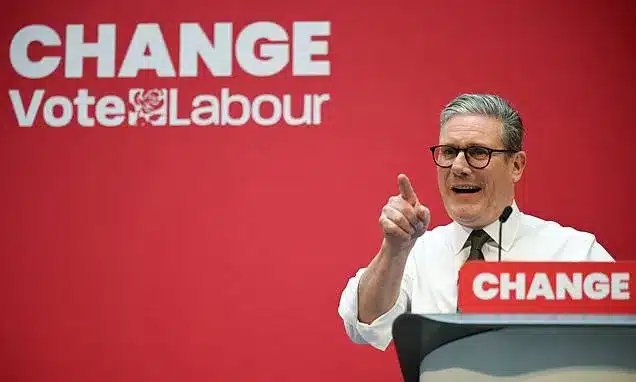
Millions of voters in England, Scotland, and Wales head to the polls today in local elections that could define Prime Minister Keir Starmer’s political future. Opposition figures describe the contests as a verdict on his leadership record, with rivals poised to capitalize on anticipated setbacks for Labour.
Shift Toward Multi-Party Politics
These elections challenge the traditional two-party dominance in Britain, as frustration with Labour and the Conservatives drives support toward Reform UK and the Greens. Kemi Badenoch, Tory leader, states that the vote reveals ‘what multi-party politics looks like,’ cautioning that rejecting established parties risks unproven leaders managing essential services.
She adds, ‘The two-party era has moved into a multi-party era. But none of these new parties or Labour have a plan for the country. A Labour government that won a landslide less than two years ago has become deeply unpopular. Governing proves far from easy.’
Polls Predict Major Labour Losses
Surveys indicate Labour faces its poorest local election performance ever, potentially forfeiting over 1,500 council seats in England while risking third place in Scotland and Wales. Nigel Farage forecasts major Reform UK advances, declaring at a rally in St Helens, Merseyside, that Labour will suffer annihilation in traditional Red Wall regions of the North and Midlands, rendering the Conservatives irrelevant nationally.
‘The implications of this vote will be historic,’ Farage asserts. ‘In Labour’s heartlands, they face a thrashing unseen for over a century.’
Challenges from Greens and Nationalists
The Greens target Labour bastions in London and urban centers, while nationalist parties gain traction in Wales and Scotland. A Labour insider admits the party risks defeats across the board. Welsh Labour leader Eluned Morgan warns that Starmer’s low approval ratings threaten the party’s long-held dominance in Wales, where it has led every election since 1922.
Morgan notes Starmer emerges as a frequent doorstep issue and urges voters to prioritize local concerns over national disputes.
Leadership Tensions Escalate
Downing Street prepares for immediate pressure on Starmer’s position post-polls. A Cabinet minister advocates Manchester mayor Andy Burnham’s return to Westminster. Starmer’s supporters vow to defend him, but senior Labour voices highlight voter backlash during campaigning.
A Red Wall Labour MP warns, ‘We lose every local seat to Reform. Strong councillors fall, much due to the PM. Doorstep reactions to him are toxic—people despise him. He cannot lead another election; he repels the public.’
Starmer conducts a subdued campaign, opting for a phone bank at Labour headquarters over direct voter contact. In his pre-election message, he calls for ‘unity over division,’ criticizing Nigel Farage and Green leader Zack Polanski as unprepared for global challenges.
Potential Challengers Emerge
Figures like Deputy PM Angela Rayner and Health Secretary Wes Streeting consider leadership bids if results disappoint. Efforts to block Burnham’s parliamentary comeback face resistance from Cabinet ministers demanding his candidacy option.
Regional Polling Insights
A YouGov poll in Wales projects Labour at 12%, trailing Plaid Cymru (33%) and Reform (29%). In Scotland, the SNP nears a majority, with Labour third behind Reform. Labour concentrates on defending London inner-city areas against Green surges, though Polanski faces scrutiny over comments on a recent Golders Green stabbing incident.