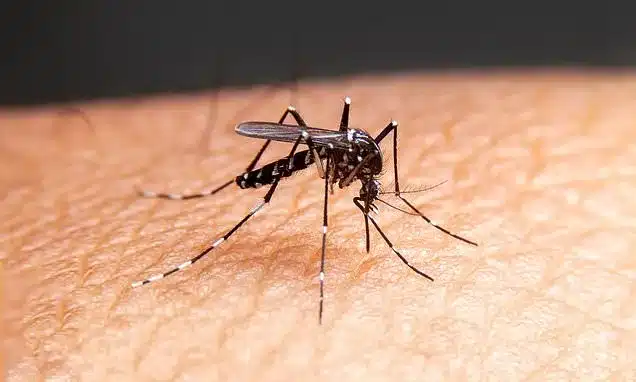
A controversial project by Alphabet’s life sciences subsidiary, Verily, aims to release approximately 64 million male mosquitoes infected with a specific bacteria into Florida and California. The initiative, known as The Debug Project, is designed as a form of biological pest control.
Mosquito Population Control and Potential Risks
The core of the project involves releasing male mosquitoes sterilized by the Wolbachia bacteria. These modified males are intended to mate with wild female mosquitoes, thereby reducing the overall population of disease-carrying insects, particularly those that spread West Nile Virus. This method is described as a form of “bug birth control.”
However, concerns have been raised regarding the potential environmental impact of such a large-scale genetic manipulation. Dr. Laura C. Harrington, a biologist specializing in mosquito behavior and mating habits, has expressed apprehension.
Expert Concerns on Environmental Manipulation
Dr. Harrington stated, “I am concerned about manipulating the genetics in the environment.” She further elaborated on potential unintended consequences, citing previous laboratory studies on other mosquito species. “In another Culvex species, there have been a couple of lab studies where they’ve shown infection with this type of bacteria enhances virus transmission,” she explained.
These findings suggest a possibility that the bacteria used to sterilize the male mosquitoes could, in some circumstances, inadvertently increase the transmission rate of viruses. This raises significant questions about the long-term effects of introducing such modified organisms into natural ecosystems.
Broader Implications and Historical Parallels
The initiative has also drawn commentary from political figures who view such endeavors with skepticism. Representative Tim Burchett has voiced strong opposition, stating, “Anytime we upset God’s plan it backfires on us. And we just never learn our lesson. We play God and we pull back a nub.”
Burchett pointed to historical examples of well-intentioned biological introductions that resulted in widespread ecological problems. He cited the introduction of kudzu, a fast-growing vine intended for erosion control and cattle feed, which has since become a tenacious invasive species across the American South. Another example mentioned was the Lone Star tick, which can transmit Alpha-gal Syndrome, causing an allergic reaction to red meat in humans.
These historical instances are used to underscore a broader concern about unintended consequences when human intervention significantly alters natural systems.
Unknowns in Mosquito Biology
Dr. Harrington also highlighted the limited understanding of male mosquito behavior and dietary needs. “Even though we’ve been studying [mosquitos] for a long time, there’s a lot we don’t know about the males,” she noted. “I’m a specialist in their mating interactions and the males have been ignored for a long time because they don’t blood feed, they don’t bite, and so we don’t know a lot about them.”
She added, “We don’t really know what an optimal diet is, or what they actually consume in nature on a regular basis, as far as nutrients.” This lack of comprehensive knowledge about male mosquitoes, the very insects central to the project’s strategy, adds another layer of uncertainty to the planned release.
While Dr. Harrington clarified that she does not suspect any malicious intent from Alphabet, she cautioned that “no matter what we do it seems like Mother Nature always has the upper hand.” The final decision on the release of these mosquitoes may involve regulatory bodies such as the Environmental Protection Agency.