Nikkei Index Reaches Record High Amidst AI Enthusiasm
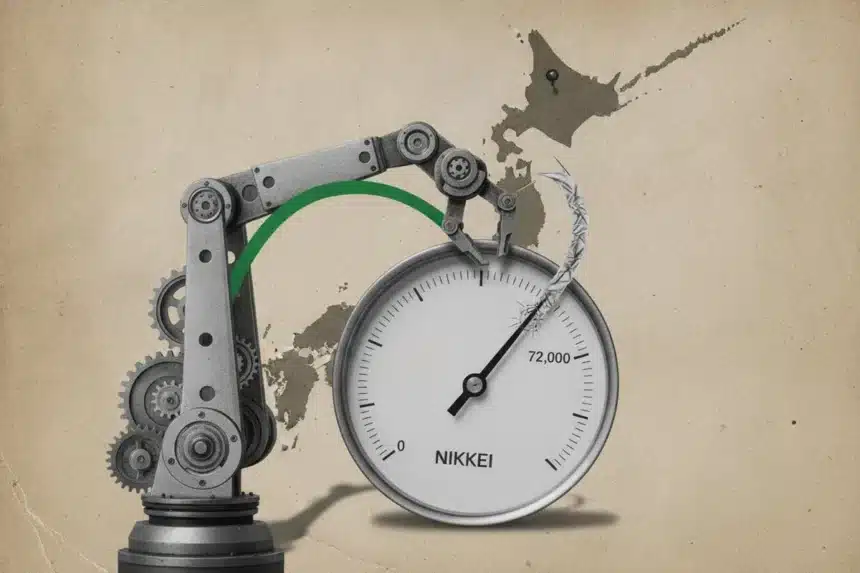
Tokyo, Japan – The Nikkei 225 index has achieved a new all-time high, surging past the 72,000 mark. This significant milestone was driven primarily by robust investor confidence in artificial intelligence (AI) and semiconductor-related industries, even as geopolitical tensions continue to create market volatility.
AI Ambitions Fueling Japanese Market Growth
Market analysts attribute the current rally to Japan’s strategic positioning as a crucial hardware supplier for the expanding global AI infrastructure. Reports indicate a concerted government initiative to establish a substantial investment target of approximately 370 trillion yen (roughly $2.29 trillion) in AI and semiconductor technologies by the year 2040.
While such long-term targets do not guarantee immediate spending, they signal a durable demand outlook for companies involved in the AI ecosystem. This vision has particularly benefited industrial automation firms and chip manufacturers, which are seen as essential providers of the tools and components necessary for AI development and deployment.
Key Sector Performance
The strength of the Nikkei has been largely concentrated in specific sectors. Leading the gains were automation specialists such as Yaskawa Electric and robot manufacturer Fanuc. In contrast, other market segments have shown less significant movement, highlighting a focused investor strategy.
This trend suggests that the index’s ascent is being propelled by investors channeling capital into areas of the Japanese economy perceived to have a clear, multi-year order pipeline. The ongoing discourse surrounding international relations, including discussions between the US and Iran, has introduced day-to-day fluctuations in market sentiment, but these have not yet fundamentally altered the long-term AI investment narrative.
Market Implications and Potential Risks
The ambitious 370 trillion yen investment goal has the potential to significantly enhance the valuation multiples for Japan’s AI hardware supply chain. Investors anticipating a decade-long buildout encompassing expanded data centers, increased chip production capacity, and advanced factory automation are increasingly willing to ascribe higher valuations to companies providing these foundational “picks and shovels.”
Consequently, the upward momentum is most pronounced in upstream enablers like Yaskawa and Fanuc, as well as in sectors tied to electronics and automation. This contrasts with a broad-based rally across the entire Nikkei index. However, this concentration introduces a degree of risk; should the AI spending narrative falter or order volumes fall short of expectations, the leading stocks could experience more substantial downturns than the broader market index.