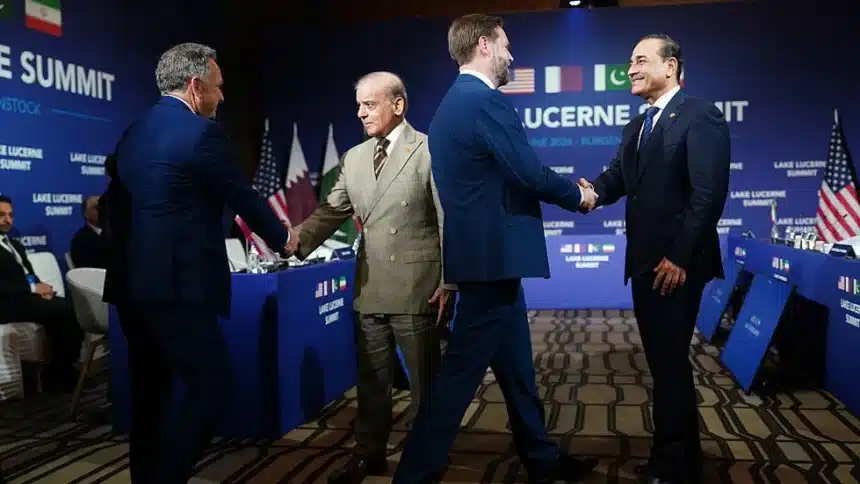
The United States and Iran have reached an agreement to halt hostilities, paving the way for renewed peace negotiations scheduled to take place in Doha, Qatar. This de-escalation comes after a series of retaliatory strikes between the two nations that threatened a fragile ceasefire established just weeks prior. Senior U.S. officials confirmed the agreement, which aims to pause military actions while diplomatic discussions resume.
Background to the Escalation
The recent exchange of fire occurred over a weekend, testing a memorandum of understanding (MoU) signed only 11 days earlier. This initial agreement was intended to chart a course toward a definitive end to the conflict that erupted in late February. The conflict’s origins trace back to a joint operation involving the U.S. and Israel targeting Iranian military assets.
The U.S. initiated the latest round of strikes on Friday and Saturday, targeting military installations in southern Iran. This action followed accusations by Washington that Tehran was responsible for drone attacks on commercial vessels transiting the Strait of Hormuz. In response, Iran launched missile strikes directed at Kuwait and Bahrain, both of which host significant American military bases.
Diplomatic Efforts and Sticking Points
A U.S. official, speaking to Axios, stated, “We decided to stop all the kinetic activity.” This sentiment was echoed by another official who told The Hill, “Technical talks are slated to continue on all areas of the MOU. Both sides will stand down for now and vessels can move freely.” This suggests a temporary cessation of military engagements to allow for continued dialogue on the terms of the MoU.
The upcoming talks in Doha are expected to address the core issues that have led to the prolonged conflict. A significant point of contention is the management of the Strait of Hormuz. Iran asserts its sovereign right to control the strategic waterway and collect transit fees, a position that the United States rejects. The MoU, signed on June 17, established a 60-day period, extendable by mutual agreement, for Washington and Tehran to negotiate a comprehensive settlement.
Originally, negotiators had planned to convene in Switzerland to discuss Iran’s nuclear program. However, the recent escalation in hostilities prompted a shift in focus, with the Strait of Hormuz now taking center stage in the upcoming Doha discussions.
Iran’s Stance on the Strait of Hormuz
Iranian Foreign Minister Abbas Araghchi, speaking at a press conference in Baghdad, outlined Iran’s perspective on the waterway. He indicated that the Strait of Hormuz would revert to its pre-conflict operational status under Iran’s sole management within 30 days. Araghchi emphasized that the responsibility for implementing these arrangements rests exclusively with the Islamic Republic. He also cautioned that any external interference or attempts to establish alternative management systems could complicate matters and impede the reopening of this vital shipping lane.
The Islamic Revolutionary Guard Corps (IRGC) had previously issued a warning, stating that further U.S. military actions would lead to the complete cessation of all diplomatic processes. This underscores the high stakes involved in the current negotiations and the potential for renewed conflict should talks falter.
The Strategic Importance of the Strait of Hormuz
The Strait of Hormuz is a critical chokepoint for global energy markets, facilitating approximately a quarter of the world’s seaborne oil and liquefied natural gas (LNG) trade. Its closure throughout the recent conflict has had significant repercussions on international energy supplies and prices. The ability of both nations to reach an agreement on the management and security of this waterway is paramount to restoring stability in the region and ensuring the free flow of commerce.
Looking Ahead: Doha Talks
The resumption of talks in Doha represents a crucial opportunity for the U.S. and Iran to de-escalate tensions and work towards a lasting resolution. The success of these negotiations will hinge on the willingness of both parties to compromise on contentious issues, particularly the control and access to the Strait of Hormuz. The international community will be closely watching the proceedings, hoping for a positive outcome that can lead to sustained peace and stability in the Persian Gulf region.
The temporary halt in hostilities, while a positive step, is contingent on continued adherence to the ceasefire. The technical talks will likely delve into the specifics of the MoU, aiming to build trust and lay the groundwork for more comprehensive political negotiations. The commitment to these discussions, despite the recent military exchanges, signals a continued, albeit tentative, desire to resolve the underlying issues through diplomatic channels.