President Donald Trump announced via social media on Monday that Iran had proposed a meeting with U.S. officials, though Iranian representatives stated that no such discussions were currently scheduled. The situation unfolds against a backdrop of escalating tensions in the Strait of Hormuz, a critical global energy chokepoint, which has led to concerns about potential impacts on oil prices and President Trump’s assertions regarding easing inflation in the United States.
Conflicting Statements on Proposed Iran-U.S. Meeting
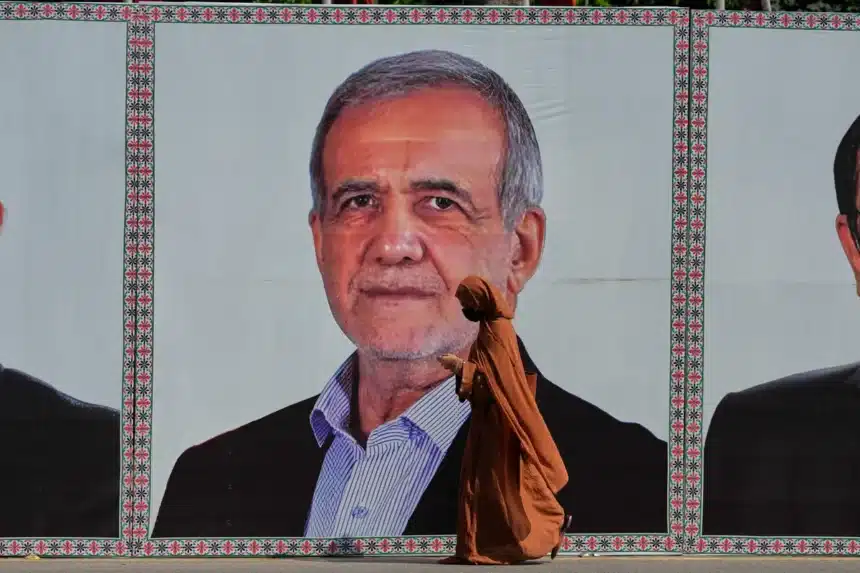
President Trump indicated that the purported meeting with Iran was slated for Tuesday in Doha, Qatar. This announcement came shortly after Iran’s President, Masoud Pezeshkian, stated that $6 billion in frozen Iranian assets would be released by Qatar. Pezeshkian’s remarks appeared to be an effort to garner public support within Iran for an interim deal, particularly as recent actions have challenged Iran’s control over the Strait of Hormuz.
The interim deal’s stability has been tested by efforts to facilitate traffic through Oman’s territorial waters, offering an alternative route for vessels entering and exiting the Persian Gulf. Iran’s actions, including attacks and threats against cargo ships and tankers, have disrupted maritime traffic through the strait. This waterway is vital, accounting for approximately one-fifth of the world’s traded oil and natural gas during peacetime, and disruptions have raised fears of a global energy crisis.
Strait of Hormuz: A Vital Global Waterway
The Strait of Hormuz, situated within the territorial waters of Iran and Oman, is internationally recognized as a crucial international waterway. In recent days, Iran has conducted at least two attacks on vessels in proximity to the Omani side of the strait. These incidents prompted retaliatory airstrikes by the United States and heightened concerns that ongoing negotiations aimed at achieving a formal end to hostilities could be jeopardized. On Sunday, Iran also reportedly launched drone and missile attacks targeting Bahrain and Kuwait.
Iranian President Highlights Asset Release Amidst Tensions
President Pezeshkian, in comments published by the state-run IRNA news agency on Monday, lauded the interim deal, describing it as “a great victory for the Iranian people.” He further elaborated on the financial aspect, stating, “Based on the plans made, $6 billion out of the total $12 billion of Iranian resources in Qatar will be released and returned to the country, and necessary follow-ups are being carried out.” While Pezeshkian, a reformist figure within Iran’s political system, did not provide further details, his statement marks the highest-level official acknowledgment of the potential release of funds held by Qatar, which has been acting as a key mediator alongside Pakistan in the negotiations.
However, U.S. officials have maintained that no frozen Iranian assets have been released to date. Qatar has also not confirmed any such transfer. Adding to the complexity, Iran reportedly attacked a tanker carrying Qatari crude oil over the weekend amidst the crossfire in the Persian Gulf.
Confusion Surrounds Next Steps in Iran-U.S. Talks
Pakistan, another significant mediator in the discussions, had indicated that talks were set to resume on Tuesday. The Trump administration, in a statement on Sunday, affirmed that no sessions had been canceled and that technical discussions remained on schedule for the upcoming days. Conversely, Kazem Gharibabadi, a senior Iranian negotiator, denied that any talks had been formally scheduled. His comments, published by IRNA, stated, “Although consultations with Qatar, including on following up on the implementation of the other side’s commitments, are continuing as usual, reports by some media about technical talks by the working groups being held in Doha are not confirmed.”
These technical talks typically involve lower-ranking diplomats who work on the intricate details of potential agreements, paving the way for higher-level engagement between leaders from Iran and the U.S. The conflicting reports underscore the delicate and often opaque nature of the diplomatic efforts between the two nations, particularly in the context of heightened regional instability.