A groundbreaking expedition is set to bring two legendary polar exploration shipwrecks, the Quest and the Terra Nova, into the 21st century through advanced digital mapping. Utilizing cutting-edge underwater imaging technology, researchers aim to create highly detailed 3D models, or “digital twins,” of these historic vessels without disturbing their resting places deep beneath the sea. This initiative marks a significant shift in underwater archaeology, prioritizing non-intrusive digital documentation over physical recovery of fragile artifacts.
A ‘Once-in-a-Generation’ Expedition to Document Maritime History
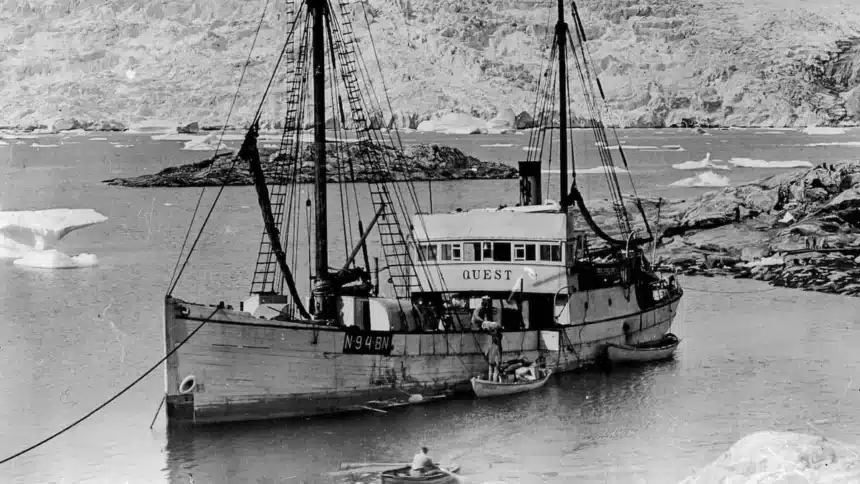
The ambitious 21-day expedition, departing from the Woods Hole Oceanographic Institute in Massachusetts, is spearheaded by the Royal Canadian Geographical Society (RCGS). Funding for this significant undertaking comes from a combination of private donors, philanthropic contributions, and corporate sponsorships. The journey will focus on two iconic ships: the Quest, which carried famed Antarctic explorer Sir Ernest Shackleton on his final voyage, and the Terra Nova, known for its role in British explorer Robert Falcon Scott’s ill-fated Antarctic expedition.
David Mearns, a renowned shipwreck hunter and co-chief scientist for the expedition, described the opportunity to create detailed digital records of both wrecks as exceptionally rare. “It’s a once-in-a-generation thing,” he stated, emphasizing the infrequent nature of such comprehensive documentation projects.
The Story of the Quest
The wreck of the Quest lies nearly 400 meters below the surface of the Labrador Sea, largely undisturbed since its sinking in 1962. Sir Ernest Shackleton, a celebrated figure in Antarctic exploration, died aboard the Quest in January 1922, while the ship was anchored near South Georgia. After Shackleton’s death, the wooden vessel continued in service for another four decades. It served as a Canadian naval ship during World War II before returning to commercial use as a sealing vessel, ultimately sinking off the coast of Labrador.
Researchers are eager to confirm the identity of the wreck definitively. “What I really want to see is the name of the Quest,” Mearns expressed. While there is strong certainty that the found vessel is indeed the Quest, photographic evidence captured by advanced cameras is sought for irrefutable proof. Beyond identification, Mearns highlighted the importance of exploring the debris field surrounding the wreck. Objects scattered during the sinking could offer crucial insights into the ship’s final moments and provide details that the hull alone might not reveal. The sinking was reportedly a controlled abandonment due to overwhelming leaks, with all crew members safely evacuated and nearby ships providing assistance.
The Terra Nova’s Legacy
Following the survey of the Quest, the expedition will proceed to the wreck of the Terra Nova. This vessel rests at a depth of approximately 170 meters, about 30 kilometers south of the Greenland mainland. Discovered in 2024, the Terra Nova wreck and its surrounding 300-meter debris field present an opportunity to answer lingering questions about its condition, any changes it has undergone, and what historical information it might yield.
Advanced Technology for Unprecedented Detail
The creation of these high-resolution digital twins relies on a sophisticated combination of lasers, stereo cameras, and advanced software. Canadian company Voyis, based in Waterloo, Ontario, is providing its specialized underwater imaging technology for this project. Voyis has previously employed similar techniques to create digital models of other famous shipwrecks, including the Titanic and Shackleton’s Endurance.
Brenden St. John, Voyis’s head of ocean science, explained the concept of a digital twin as an “essentially a replica of what you were looking at underwater.” The process, known as photogrammetry, involves a remotely operated vehicle (ROV) scanning the entire 34-meter length of the ship and its surrounding debris. Millions of images are stitched together in real-time to construct a comprehensive 3D model. “It’s a series of images that are then effectively stitched together,” St. John noted. “And that’s all going to be available in real time, which is actually quite exciting.”
Benefits of Digital Documentation
Unlike traditional methods that often involve divers, digital photogrammetry offers significant advantages. It is a safer, more precise approach that allows researchers and engineers to meticulously measure, analyze, and revisit the discovered data long after the expedition has concluded. Voyis’s technology, typically used in demanding industrial sectors like oil and gas, civil infrastructure, and defense for inspecting underwater structures, is being adapted here to push the boundaries of scientific exploration.
Navigating the Challenges of the Deep Sea
Despite the advanced technology and meticulous planning, the expedition faces considerable challenges. The Labrador Sea, much like the Great Lakes where similar deep-water explorations have occurred, presents a harsh and unforgiving environment. Even with ideal surface conditions, the underwater environment can be unpredictable.
Zach Melnick, a documentary filmmaker with experience piloting ROVs in deep waters, highlighted the significant concern of intense currents in the Labrador Sea. These currents, even at depths of 400 meters, can potentially push the ROV off course, compromising the data collection. Poor visibility at the seabed could also limit the effectiveness of the cameras. “You can imagine sending a line down down 400 metres. There’s a ton of current pressure on that line. That’s the factor they’re always going to be concerned about,” Melnick explained.
Furthermore, the delicate operation of maneuvering the ROV around the wreck without its tether snagging on the ship requires exceptionally skilled piloting. Melnick emphasized the complexity involved: “There are so many moving parts that everything really has to work together in order for this to be a success, and I wish them the absolute best in everything going perfectly.” The success of this mission hinges on the seamless integration of technology, expert piloting, and favorable environmental conditions.
Conclusion: A New Era for Maritime Archaeology
This expedition represents a pivotal moment in the study of maritime history. By leveraging sophisticated digital technologies, the RCGS and Voyis are not only preserving the legacy of the Quest and Terra Nova for future generations but also setting a new standard for how underwater archaeological sites can be explored and understood. The resulting digital twins promise to unlock new historical insights, offering an unprecedented, non-invasive window into the past.