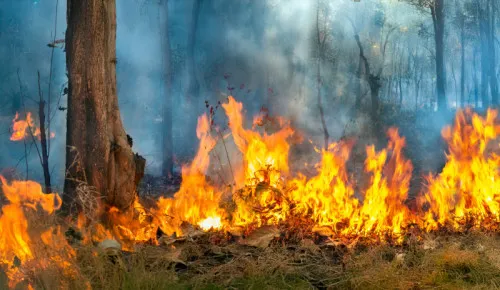
During periods of intense heat and wildfire smoke, simply closing windows at home may not fully safeguard occupants from harmful particulate matter, according to preliminary research from the University of Manchester. The study, which analyzed indoor air quality in Greater Manchester homes during wildfire events in July 2026, suggests that while closing windows can reduce smoke infiltration, it can also trap heat, creating a difficult choice between air quality and thermal comfort. This dilemma is particularly acute for individuals with pre-existing respiratory conditions.
Understanding the Indoor Air Quality Threat
Researchers from the University of Manchester’s Cystic Fibrosis Hub Air Quality Research team monitored 23 homes in the Greater Manchester area between July 1 and July 26, 2026. This period coincided with significant wildfire activity in the nearby Pennine hills. The study, funded by the Cystic Fibrosis Trust, focused on fine particle pollution, specifically PM2.5 – microscopic particles produced by smoke that are small enough to penetrate deep into the lungs, potentially causing significant health issues.
The findings indicated that on July 17, when outdoor smoke levels reached their peak, every monitored home exceeded the World Health Organization’s 24-hour guideline for fine particle pollution. This highlights the pervasive nature of wildfire smoke, reaching even indoors.
The Impact of Opening Windows
A key aspect of the preliminary analysis, which has not yet undergone peer review, revealed a concerning trend related to temperature. As outdoor temperatures climbed above 33°C (91.4°F), residents in many of the monitored homes opened their windows to cool their living spaces. This action, while intended to alleviate heat, appeared to worsen the indoor air pollution problem.
Dr. Congbo Song, affiliated with the University of Manchester and the National Centre for Atmospheric Science (NCAS), led the analysis of PM2.5 levels. The data showed a stark contrast in overnight bedroom PM2.5 concentrations: levels rose from an average of 2.7 micrograms per cubic metre to 7.8 µg/m³ with windows closed, and further to 11.8 µg/m³ when windows were opened. Even with windows shut, indoor PM2.5 levels remained two to four times higher than normal during wildfire events.
In some instances, overnight concentrations within bedrooms surged to over 100 µg/m³, a level many times higher than typically recorded in those homes. Interestingly, levels of indoor-generated pollutants, such as volatile organic compounds and carbon dioxide, decreased during these periods. This was attributed to participants opening windows to cool their homes, inadvertently allowing more outdoor smoke pollution to enter.
Navigating Conflicting Health Advice
Current guidance from bodies like the UK Health Security Agency often recommends staying indoors and closing windows during wildfire smoke events to minimize exposure. The University of Manchester researchers acknowledged that closing windows does help reduce pollution compared to leaving them open. However, their findings suggest this measure alone is insufficient to completely block outdoor smoke from infiltrating homes.
Professor Alex Horsley from the University of Manchester emphasized the difficult trade-offs people face. “Following the simple but often repeated instruction of going indoors and shutting the windows will only give you some protection from wildfire smoke, and keeps heat in the home,” he stated. “Both smoke and heat can make breathing worse for those with chronic lung conditions.” He noted that smoke effects were present in all monitored homes, even those up to 60 kilometers (approximately 37 miles) away from the wildfires, particularly when heat necessitated opening windows.
Dr. Thomas Bannan, lead environmental researcher for the group, echoed these concerns. “The findings support advice to close windows while smoke levels are high, but show that this cannot completely prevent smoke infiltration and may increase the risk of overheating,” he explained. “The challenge is that this advice can be difficult to follow during very hot weather, particularly in homes that are prone to overheating.”
Potential Solutions and Future Research
The research team is actively exploring practical solutions to mitigate the dual threats of wildfire smoke and extreme heat indoors. They are investigating measures such as air purification systems and integrated ventilation strategies, as well as improved home cooling techniques. This work is supported by the Greater Manchester Local Innovation Partnership through the Retrofit Advanced Materials and Manufacturing Innovation Centre.
Dr. Bannan highlighted the need for clearer, evidence-based guidance. “We need clearer, evidence-based guidance that helps households reduce exposure to both smoke and heat. I hope this new data can support these decisions,” he said. “We are now investigating practical measures, including air filtration and approaches to keeping homes cool, so that people – especially those with existing respiratory conditions – have better options during future extreme events such as these.”
Broader Health Implications
The health risks associated with wildfire smoke extend beyond respiratory issues. Dr. Bannan pointed out that wildfire smoke contains fine particles and gases that can irritate the lungs and exacerbate conditions like cystic fibrosis, asthma, and Chronic Obstructive Pulmonary Disease (COPD). Symptoms can include coughing, wheezing, breathlessness, and chest tightness, potentially leading to severe flare-ups requiring medical intervention. Vulnerable populations, including children, the elderly, and immunocompromised individuals, are at heightened risk.
Dr. Sharon Weinberg, a clinical research fellow at the University of Manchester, added that the impact of poor air quality is not limited to the lungs. “Elevated PM2.5 exposure is known to increase the risk of cardiovascular events – including heart attacks, strokes, and thrombosis,” she noted. “It is also associated with headaches and migraines, highlighting that the health consequences of air pollution extend well beyond people with chronic respiratory disease.”
Personal Experience Highlights the Challenge
Laura Beattie, a participant in the study who has cystic fibrosis, shared her personal experience during the heatwave and wildfires. “I found it really hard during the heatwave and the wildfires. You could see and smell the smoke for days, and it made my breathing worse,” she recounted. “I was more breathless, and had to restrict myself to staying indoors. I also noticed that my sputum went dark from the smoke – I’ve never seen it like this before.” Her testimony underscores the critical need for effective strategies to manage indoor air quality during such events, especially for individuals with chronic lung conditions.
The research team is continuing to recruit participants with cystic fibrosis across the UK for the CF Tracker study, which includes air quality monitoring as an optional component in certain regions.