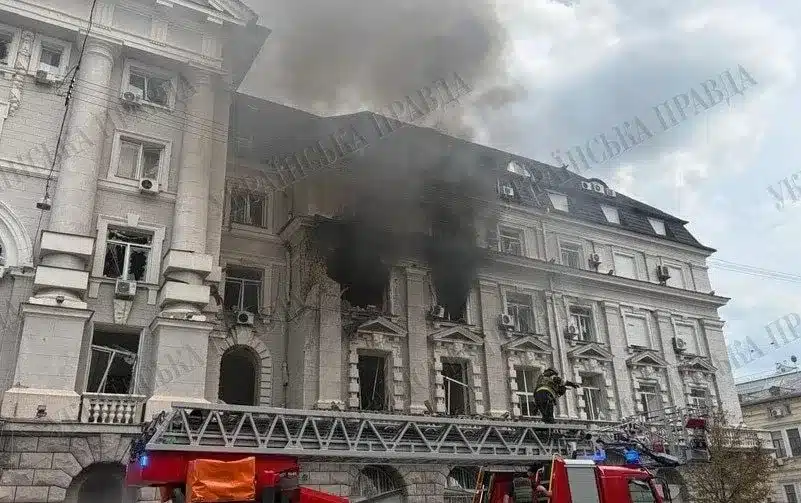
The central headquarters of Ukraine’s Security Service (SBU) in Kyiv was struck by a Russian drone, according to Ukrainian officials. The attack, which occurred in the heart of the capital, has been described by Ukrainian authorities as a significant escalation of the ongoing conflict and potentially an assassination attempt.
Drone Strike on SBU Headquarters
On [Insert Date of Attack, if known, otherwise omit or use a general timeframe like ‘recently’], a Russian drone targeted the SBU’s main building located on Volodymyrska Street in Kyiv. The building is situated in close proximity to the historic St. Sophia Cathedral, a UNESCO World Heritage site.
Eyewitnesses reported seeing thick plumes of black smoke billowing from the city center following the impact. The precise nature and extent of the damage to the SBU headquarters are still being assessed, but initial reports indicate a direct hit on a section of the building.
Alleged Assassination Attempt
President Volodymyr Zelensky stated that the drone was deliberately aimed at the office of a high-ranking security official within the targeted building. He characterized the strike as a potential assassination attempt on Oleksandr Poklad, identified as the head of the SBU. This assertion suggests a targeted effort to neutralize key Ukrainian leadership figures.
“The drone was aimed directly at the office of the head of the security service in that building,” President Zelensky communicated via social media platforms, emphasizing the precision and intent behind the attack.
“Major Escalation” of the Conflict
Ukraine’s Foreign Minister characterized the drone strike on the SBU headquarters as a “major escalation” of the war. This sentiment underscores the perceived gravity of the attack, suggesting it moves beyond conventional military objectives and signals a new phase or intensification of hostilities.
The targeting of a primary intelligence and security agency’s headquarters is a significant development. Such actions can be interpreted as attempts to disrupt a nation’s command and control, intelligence gathering capabilities, and internal security apparatus.
Context of the War
The drone attack occurs amidst a protracted and intense conflict between Russia and Ukraine. Both sides have engaged in various forms of aerial warfare, including missile strikes and drone attacks, targeting military installations, infrastructure, and, at times, reportedly civilian areas or leadership figures.
Russia has previously denied targeting civilians or civilian infrastructure, often stating that its military operations are aimed at degrading Ukraine’s military capabilities. However, reports from international observers and Ukrainian authorities frequently document extensive damage to non-military sites.
International Reactions and Implications
The international community has largely condemned Russia’s actions in Ukraine, with many nations providing military, financial, and humanitarian aid to Kyiv. Attacks on sensitive government buildings like the SBU headquarters are likely to draw further international scrutiny and may influence diplomatic responses and the ongoing debate regarding further sanctions or military assistance.
The designation of the strike as a “major escalation” by Ukrainian officials highlights the potential for increased retaliatory actions and a further broadening of the conflict’s scope. The deliberate targeting of leadership offices, if confirmed, could also impact future negotiations or strategic calculations by both sides.
Kyiv’s Air Defense Capabilities
Kyiv has significantly bolstered its air defense systems in response to repeated aerial attacks. While these defenses have proven effective in intercepting many incoming threats, the successful penetration by a drone to strike a central government building raises questions about the evolving tactics employed by Russian forces and the continuous need for advanced air defense solutions.
The effectiveness of air defense is a critical factor in protecting urban centers and key infrastructure. The incident underscores the persistent threat posed by aerial attacks and the ongoing challenge of maintaining comprehensive air superiority.
Historical Significance of the Location
The SBU headquarters’ location near St. Sophia Cathedral adds a layer of symbolic significance to the attack. The cathedral, a centuries-old landmark, is a potent symbol of Ukrainian history and spirituality. Its proximity to the targeted SBU building means that any collateral damage could have profound cultural and historical implications, in addition to the immediate military and political consequences of the strike.
Conclusion
The drone strike on the SBU headquarters in Kyiv represents a serious development in the Russia-Ukraine war. The Ukrainian government’s characterization of the event as a potential assassination attempt and a major escalation underscores the high stakes involved. As the situation unfolds, the international community will be closely monitoring the impact of this attack on the conflict’s trajectory and the security of Ukraine’s leadership and infrastructure.