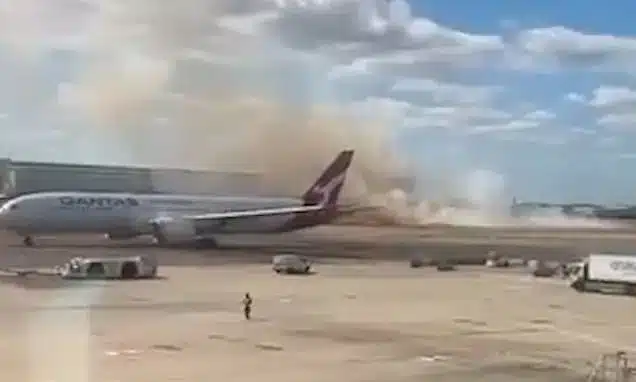
A grass fire adjacent to one of its runways forced Heathrow Airport to temporarily close its southern runway on [Insert Date of Fire], leading to significant flight disruptions and diversions. Emergency services responded swiftly to extinguish the blaze, and the runway has since been reopened.
Heathrow Experiences Runway Closure Due to Grass Fire
Britain’s busiest airport, Heathrow, faced operational challenges when a grass fire broke out near its southern runway. The incident prompted the immediate closure of the runway as firefighters worked to contain and extinguish the flames. The closure caused a ripple effect, impacting numerous flights and leading to passenger frustration.
Flight Disruptions and Diversions
The temporary closure of the southern runway resulted in several flights being diverted to alternative airports. A flight originating from San Francisco was rerouted to Manchester, while a service from San Diego had to land in Birmingham. These diversions added considerable travel time and inconvenience for passengers.
Visual evidence, including video footage, depicted plumes of smoke drifting across the affected runway, with a Qantas passenger jet visible in the vicinity. The sight of smoke near active flight paths heightened concerns among travelers and onlookers.
Passenger Reactions to the Disruption
Social media platforms became a channel for passengers to express their dissatisfaction with the unfolding situation. Many shared their experiences, highlighting the compounded travel issues they faced. One traveler lamented the timing, noting, “The one time I fly from Heathrow, it’s down to one runway and the trains down are disrupted by swans on the tracks. Can’t make it up.” Another passenger described the morning as “fun” at London Heathrow Airport, referencing the grass fire incident near runway 27L.
The dry conditions, even after recent rainfall, were cited as a contributing factor to the fire’s rapid spread. One observation noted, “Despite the recent rain, the grass is still like a tinderbox,” underscoring the potential fire risk in such environments.
Swift Response and Runway Reopening
Heathrow Airport confirmed that its operational teams acted with speed and efficiency to resolve the grass fire incident. The airport’s statement indicated that the fire was quickly extinguished, allowing for the prompt reopening of the affected runway.
A spokesperson for Heathrow stated, “Earlier today our teams acted quickly to safely resolve a grass fire adjacent to the southern runway. Thanks to their swift response, the fire was extinguished quickly and both runways are fully operational.” The statement also extended gratitude to all involved personnel and offered apologies for any inconvenience caused to passengers, thanking them for their patience and understanding.
Airport Operations Return to Normal
Following the successful containment and extinguishing of the grass fire, both of Heathrow’s runways were declared fully operational. The airport’s quick response ensured that the disruption was minimized, and normal flight schedules could resume as soon as safely possible. The incident serves as a reminder of the operational challenges that airports can face, even from seemingly minor environmental events.
Preventative Measures and Future Considerations
While the immediate incident was resolved, the event may prompt a review of preventative measures concerning vegetation management around airport operational areas. Airports are critical infrastructure, and ensuring their continuous operation requires robust safety protocols, especially in environments susceptible to dry conditions.
The swift action by Heathrow’s teams and the emergency services prevented a potentially more severe disruption. The airport’s commitment to passenger safety and operational continuity was evident in their rapid response. Passengers affected by the diversions and delays were advised to check with their respective airlines for the latest flight information.
The incident at Heathrow highlights the importance of preparedness and rapid response capabilities in managing unforeseen events at major transportation hubs. The airport’s ability to quickly restore full operations underscores the effectiveness of its emergency management procedures.