Australia’s superannuation system is projected to significantly reduce the future cost of the age pension to taxpayers, even as a large demographic wave of Australians enters retirement age over the next 40 years. This stands in contrast to many other developed nations facing substantial increases in pension expenditures.
Intergenerational Report Highlights Shifting Budgetary Pressures
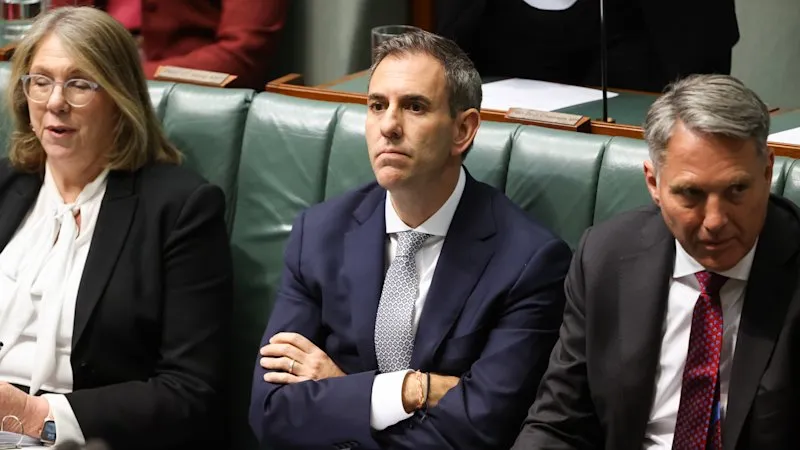
Treasurer Jim Chalmers is set to unveil key findings from the upcoming intergenerational report, which forecasts significant demographic shifts and their impact on the national budget over the next four decades. The report, originally commissioned by Peter Costello in 2002, analyzes long-term pressures on government finances. The latest iteration is expected to show that by 2066, approximately 9 million Australians will be of pension age (currently set at 67). However, a crucial finding indicates that the proportion of this age group receiving the age pension is predicted to decrease from 66% last year to 52%.
Consequently, budget spending on the age pension is forecast to decline as a percentage of the Gross Domestic Product (GDP). It is expected to fall from 2.3% of GDP in the past year to 1.8% by the mid-2060s. This projected decrease in pension spending as a share of the economy is particularly noteworthy when compared to international trends.
Australia Defies Global Trends in Pension Costs
In stark contrast to Australia’s outlook, other developed countries are anticipating significant increases in their pension outlays. Projections indicate that by 2060, the United Kingdom could see pension spending reach 10% of GDP, Canada 8%, New Zealand 7%, and the United States 6%. Treasurer Chalmers will emphasize that Australia’s comparatively lower projected pension costs, especially within an aging society, are a direct benefit of its robust superannuation system.
“That is phenomenal in an ageing society, and it’s essential,” Chalmers is expected to state in a speech to the Super Members Council. “Super takes serious pressure off social security outlays and makes the budget much more sustainable as a consequence. Having super at the core of the best retirement incomes system in the world means pension spending as a share of the economy will be the lowest in the OECD, but even as those costs moderate, retirees will have more economic security, not less.”
Superannuation Balances Set for Significant Growth
The report also projects a substantial increase in average superannuation balances for retirees. By the mid-2030s, the median retirement super balance is anticipated to approach $450,000. This figure represents more than double the estimated current balance of $200,000 and a significant increase from the $115,000 recorded in 2015. This growth in private retirement savings is a key factor contributing to the projected decrease in reliance on the age pension.
The historical context provided by the intergenerational reports underscores this trend. Peter Costello’s first intergenerational report in 2002 had forecast the age pension to climb to 4.6% of GDP by 2046-47. At that time, the superannuation guarantee levy was legislated to rise to 9%. The guarantee has since reached its current level of 12% in the last financial year. The latest projections from Treasury, as included in Chalmers’ 2023 intergenerational report, now anticipate the age pension costing 2% of GDP by the early 2060s, a marked reduction from earlier forecasts.
Debate Intensifies Over Superannuation’s Future
Amidst these projections, the future of the superannuation system has become a focal point of political debate. Proposals from political parties, including One Nation and the Liberal Party, have suggested allowing individuals, particularly younger Australians and those facing housing affordability challenges, to access their superannuation savings. One Nation proposed allowing renters and mortgage holders to withdraw a quarter of their 12% super guarantee as income for up to three years, claiming it would provide an additional $44 per week for someone on a median wage. However, the party has faced scrutiny regarding the policy’s mechanics and its potential inflationary impact.
Similarly, reports indicate the Liberal Party has considered a policy allowing workers to withdraw a portion of their super, though with a different structure and no time limit. Such proposals have drawn criticism from Treasurer Chalmers, who argues they pose an “existential threat” to the superannuation system and could undermine both the budget’s sustainability and the retirement security of Australians.
Chalmers is expected to characterize the upcoming election as a critical juncture for compulsory superannuation, emphasizing its preservation and core principles. “We’re witnessing now the biggest threat to compulsory super, with preservation at its core, in the four decades since it began,” he is anticipated to say. “The next election will be super’s existential moment. It will help determine whether we make the most of our intergenerational advantages or trash them.”
Conclusion: A System Underpinning Future Security
The forthcoming intergenerational report’s findings underscore the critical role of Australia’s compulsory superannuation system in managing future fiscal pressures. By fostering private retirement savings, the system is projected to alleviate the burden on the age pension and the federal budget, positioning Australia favorably against international counterparts. However, ongoing political discussions regarding access to superannuation funds highlight the system’s vulnerability and the importance of its preservation for long-term economic security.