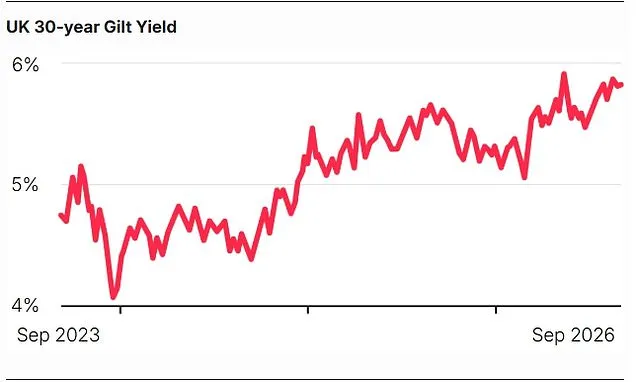
The United Kingdom is currently facing a significant challenge in its bond market, experiencing higher borrowing costs compared to many of its international counterparts. This situation has sparked concern among economists and the public alike, raising questions about its causes and its potential impact on national finances, mortgages, savings, and the upcoming government budget.
Understanding the UK’s Bond Market Problem
Bond markets are crucial for governments to raise funds by issuing debt. Investors purchase these bonds, essentially lending money to the government, with the expectation of receiving interest payments and the principal back at maturity. The interest rate offered on these bonds, known as the yield, reflects the perceived risk of lending to that government. When yields rise, it means the government has to offer higher interest rates to attract investors, thereby increasing its borrowing costs.
Recently, global bond markets have experienced considerable volatility, leading to soaring yields in major economies. However, the UK’s situation appears to be more pronounced than that of its rivals. This divergence suggests specific factors are at play within the UK’s economic and fiscal landscape that are making investors more hesitant or demanding higher compensation for holding UK government debt.
Why Are UK Borrowing Costs Surging?
Several factors are contributing to the elevated borrowing costs for the UK government. A primary concern is the level of national debt and the government’s fiscal policy. Investors closely scrutinize a country’s debt-to-GDP ratio and its plans for managing its finances. If a government is perceived to be running large deficits or has a high debt burden without a clear and credible plan for fiscal consolidation, it can lead to increased risk premiums demanded by bondholders.
Market confidence also plays a pivotal role. Political stability, clear economic direction, and consistent policy-making are vital for maintaining investor trust. Any perceived instability or uncertainty regarding future economic policies can spook markets, leading to a sell-off in government bonds and a subsequent rise in yields. The UK’s economic outlook, including inflation rates, growth prospects, and the effectiveness of monetary policy, are all under constant scrutiny by global investors.
Furthermore, global economic trends can influence national bond markets. Inflationary pressures worldwide, coupled with central banks’ responses through interest rate hikes, create a dynamic environment for bond yields. While these global factors affect all markets, specific domestic issues can exacerbate the situation for individual countries.
Implications for the UK Budget and National Finances
The surge in UK government borrowing costs has direct and significant implications for the national budget. When the government needs to borrow more money, or when existing debt needs to be refinanced at higher rates, the cost of servicing that debt increases substantially. This means a larger portion of taxpayer money must be allocated to interest payments, leaving less available for public services such as healthcare, education, and infrastructure.
For the government, this translates into a more challenging fiscal environment. It can constrain spending plans, potentially leading to austerity measures or a need to increase taxes. The Office for Budget Responsibility (OBR) and other fiscal watchdogs will be closely monitoring these developments, as they can significantly impact the government’s ability to meet its fiscal targets and manage the national debt sustainably.
What Does This Mean for Mortgages, Savings, and Your Personal Finances?
The impact of rising bond yields extends beyond government finances and directly affects individuals’ personal finances. Bond yields are closely linked to interest rates across the economy, including those for mortgages and savings accounts.
- Mortgages: As government borrowing costs rise, so do the rates at which banks and building societies can lend. This typically leads to higher mortgage rates for homeowners and those looking to buy property. Fixed-rate mortgages, in particular, are sensitive to changes in longer-term bond yields. An increase in these yields can make new fixed-rate deals more expensive, increasing monthly payments for borrowers.
- Savings: On the flip side, higher interest rates can be beneficial for savers. As wholesale borrowing costs increase, banks may offer more attractive rates on savings accounts, ISAs, and other deposit products. This could provide some relief to households looking to earn more on their cash.
- Inflation and Cost of Living: The underlying economic conditions driving bond yields, such as inflation, also impact the cost of living. While higher savings rates might offer some comfort, the overall effect of inflation and potentially higher borrowing costs can put a strain on household budgets.
Broader Economic Context and Investor Sentiment
The turmoil in the UK bond market is occurring within a broader context of global economic uncertainty. Inflation remains a persistent challenge in many economies, prompting central banks to tighten monetary policy. Geopolitical events and concerns about global economic growth also contribute to market volatility. Investors are often seeking safe havens during uncertain times, and their perception of a country’s economic stability and fiscal health heavily influences where they choose to invest.
The UK’s specific challenges might include concerns about its post-Brexit economic adjustments, productivity growth, and the effectiveness of its fiscal and monetary policy responses to current economic headwinds. A sustained period of high borrowing costs could signal a loss of investor confidence, making it more difficult and expensive for the UK to finance its public spending and investments in the future.
Conclusion: Navigating the Bond Market Challenges
The current situation in the UK bond market presents a complex challenge with far-reaching consequences. The surge in government borrowing costs is a symptom of underlying economic and fiscal pressures, amplified by global market conditions. For the average person, this translates into potential increases in mortgage costs, though it may also bring better returns on savings. The government faces the difficult task of managing its finances in a way that reassures markets, controls borrowing costs, and protects public services.
Understanding these dynamics is crucial for individuals to make informed financial decisions regarding their mortgages, savings, and overall household budget. As the economic landscape continues to evolve, close monitoring of bond market performance and its ripple effects will be essential for both policymakers and the public.