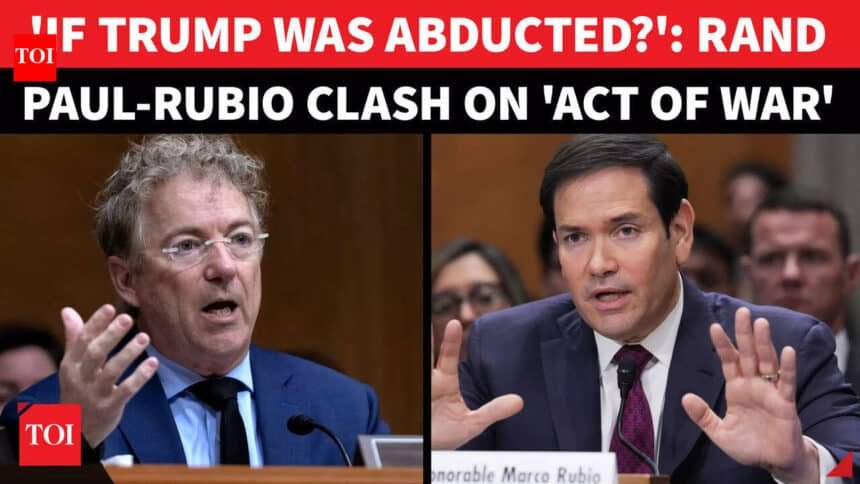
A heated exchange erupted in Washington on Wednesday as Senator Rand Paul directly challenged Secretary of State Marco Rubio’s justification for the recent U.S. military operation that led to Venezuelan President Nicolás Maduro’s capture.
Constitutional Authority Questioned
During a three-hour Senate Foreign Relations Committee hearing, Paul forcefully disputed the administration’s characterization of the January operation as a law enforcement action rather than an act of war. ‘Let’s be honest with the American people – sending special forces into a sovereign nation to capture its leader is not a police action,’ Paul stated.
Rubio defended the administration’s position, citing evidence of drug trafficking activities and arguing that Maduro posed an ‘imminent threat’ to U.S. security interests. ‘This operation was conducted under existing legal authorities to combat international narcotics trafficking,’ Rubio asserted.
Growing Congressional Divide
The confrontation highlighted deepening divisions in Congress over presidential war powers and foreign intervention. While most Republican committee members supported the administration’s actions, several joined Democrats in expressing concern about the lack of congressional consultation before the operation.
Legal Implications
The debate carries significant implications for future U.S. military actions abroad. Paul, known for his libertarian stance on foreign intervention, warned that accepting the administration’s legal reasoning would set a dangerous precedent for executive authority.
‘If we accept that capturing foreign leaders under the guise of law enforcement doesn’t require congressional approval, we’re effectively giving the executive branch unlimited power to conduct military operations worldwide,’ Paul cautioned.
Administration Response
Rubio maintained that prior congressional authorization was unnecessary, citing intelligence reports linking Maduro’s government to drug trafficking operations. He assured senators that any future deployment of ground troops would require congressional approval.
The hearing concluded without resolution, setting the stage for potential legislative action to clarify the limits of executive authority in similar operations.