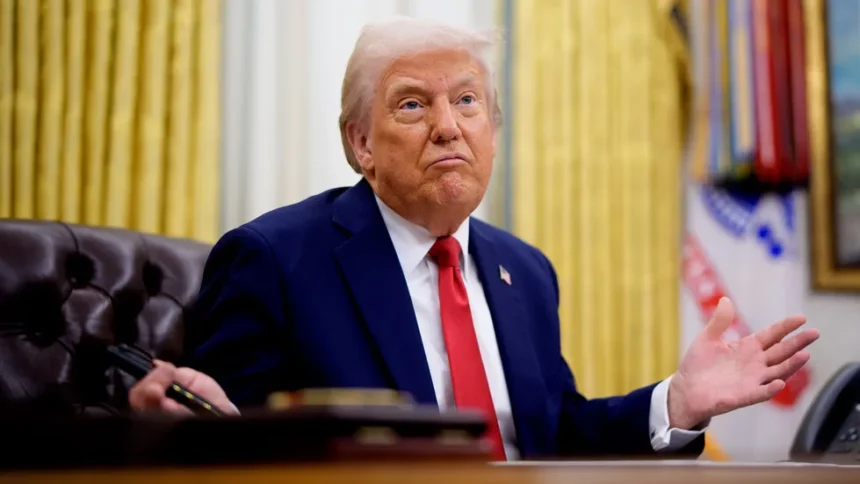
US President Donald Trump describes the recovery of Iran’s highly enriched uranium as primarily a public relations move rather than a critical necessity, amid ongoing negotiations to resolve the Middle East conflict.
Trump Downplays Uranium Urgency
Trump emphasizes that constant surveillance renders the removal non-urgent. In a recent interview, he notes nine cameras monitor the three sites around the clock. “We have nine cameras on that site, on those three sites, 24 hours a day. We know exactly what’s happening. Nobody’s even gotten close to it,” Trump states. “I think it’s more for public relations than it is for anything else. The other thing we could do is bomb it again, just make it absolute. But I just, I would just feel better getting it.”
Following last year’s US-Israeli airstrikes, which Trump claims destroyed Iran’s nuclear facilities, approximately 400 kg of uranium enriched to 60% purity—close to weapons-grade—remains buried under debris.
Stalemate in Peace Negotiations
Talks for a comprehensive peace agreement stall over Iran’s nuclear activities. The US and Israel demand zero enrichment and full removal of enriched uranium from Iranian territory. Active hostilities, sparked by late February strikes, halted under a shaky early April ceasefire.
Trump signals waning patience: “I am not going to be much more patient. They should make a deal.”
Positions of Key Players
Israeli Prime Minister Benjamin Netanyahu stresses the material’s removal as essential, stating the conflict cannot conclude while it persists in Iran, deeming it a “terrifically impoant mission.”
Iran maintains its nuclear program serves peaceful ends and rejects zero-enrichment mandates as threats to sovereignty. Tehran proposes downblending the uranium to civilian levels but opposes storage abroad or program dismantlement. Parliamentary spokesman Ebrahim Rezaei warns of potential 90% enrichment—weapons-grade—if fuher attacks occur.
Pre-conflict US intelligence assessments, per former National Counteerrorism Center Director Joe Kent, find no active bomb development by Tehran. IAEA Director General Rafael Grossi confirms the agency detects no structured nuclear weapons program.