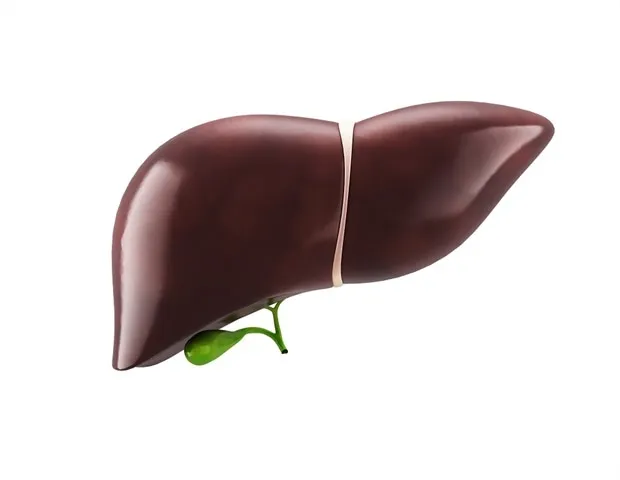
Researchers from the University of Washington School of Medicine and College of Engineering have developed unprecedented 3D reconstructions of human liver tissue at the cellular level. These detailed models capture the spatial microstructure across multiple liver lobes, highlighting the organ’s complex architecture.
Essential Functions of the Healthy Liver
The human liver performs over 500 vital tasks, including detoxifying harmful substances, regulating metabolism, supporting digestion, storing nutrients, producing blood clotting proteins, and bolstering infection resistance.
How Cirrhosis Alters Liver Architecture
Cirrhosis, characterized by extensive liver scarring, disrupts this intricate structure and impairs biological functions. The team’s Liver Map pipeline, detailed in a February 18 Science Advances paper, visualizes these changes and offers potential pathways for improved cirrhosis treatments and liver restoration.
These reconstructions also pave the way for engineering replacement organs through bioprinting. Kelly Stevens, a professor of bioengineering at the UW School of Medicine and College of Engineering, emphasizes the need for precise cellular blueprints.
“Our field has skimmed over a fact that could prevent this dream from becoming reality: We don’t know what complex organs look like at a cellular level,” Stevens stated. “We don’t yet have the ‘blueprints’ of human organs to feed into bioprinters. This oversight is important because decades of studies have shown that the structure of human organs, particularly the organ-specific topology of its vasculature, is intimately connected to organ function.”
She added, “If the maps aren’t right, the organs produced will not be functional.”
Advanced Imaging Techniques Drive Discovery
Leveraging innovations in optics, imaging, computational analysis, and chemistry, the team transcends traditional 2D microscopy. “Scientists are now equipped with an enhanced imaging toolkit that is better at elucidating tissue structure and its disease-associated alterations,” the study notes.
Research Team and Methodology
Lead researchers Wesley B. Fabyan, Chelsea L. Fortin, and Dorice L. Goune from the Department of Bioengineering and UW Medicine Institute for Stem Cell and Regenerative Medicine spearheaded the effort. Senior authors include Stevens, Rotonya M. Carr, professor of medicine and head of the Division of Gastroenterology, and Raymond S. W. Yeung, professor of surgery.
Tissue samples came from patients undergoing liver cancer surgery or transplants, with consent for research use. Some specimens exhibited cirrhosis from causes like viral infections, metabolic disorders, medications, or alcohol abuse.
Key Observations in Cirrhotic Livers
The 3D models reveal cirrhosis-induced changes, such as disrupted metabolite transport in sinusoidal zones, reduced specialized cells for ammonia detoxification, regressed central vein networks, altered artery systems, and fragmented bile transport ducts. These shifts indicate a broader reconfiguration of the liver’s vascular and biliary networks.
Current Limitations and Future Potential
While groundbreaking, the technology cannot yet image the full depth of liver lobules. Advancements in the Liver Map pipeline promise to overcome this hurdle, enabling comprehensive organ mapping for bioprinting and regenerative therapies.
DOI: 10.1126/sciadv.adz2299