[ad_1]
By SAMY MAGDY, MICHELLE L. PRICE and AAMER MADHANI
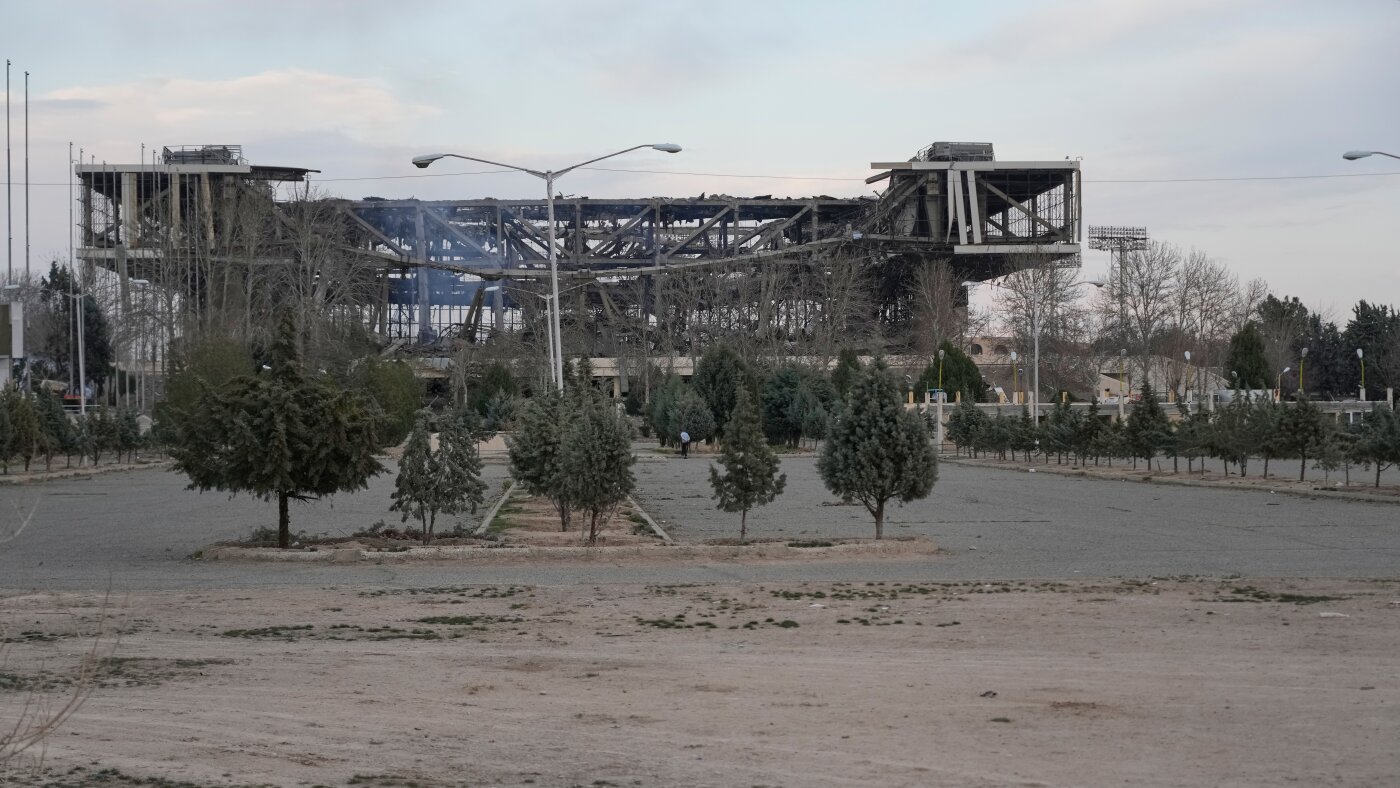
CAIRO (AP) — The Trump administration is confronting mounting discontent from allies within the Persian Gulf who’ve complained they weren’t given ample time to arrange for the torrent of Iranian drones and missiles bombarding their international locations in retaliation for strikes launched by the U.S. and Israel.
Officers from two Gulf international locations mentioned their governments have been dissatisfied in the best way the U.S. has dealt with the warfare, significantly the preliminary assault on Iran on Feb. 28. They mentioned their international locations weren’t given advance discover of the U.S.-Israeli assault and complained the U.S. had ignored their warnings that the warfare would have devastating penalties for your entire area.
One of many officers mentioned that Gulf international locations have been pissed off and even indignant that the U.S. army has not defended them sufficient. He mentioned there’s perception within the area that the operation has targeted on defending Israel and American troops, whereas leaving Gulf international locations to guard themselves, and mentioned that his nation’s inventory of interceptors was “quickly depleting.”
Like others on this story, the Gulf officers spoke on the situation of anonymity as a result of they have been discussing a confidential diplomatic matter.
The governments of Bahrain, Kuwait, Oman, Qatar, Saudi Arabia and the United Arab Emirates didn’t reply to requests for remark.
White Home spokeswoman Anna Kelly mentioned in response: “Iran’s retaliatory ballistic missile assaults have decreased by 90% as a result of Operation Epic Fury is crushing their means to shoot these weapons or produce extra. President Trump is in shut contact with all of our regional companions, and the terrorist Iranian regime’s assaults on its neighbors show how crucial it was that President Trump remove this risk to our nation and our allies.”
The Pentagon didn’t reply.
Official reactions by the Gulf Arab international locations have been muted, however public figures with shut ties to their governments have been overtly important of the U.S., suggesting that Israeli Prime Minister Benjamin Netanyahu dragged President Donald Trump right into a unnecessary warfare.
“That is Netanyahu’s warfare,” Prince Turki al-Faisal, the previous Saudi intelligence chief, advised CNN on Wednesday. “He someway satisfied the president (Trump) to assist his views.”
Pentagon officers conceded this week in closed-door briefings with lawmakers they’re struggling to cease waves of drones launched by Iran, leaving some U.S. targets within the Gulf area, together with troops, susceptible.
The Gulf international locations have emerged as beneficial targets for Iran, effectively inside the vary of Iran’s short-range missiles and stuffed with targets, together with American troops, high-profile enterprise and vacationer areas and power amenities, disrupting the world’s stream of oil.
Because the begin of the warfare, Iran has fired no less than 380 missiles and over 1,480 drones concentrating on the 5 Arab Gulf international locations, in line with an AP tally based mostly on official statements. At the very least 13 individuals have been killed in these international locations, in line with native officers.
As well as, six U.S. troopers have been killed in Kuwait on Sunday when an Iranian drone strike hit an operations heart in a civilian port, greater than 10 miles from the primary Military base. The husband of one of many slain troopers, who was a part of a provide and logistics unit based mostly in Iowa, mentioned the operations heart was a delivery container-style constructing and had no defenses.
In briefings for members of Congress on Tuesday, U.S. Protection Secretary Pete Hegseth and Gen. Dan Caine, chairman of the Joint Chiefs of Workers, advised lawmakers that the U.S. won’t be able to intercept lots of the incoming UAVs, particularly the Shaheds, in line with three individuals accustomed to the briefings.

In one of many briefings, Caine and Hegseth didn’t provide any particulars when pressed by lawmakers why the U.S. didn’t appear ready for Iran to launch waves of drones at U.S. targets within the area, in line with one of many individuals.
That particular person, a U.S. official who’s accustomed to the U.S. safety posture in Gulf area, mentioned that the U.S. didn’t have widespread capabilities all through the Gulf area to successfully counter waves of the one-way drones coming to locations outdoors standard targets or bases outdoors of Iraq and Syria.
Drone assaults this week on the embassy in Saudi Arabia precipitated a restricted hearth on the embassy in Riyadh, and one other drone assault the United Arab Emirates sparked a small hearth outdoors the U.S. consulate in Dubai.
The U.S. and its allies within the Center East on Thursday even sought assist from Ukraine, which has experience in countering Iran’s Shahed drones, in line with Ukrainian President Volodymyr Zelenskyy. When requested about Zelenskyy’s feedback, Trump advised Reuters on Thursday, “Definitely, I’ll take, you recognize, any help from any nation.”
Bader Mousa Al-Saif, a Kuwait-based analyst with Chatham Home, mentioned the U.S. appeared to have underestimated the danger to its Gulf Arab allies, believing American troops and Israel could be the first targets of Iranian retaliation.
“I don’t suppose they noticed that there could be as a lot publicity to the Gulf,” he mentioned, saying the dearth of a plan to guard the Gulf international locations “speaks to U.S. short-sightedness.”
The frustration in a number of the Gulf nations is pushed partly by the relative success that Israel has had pulling down drones and missiles in comparison with a few of their neighbors, in line with an individual accustomed to the delicate diplomatic matter who was not approved to remark publicly.
Their air protection methods are hardly as sturdy as Israel’s, however in line with the particular person, U.S. officers have been considerably perplexed that the Gulf international locations are nonetheless not exhibiting an urge for food for delivering a counteroffensive by launching missiles at Iranian targets.
Elliott Abrams, who served as a particular consultant for Iran and Venezuela on the finish of Trump’s first time period, mentioned that U.S. nationwide safety officers and their Gulf allies have been conscious that Iran had the aptitude to hold out important strikes.
“And the neighbors knew it and have been afraid of it. Nevertheless it was by no means clear that Iran would truly do it, as a result of they’ve loads to lose,” Abrams mentioned. “These assaults will depart long-term enmity, and in the event that they sustain, the Gulf Arabs might begin attacking Iran.”
Michael Ratney, a former U.S. ambassador to Saudi Arabia, mentioned that whereas the Gulf international locations have an curiosity in seeing Iran weakened, additionally they have key considerations in regards to the ongoing warfare — together with the financial injury and instability it’s inflicting and its open-ended nature.
Ratney, who’s now a senior adviser within the Center East program of the Heart for Strategic and Worldwide Research, mentioned: “What comes subsequent? The international locations of the Gulf must bear the brunt of no matter that’s.”
Value and Madhani reported from Washington. AP reporters Seung Min Kim, Konstantin Toropin, Ben Finley and Matt Lee in Washington, Danica Kirka and Susie Blann in London and Josef Federman in Jerusalem contributed to this report.
[ad_2]