As the United States marked its 250th anniversary, nationwide celebrations on Saturday were significantly impacted by a potent combination of extreme heat and severe thunderstorms. From New York City to the nation’s capital, planned festivities faced disruptions, with organizers adjusting schedules and some events canceled altogether. Despite the weather challenges, Americans across the country found ways to commemorate the milestone, reflecting on the nation’s history and its journey to superpower status.
East Coast Weather Disrupts Major Events
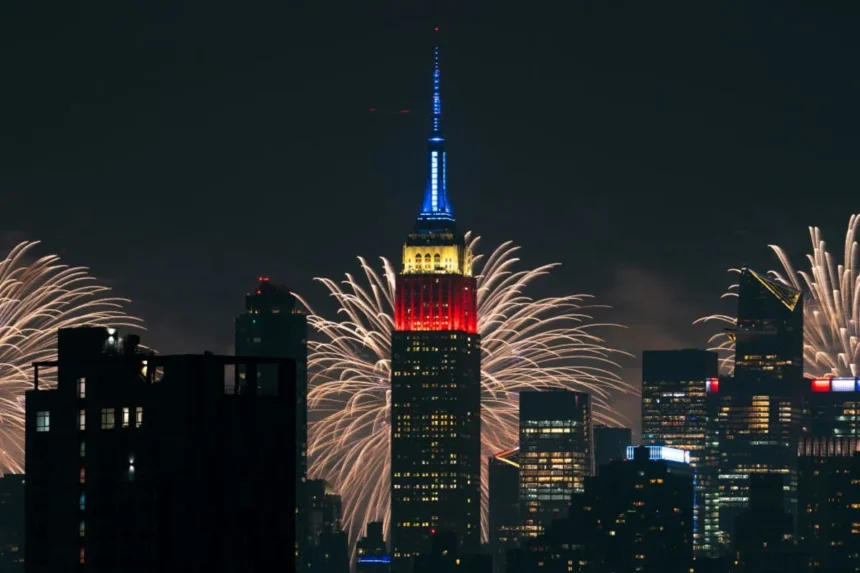
In New York City, the iconic Macy’s Fourth of July fireworks display, a highlight of the nation’s 250th birthday, was rescheduled to an earlier time to avoid anticipated severe thunderstorms. The storms, which swept across the East Coast, arrived amid a widespread heatwave that had already been affecting the region for days. Temperatures approached or exceeded 100 degrees Fahrenheit in many areas, adding another layer of difficulty to outdoor celebrations.
Similarly, in Washington, D.C., severe weather forced the evacuation of the National Mall in the early evening. President Donald Trump, whose address to the nation was originally slated for around 10 p.m., indicated his intention to proceed with the speech once the inclement weather passed. He remarked on social media that storms bring “good luck” and that he was unfazed by a potentially late-night or early-morning delivery of his remarks.
The Independence Day parade in Washington, D.C., scheduled for Saturday, was canceled due to the conditions. However, a smaller parade did take place in the Capitol Hill neighborhood in the morning, with attendees seeking shade from the intense sun. In a separate event, members of the white nationalist group Patriot Front conducted a march in the area, reportedly wearing face masks and carrying Confederate battle flags. Authorities reported no arrests related to this march.
Heatwave Adds Challenge to Celebrations
The intense heatwave was a defining feature of the holiday weekend across much of the country. The heat made outdoor activities uncomfortable and posed health risks, leading to the cancellation of some planned events. Despite these challenges, many communities persevered with their celebrations.
Chicago’s Navy Pier featured planned fireworks displays, and New York City marked the holiday with a midnight ball drop, reminiscent of New Year’s Eve festivities. A parade of tall ships sailed past the Statue of Liberty, evoking imagery from the nation’s bicentennial celebration in 1976.
The annual Nathan’s Famous Fourth of July hot dog eating contest on Coney Island, New York, proceeded despite the heat. Joey Chestnut secured his 18th victory in 21 appearances, consuming 66 hot dogs and buns. On the women’s side, Miki Sudo defended her title by eating 38.75 hot dogs. Both champions acknowledged that the extreme heat made the competition more arduous.
Reflections on a Complicated History
The 250th anniversary provided an occasion for Americans to reflect on their nation’s complex history, from its origins as colonies to its rise as a global superpower. This milestone holiday, anticipated for months, served as a moment for contemplation amidst contemporary societal divisions.
The celebrations unfolded against a backdrop of significant political and cultural polarization. Discussions surrounding the nation’s future, its global role, and internal challenges were voiced by various public figures.
Former Democratic President Bill Clinton, in a statement, noted that the anniversary arrived at a time of “renewed questions about America’s future and role in the world, and serious threats to our own institutions and to our democracy itself.” He expressed optimism, stating, “there is still nothing wrong with America that cannot be cured by what’s right with America.”
Vice President JD Vance commented on the occasion, suggesting that some voices might focus on the nation’s imperfections rather than its achievements. Speaking aboard the USS Kearsarge, he anticipated that “small but loud voices would speak on America’s birthday about its imperfections instead of its greatness,” adding that some would contend “that America is just another country, where the weak struggle against the strong.”
Earlier, on Friday, President Trump, speaking at Mount Rushmore, characterized communism as a “mortal threat to American liberty,” deeming it more dangerous than World War II or the 9/11 attacks. In a speech on Friday, New York City Mayor Zohran Mamdani, without directly naming Trump, appeared to allude to such rhetoric, emphasizing that the nation’s founding ideals are resilient enough to withstand authoritarianism if actively embraced.
Technological Touches and International Connections
Even amidst the weather disruptions, modern technology played a role in the celebrations. Before a World Cup match in Houston, a message from astronauts aboard the International Space Station acknowledging the holiday was broadcast into the stadium, connecting terrestrial celebrations with those in orbit.
The anniversary celebrations, while marked by weather-related challenges and ongoing societal discussions, underscored the enduring spirit of American commemoration and reflection.