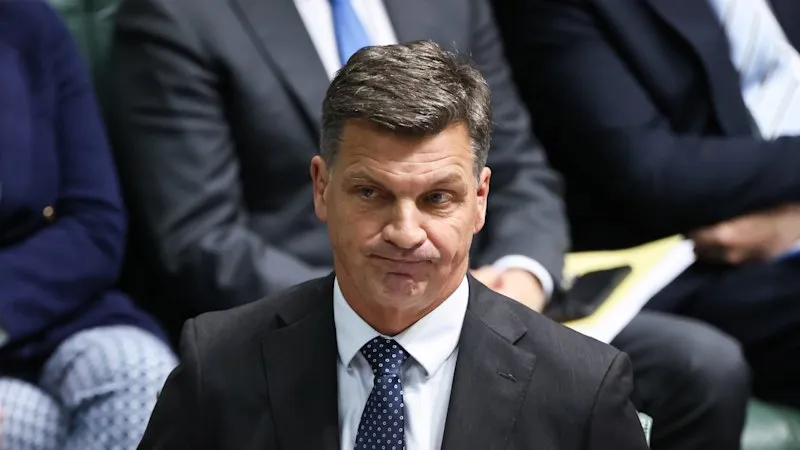
Opposition Leader Angus Taylor has voiced strong criticism against Cricket Australia, labeling their decision regarding the national anthem on Australia Day as “tone deaf” and indicative of “woke moralising.” The controversy stems from Cricket Australia’s announcement that while Big Bash League (BBL) matches will proceed on January 26, the national anthem may not be played, citing sensitivities towards Indigenous Australians. This move has ignited a debate about national identity, historical reflection, and the role of sporting bodies in cultural discourse.
Cricket Australia’s Stance on Australia Day Matches
Cricket Australia has decided to schedule the Big Bash League final for January 26, 2027. This decision marks a shift from recent years, where cricket events were not held on the national day, and the term “Australia Day” was avoided by the governing body since 2021. The decision to play on January 26 was reportedly influenced by the day’s significance as the national day and its proximity to the conclusion of Australia’s Test series in India.
However, the playing of the national anthem is contingent on a request from the host city, determined by which teams reach the final. This conditional approach has drawn particular ire from critics like Angus Taylor.
Angus Taylor’s Accusations of “Woke Moralising”
Angus Taylor took to social media to express his dismay, stating, “Cricket Australia’s decision not to play our national anthem is yet more tone-deaf woke moralising.” He argued that while acknowledging past imperfections, Australia’s achievements significantly overshadow its wrongdoings and that the nation is worthy of celebration. Taylor asserted that Cricket Australia should resist pressure from activists seeking to instill guilt about the past and instead “proudly play our national anthem at the Big Bash final.” He believes this stance would better reflect the views of the majority of Australians and cricket fans who are proud of their country and grateful for their Australian identity.
Taylor’s intervention comes amid broader political maneuvering, as his party seeks to regain traction. His critique of Cricket Australia’s decision aligns with a broader pattern of his engagement with cultural conservative issues. He has previously voiced concerns about the frequency of Welcome to Country ceremonies and acknowledgements of country, advocated for changes to gender identity laws, and adopted a firm stance on migration.
Broader Context: Indigenous Perspectives and National Identity
The debate surrounding Australia Day and its associated traditions is complex and deeply rooted in the nation’s history. Indigenous Australians often view January 26 as a date marking invasion and dispossession, leading to calls for the date to be changed or for the day to be observed with greater reflection and acknowledgment of this perspective.
Jason Gillespie, a prominent Indigenous cricketer, has publicly supported changing the national day from January 26, the anniversary of the First Fleet’s arrival in 1788.
Alistair Dobson, the executive of the Big Bash League, acknowledged the diverse meanings of January 26 for different Australians. He stated that the organisation would collaborate with the home club and a First Nations advisory group to ensure appropriate recognition for everyone on the day. “We have to ensure we build an appropriate recognition for everyone on the day,” Dobson remarked.
Former Indigenous Labor Senator Nova Peris has also weighed in, suggesting a path for coexistence. She proposed that the Australian, Aboriginal, and Torres Strait Islander flags could fly together, followed by a minute’s silence to honor the fallen, before proceeding to sing the national anthem. Peris described the anthem’s lyrics as beautiful and highlighted the nation’s current identity crisis, emphasizing the need for coexistence. “The anthem’s words are beautiful… Our nation is facing an identity crisis. We have to co-exist,” she told News Corp.
Internal Party Reforms and Gender Quotas
Taylor’s critique of Cricket Australia unfolds against a backdrop of internal challenges within his own political party. The Liberal Party recently released a discussion paper exploring reform options to revitalize the organization. The paper, led by Senator James McGrath, painted a stark picture of the party’s current state, noting that over 55% of its declining membership is over 60 years old, with approximately 70% of members aged 16-30 being male.
The discussion paper presented various reform proposals, including open primaries, community preselection, weighted voting for female candidates, mandatory female preselection candidates, and quotas. It referenced international examples, such as Germany’s CDU party, which requires 30% of party positions to be held by women by 2025, and noted that the Australian Labor Party (ALP) had 53% female federal MPs after the 2022 election. While the paper did not advocate for or against gender quotas, it raised the potential benefits of such policies in improving gender balance over time, while also acknowledging the common concern that quotas might undermine merit-based selections.
Historically, Taylor has expressed opposition to gender quotas. Consequently, the party is more likely to pursue less interventionist strategies to increase female representation. Despite preselecting several women in key seats during the last election, these candidates ultimately lost to Labor or teal independents.
Conclusion
The debate initiated by Angus Taylor’s comments on Cricket Australia’s Australia Day anthem policy highlights the ongoing tension between celebrating national identity and acknowledging historical injustices. As sporting bodies navigate these sensitive issues, their decisions often become focal points for broader societal discussions. Simultaneously, political parties are grappling with their own internal challenges, including strategies to enhance representation and appeal to a wider demographic, underscoring a period of significant introspection and debate across various sectors of Australian society.