The Bank of England has issued a stark warning regarding the escalating risk of higher inflation, directly attributing the concern to a significant surge in global oil prices. This inflationary pressure is being exacerbated by geopolitical tensions, particularly the ongoing conflict between the United States and Iran, alongside Ukrainian attacks on Russian energy infrastructure.
Geopolitical Shocks Fueling Oil Price Hikes
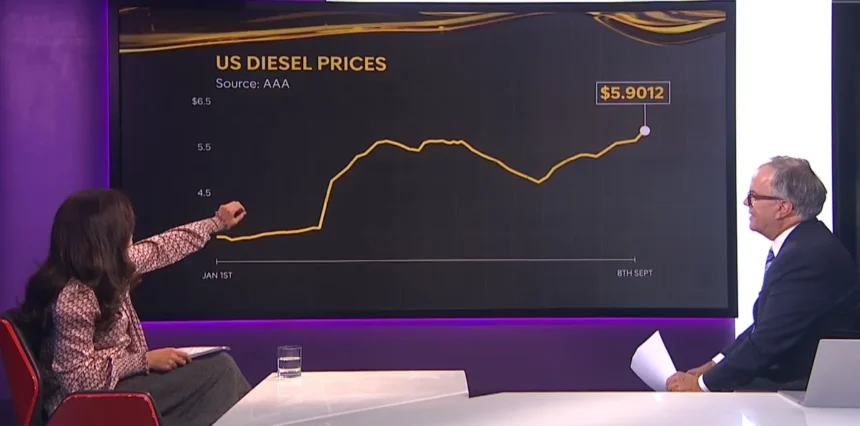
Global oil markets are experiencing considerable volatility, with crude oil prices approaching the critical threshold of $100 per barrel. This upward trend is largely a consequence of heightened geopolitical instability in the Middle East. The conflict involving the US and Iran has introduced significant uncertainty into oil supply chains, prompting traders to factor in potential disruptions and price premiums.
Simultaneously, a separate but equally impactful development is occurring in Eastern Europe. Ukrainian strikes targeting Russian oil facilities have had a dual effect: they have diminished the Kremlin’s oil revenues while simultaneously crippling Russia’s domestic oil refining capacity. Reports indicate that Russia’s refining output has fallen to its lowest point in two decades, further constricting global supply and contributing to the price escalation.
The Inflationary Ripple Effect
The Bank of England’s concern stems from the well-established link between energy costs and broader inflation. When the price of oil rises substantially, it has a cascading effect across the economy. Transportation costs increase for businesses and consumers alike, impacting everything from the price of goods delivered to store shelves to the daily commute.
Key areas susceptible to inflation from rising oil prices include:
- Transportation: Higher fuel costs directly impact airlines, shipping companies, trucking firms, and individual vehicle owners.
- Manufacturing: Many industrial processes rely on energy derived from oil, leading to increased production costs.
- Agriculture: The cost of fuel for farm machinery and the production of fertilizers (often derived from natural gas, which is correlated with oil prices) can rise, affecting food prices.
- Consumer Goods: Increased costs throughout the supply chain are often passed on to consumers in the form of higher prices for a wide range of products.
Central banks like the Bank of England monitor inflation closely, as sustained high inflation can erode purchasing power, destabilize economic growth, and create uncertainty for businesses making investment decisions.
Russia’s Refining Woes and Global Supply Constraints
The impact of Ukrainian attacks on Russian oil refineries is particularly significant. Russia is a major global energy producer, and disruptions to its refining capacity mean less refined petroleum products, such as gasoline and diesel, are available on the international market. This reduction in supply, coupled with strong global demand, naturally pushes prices higher.
The Kremlin’s reduced oil revenues also have broader economic and geopolitical implications, potentially affecting Russia’s ability to fund its military operations and manage its domestic economy. However, from a global market perspective, the immediate concern is the tightening supply of refined fuels.
Central Bank Response and Economic Outlook
The Bank of England’s warning signals that policymakers are increasingly vigilant about the potential for inflation to become more entrenched. In response to rising inflation, central banks typically consider tightening monetary policy, which could involve raising interest rates. Higher interest rates make borrowing more expensive, aiming to cool down demand in the economy and thereby reduce inflationary pressures.
However, raising interest rates too aggressively can also stifle economic growth. This presents a delicate balancing act for policymakers: controlling inflation without triggering a recession. The current situation, driven by supply-side shocks from geopolitical events rather than overheating demand, makes the challenge even more complex.
The duration and severity of the conflicts in the Middle East and Eastern Europe will be critical factors in determining the future trajectory of oil prices and, consequently, inflation. Any further escalation or prolonged instability could lead to sustained higher energy costs, posing a significant challenge to economic stability worldwide.
Navigating Economic Uncertainty
As the global economy grapples with these intertwined challenges, businesses and consumers face a period of heightened uncertainty. The prospect of oil prices remaining elevated, coupled with the potential for further interest rate hikes, necessitates careful financial planning and strategic decision-making. The Bank of England’s alert underscores the vulnerability of the global economy to geopolitical shocks and the persistent threat of inflation in an increasingly interconnected world.