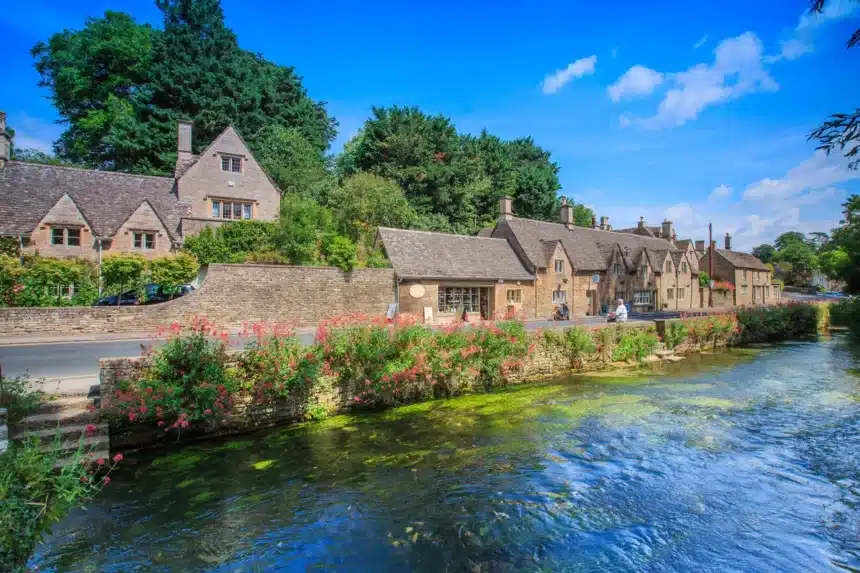
Bibury, a picturesque village nestled in the Cotswolds, has been recognized as the best village in the world by Forbes and the Unforgettable Travel Company. This charming Gloucestershire parish, situated along the River Coln, is renowned for its quintessential English charm, featuring moss-covered cottages and ancient woodlands that draw visitors seeking a storybook escape.
Bibury’s Rise to Global Acclaim
The accolade places Bibury above other notable international destinations, including Hallstatt in Austria, a UNESCO World Heritage site famed for its 16th-century Alpine houses, and Reine in Norway, known for its vibrant red fishermen’s cabins set against a dramatic Arctic fjord. This latest recognition builds on Bibury’s established reputation; the celebrated 19th-century textile designer, artist, and poet William Morris once described it as ‘the most beautiful village in England’.
The Cotswolds region, as a whole, has seen a surge in popularity, often depicted on platforms like TikTok as an idyllic, storybook landscape. Bibury stands out as a prime example of this enchanting appeal.
Arlington Row: The Jewel in Bibury’s Crown
Central to Bibury’s acclaim is Arlington Row, a Grade I-listed collection of 17th-century weavers’ cottages. Originally constructed in 1380 as a monastic wool store, these honey-coloured limestone cottages were later converted for textile production. The cloth manufactured here was historically sent to the nearby Arlington Mill, across the Rack Isle, a protected water meadow that adds to the village’s scenic beauty.
Today, Arlington Row is one of the most photographed scenes in the Cotswolds. The row comprises a mix of private residences and National Trust-owned holiday lets. Its picturesque setting also gained cinematic recognition, serving as a filming location for the 2007 romantic fantasy film ‘Stardust’.
Respecting Private Property and Local Concerns
While Bibury’s cottages are undeniably attractive, adorned with hanging baskets and climbing greenery, visitors are reminded that they are private homes. Residents kindly request that tourists refrain from knocking on doors or peering into windows. To manage visitor impact, vehicle access for non-residents is restricted.
The village has taken steps to prevent issues seen in the past, such as the 2017 incident where a car parked on Arlington Row was vandalized by tourists who felt it disrupted their photographs. This underscores a broader concern about the pressures of ‘fast tourism’ or ‘hit and