




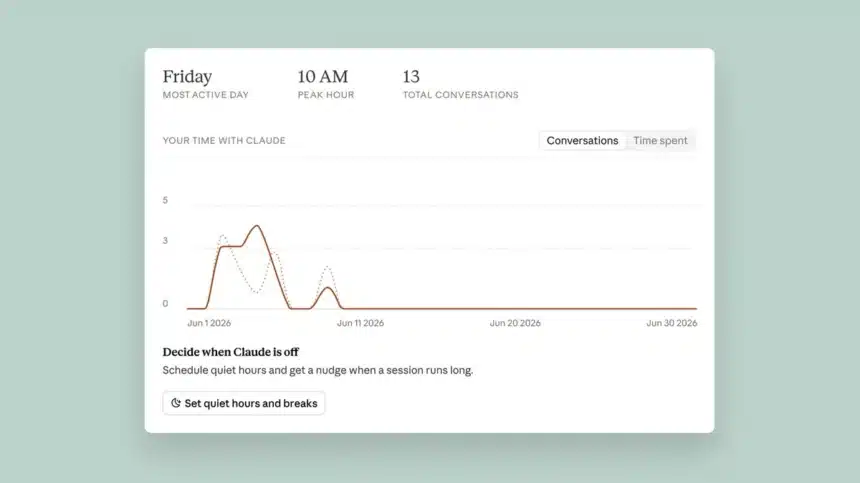
In an effort to foster a healthier relationship between users and artificial intelligence, AI developer Anthropic has introduced a new feature called Reflect. This dashboard, integrated into Claude’s settings, aims to provide users with insights into their interaction patterns and offer tools to manage their AI usage effectively. Drawing inspiration from popular digital well-being tools like Spotify Wrapped and Apple’s Screen Time, Reflect is designed to help individuals become more mindful of the time they spend engaging with the Claude chatbot.
Understanding the Reflect Dashboard
The Reflect dashboard serves as a personal analytics tool for Claude users. It provides a summary of interaction history, allowing individuals to gauge their engagement levels. To access this feature, users can navigate to the Claude website (claude.ai), click on their profile information, select ‘Settings,’ and then choose ‘Reflect.’ Upon accessing the dashboard, Claude generates a report summarizing recent usage. While the default view covers the past month, users have the option to extend this analysis to three, six, or twelve-month periods by adjusting a toggle at the top of the report.
It’s important to note that as of the current implementation, the Reflect dashboard does not display the exact duration of time spent using Claude. This functionality is listed as ‘coming soon.’ According to Ryn Linthicum, Anthropic’s head of well-being policy, the absence of precise time-tracking was due to the company not having an established internal system for this metric when development began. Despite this limitation, the dashboard offers valuable features for managing AI interaction.
Setting Break Reminders and Quiet Hours
Reflect provides two primary mechanisms for users to control their Claude usage: break reminders and quiet hours. Break reminders are designed to prompt users to step away from the chatbot after a predetermined period of engagement. Users can customize the frequency of these nudges, choosing intervals of 15, 30, or 45 minutes, or even longer periods like a few hours. These reminders appear as gentle notifications, encouraging users to take a pause.
Complementing break reminders are quiet hours. This feature allows users to designate specific times of the day when they wish to avoid using Claude altogether. The quiet hours can be set independently for each day of the week, offering flexibility to accommodate different schedules and routines. For instance, a user might choose to block Claude usage from 5 PM to 8 PM on weekdays while setting different restrictions for weekend afternoons.
While these tools are designed to promote mindful usage, their effectiveness ultimately relies on the user’s commitment. Claude’s nudges and reminders can be dismissed, meaning that adherence to the set limits is a personal responsibility. Users can adjust their break reminder settings within the ‘Time and focus’ section of the Claude settings menu.
Enhancing AI Fluency and Smart Usage
Beyond usage management, the Reflect dashboard also includes an ‘AI fluency’ section. This area offers personalized recommendations aimed at optimizing the way users interact with Claude. For example, if the system detects that a user frequently reiterates the same context or background information when formulating prompts, it might suggest utilizing Claude’s ‘Projects’ feature. This feature allows users to group related prompts and maintain context more efficiently, thereby reducing the need for repetitive explanations.
These AI fluency suggestions are intended to help users engage with the chatbot more intelligently and effectively. By streamlining prompt formulation and context management, users can potentially achieve their goals with Claude more quickly and with less effort. Testing of this feature has indicated its potential to foster smarter AI interaction, making it a valuable component of the Reflect dashboard for those looking to maximize their productivity and minimize wasted time.
The Importance of Digital Well-being with AI
The introduction of the Reflect dashboard by Anthropic underscores a growing awareness within the AI industry regarding the potential impact of advanced technology on user well-being. As AI tools become more sophisticated and integrated into daily life, the need for mechanisms that promote balanced usage becomes increasingly critical. Features like break reminders and quiet hours are not merely about limiting screen time; they are about cultivating a conscious and intentional relationship with powerful digital tools.
The analogy to tools like Spotify Wrapped and Apple’s Screen Time highlights a broader societal conversation about digital consumption. Just as these platforms offer insights into media habits, Reflect aims to shed light on AI interaction patterns. This self-awareness is the first step toward making informed choices about how and when to engage with AI, ensuring that it remains a beneficial assistant rather than a source of distraction or over-reliance.
By providing these analytical and control features, Anthropic is empowering users to take ownership of their AI experience. The goal is not to discourage the use of Claude, but rather to encourage its use in a way that is sustainable and supportive of the user’s overall well-being and productivity. The ongoing development, particularly the upcoming ‘time spent’ metric, suggests a continued commitment to refining these tools for optimal user benefit.
Conclusion: Towards Mindful AI Engagement
The Reflect dashboard represents a proactive approach by Anthropic to address the potential downsides of extensive AI use. By offering insights into usage patterns and providing customizable tools for setting boundaries, the dashboard empowers users to manage their interactions with Claude more effectively. The integration of break reminders, quiet hours, and AI fluency recommendations collectively aims to foster a more balanced and productive relationship with artificial intelligence. As users explore these features, they can gain a better understanding of their own digital habits and make conscious decisions to ensure that AI tools like Claude enhance, rather than detract from, their daily lives.










.jpg "DoorDash Reservations Scored America’s Most Unique Eating places")

