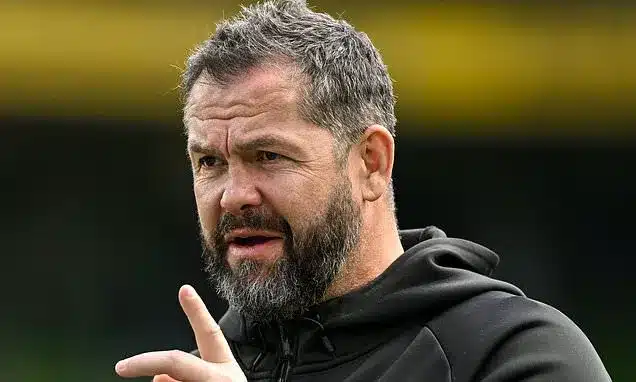
Head coach Andy Farrell faces a critical juncture as Ireland prepares for its upcoming Nations Championship campaign, marking only his third overseas tour in nearly seven years at the helm. This period has been characterized by unique circumstances, including the COVID-19 pandemic disrupting planned tours to Fiji and Australia, a Rugby World Cup, and a British & Irish Lions series where Farrell took a sabbatical to lead the Lions to a series victory in Australia. Meanwhile, Paul O’Connell guided an experimental squad against Georgia and Portugal, matches that offered limited insight due to the caliber of opposition.
Testing the Waters Abroad
This summer’s tour, featuring matches against Australia, Japan, and New Zealand, presents a significant opportunity for Farrell to gain valuable insights. The tour kicks off with a challenging encounter against Australia in Sydney on July 4th. Joe Schmidt, soon to hand over the reins of the Wallabies to Les Kiss, is expected to leave no stone unturned in his tactical preparations against Ireland, a team that significantly contributed to the Lions squad.
Following this, Ireland will face Japan, coached by Eddie Jones, in Newcastle, New South Wales. Jones has already voiced his perspective on the scheduling, suggesting that Ireland’s influence in World Rugby led to their ‘home’ fixture being played in Australia rather than Tokyo. He commented, “Ireland have all the power at World Rugby… So we have to play our home game, that should be in Tokyo, in Australia to make sure Ireland don’t have to travel too much – let’s be frank about it. We have to just suck it up and that’s what happens when you’re not a major political power at the table.”
The tour culminates in a highly anticipated match against the All Blacks at Eden Park on July 18th. This iconic venue has been a formidable fortress for New Zealand, with their last international defeat there occurring in 1994. Under new coach Dave Rennie, the All Blacks will be eager to make a statement, particularly after their 2-1 home series loss to Ireland in 2022, a result considered a low point in New Zealand rugby.
Striking a Crucial Balance
Farrell will aim to balance the immediate need for results with long-term squad development. The recent Six Nations success, where Ireland finished strongly after a shaky start in Paris, provides positive momentum. A victory against the All Blacks on their home turf would be a landmark achievement and a significant statement of Ireland’s growing prowess. The dynamic of the fixture has undoubtedly shifted; once dominated by New Zealand, it has evolved into a genuine rivalry since Ireland’s historic win in Chicago in 2016.
However, recent history shows New Zealand on a three-game winning streak against Farrell’s side, dating back to the 2023 World Cup quarter-final defeat. The upcoming tour in Auckland offers a chance to break this sequence. Beyond immediate results, this tour is integral to the strategic planning for the 2027 Rugby World Cup. With limited guaranteed fixtures remaining, Farrell must utilize this opportunity to assess and develop the depth of the squad.
The current season has already seen Farrell demonstrate a willingness to blood new talent. Injuries during the Six Nations provided opportunities for players like Cian Prendergast and Cormac Izuchukwu, who made their championship debuts. Tom O’Toole was notably selected at loose-head prop, while Rob Baloucoune impressed on the wing. Stuart McCloskey solidified his position at inside centre, and Jamie Osborne performed well at full-back. Nick Timoney had a strong Six Nations, and Edwin Edogbo, Nathan Doak, and Darragh Murray earned their first international caps.
Potential Squad Decisions and Emerging Talent
As Farrell prepares to announce a squad of approximately 37 players, selection decisions will be critical. Injuries could influence choices, with Jack Crowley’s availability uncertain due to a persistent leg issue. Farrell may opt for caution, allowing Crowley and other key veterans like Tadhg Furlong, Tadhg Beirne, Jack Conan, and Bundee Aki to rest and recharge for future campaigns. These experienced players, all over 33, have endured demanding seasons, and a break could ensure they are in peak condition for 2027.
The absence of Mack Hansen and James Lowe, due to surgery and a move to Japan respectively, further opens doors for emerging talent. Young Connacht front-rowers Billy Bohan and Sam Illo have shown promise and could be rewarded with tour call-ups. Locks Edwin Edogbo, Darragh Murray, and Cormac Izuchukwu represent exciting prospects for the second row. With Conan and Beirne potentially unavailable, the back row could see opportunities for Ulster’s Bryn Ward, Connacht’s Sean Jansen, and Munster’s Brian Gleeson. These uncapped back-row forwards are noted for their power and dynamic style, qualities that align with Farrell’s vision.
Further potential additions include Ulster’s Jude Postlethwaite and Zac Ward, who offer game-breaking abilities in the midfield and back three. Farrell’s recent selections have shown boldness, and this approach is anticipated to continue as he looks to build for the future and address Ireland’s long-standing World Cup challenges.