Greenlandic authorities have mandated a significant delay for a U.S. oil company’s planned drilling operations in the Arctic territory, effectively halting immediate extraction efforts. This decision contradicts earlier assertions from a U.S. presidential envoy who suggested American companies could begin crude oil extraction by the following year. The situation has been marked by rising tensions, particularly after the oil firm transported drilling equipment to Greenland’s eastern coast in July without securing prior government authorization, prompting a stern warning from the authorities.
Regulatory Hurdles Delay Arctic Drilling
Just days before Greenland Energy intended to commence drilling its initial wells, the government announced that the essential regulatory procedures could not be finalized, and consequently, the necessary approvals could not be obtained in time for the planned start. Government statements indicated that during discussions, Greenlandic officials voiced concerns regarding the compressed timeline, which they deemed insufficient for a thorough assessment of potential environmental and social impacts.
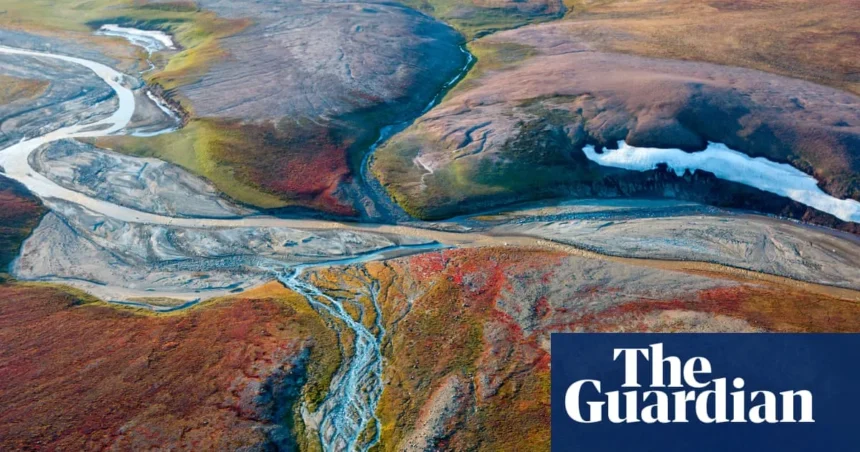
The authorities are now tasked with evaluating whether to permit drilling activities in a protected wetland area. This sensitive ecosystem is a critical habitat for rare bird species and supports the muskoxen population, which is vital for the sustenance of local hunting communities. The earliest possible commencement for drilling operations is now projected for the winter of 2027, according to joint statements from the government and the company.
Contrasting Timelines and Political Connections
This revised timeline stands in stark contrast to predictions made as recently as May by Jeff Landry, the governor of Louisiana and a figure appointed by President Trump as his envoy to Greenland. Following a visit, Landry had suggested that oil reserves beneath Greenland could help alleviate the energy crisis, which he linked to geopolitical events. He stated that production could potentially begin within approximately ten months. This ambitious schedule, which was always considered optimistic, is now definitively unachievable.
Robert Price, the chief executive of Greenland Energy, who estimates that oil reserves valued at up to $1 trillion may exist beneath the remote Jameson Land region, affirmed the company’s commitment. He stated that Greenland Energy intends to proceed with its oil exploration program responsibly, adhering strictly to Greenland’s regulatory framework and in full cooperation with the local authorities. Price added that the extended timeframe would be utilized to refine operational plans and strengthen relationships with local communities, strategic partners, and relevant governmental bodies.
Background of Acquisition Interest and Market Reaction
The prospect of acquiring Greenland has been a recurring theme during Donald Trump’s presidency. Reports suggest the idea was initially proposed by a wealthy associate during his first term, leading to subsequent threats from Trump to purchase the territory from Denmark, or even to seize it through military action. Shareholders in Greenland Energy had reportedly anticipated a “Trump pump”—a presidential endorsement that could potentially boost the company’s stock value on the New York Stock Exchange. However, the company’s stock experienced a significant decline, falling by over a third following the announcement of the drilling delay.
Previously, Price had indicated that a vessel carrying 300 containers of drilling equipment was scheduled to depart from Canada for Greenland in September, with the initial well sinking planned for the subsequent month. He had also informed a community meeting, reportedly inaccurately, that Greenland had already granted permission for the company to begin landing equipment.
Partner’s Perspective and Licensing History
Greenland Energy’s British partner, 80 Mile, provided an update to its investors, attributing the delay to the necessity of completing the permitting and regulatory approval processes. 80 Mile holds exploration licenses that were granted prior to Greenland’s decision in 2021 to halt the issuance of new licenses, a move prompted by concerns over the climate crisis. Greenland Energy, established just last year, has announced plans to invest $60 million, raised from investors, to fund its drilling operations in exchange for a majority stake in the project.
While representatives from Greenland Energy have stated that their oil venture is unrelated to any U.S. annexation ambitions, the company has established several connections to the former Trump administration. Notably, Phil McGraw, widely known as Dr. Phil, has a collaboration with Greenland Energy to document the company’s exploration efforts for a documentary series. McGraw has previously appeared in the Oval Office and served on a presidential commission during Trump’s term.
Board Memberships and Investments
Further connections include a U.S. Navy veteran, who is involved with a missile defense plan for which Trump has emphasized the strategic importance of Greenland, serving on Greenland Energy’s board of directors. Additionally, Kenneth Griffin, a prominent Wall Street billionaire who contributed significantly to Trump’s second inauguration fund, acquired a 9% stake in Greenland Energy’s shares in April.
Rod McIllree, the head of 80 Mile, expressed disappointment regarding the revised timing of the Jameson drilling program but reiterated the company’s firm commitment to advancing the project, which is considered highly prospective.
Conclusion: A Setback for Arctic Exploration
The decision by Greenlandic authorities represents a significant setback for Greenland Energy’s immediate drilling ambitions and highlights the complex interplay between resource exploration, environmental concerns, and regulatory oversight in sensitive Arctic regions. While the company and its partners remain committed to the project, the extended timeline underscores the rigorous approval processes required, especially in areas with ecological significance. The delay also casts uncertainty on the feasibility of rapid oil extraction in Greenland, tempering expectations set by external political figures.