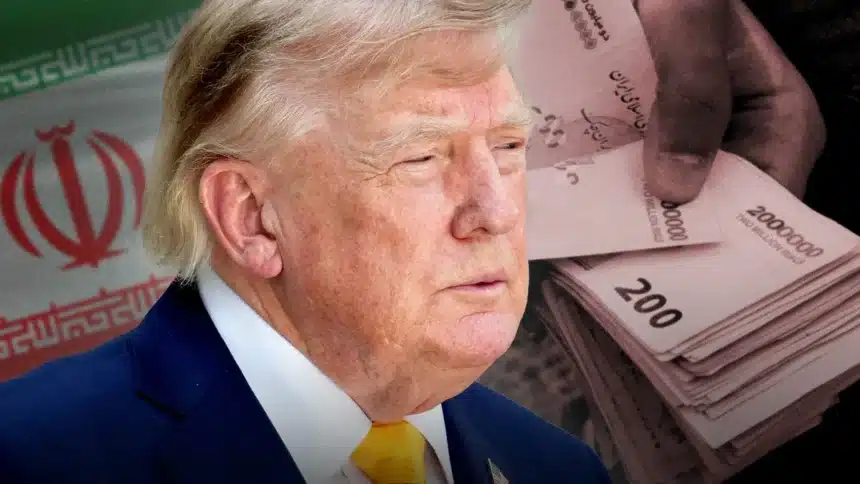
Iran has declared its readiness to withstand further United States sanctions, following President Trump’s recent threats of an “economic onslaught.” The announcement of these new measures has drawn condemnation from China, while Iranian officials assert their preparedness to counter the economic pressure. Meanwhile, diplomatic efforts continue, with Oman’s foreign minister expressing optimism about a potential temporary trade corridor through the Strait of Hormuz.
US Imposes New Sanctions on Iran
The United States has unveiled a new round of sanctions aimed at increasing economic pressure on Iran. These measures are part of a broader strategy by the Trump administration to compel Tehran to alter its regional policies and nuclear program. The specifics of the sanctions have not been fully detailed, but they are expected to target key sectors of the Iranian economy, potentially impacting its oil exports, financial institutions, and access to international markets.
President Trump has previously characterized his approach towards Iran as an “economic onslaught,” signaling a determination to exert maximum pressure. This strategy aims to cripple Iran’s economy, thereby limiting its capacity to fund its military activities and support regional proxies. The administration argues that such stringent measures are necessary to curb Iran’s destabilizing influence in the Middle East and to prevent it from acquiring nuclear weapons.
Iran’s Response: Defiance and Preparedness
In response to the escalating sanctions, Iranian officials have maintained a defiant stance. The government has stated that it is “fully prepared” to counter the new measures, suggesting that contingency plans are in place to mitigate their impact. This preparedness likely involves efforts to bolster domestic production, seek alternative trade partners, and develop financial mechanisms that bypass international banking systems. Tehran has consistently argued that the sanctions are illegal and counterproductive, asserting that they primarily harm the Iranian people.
The Iranian leadership has framed the sanctions as an act of economic warfare, emphasizing national resilience and self-sufficiency. They have also pointed to past instances where Iran has weathered significant economic challenges, suggesting a capacity to adapt and endure. This rhetoric serves to rally domestic support and project an image of strength to both domestic and international audiences.
International Reactions: Condemnation and Cautious Optimism
The imposition of new US sanctions has elicited varied international reactions. China, a significant trading partner for Iran, has condemned the measures, reiterating its opposition to unilateral sanctions that undermine international law and multilateral cooperation. Beijing has consistently advocated for diplomatic solutions and has expressed concerns that the escalating tensions could further destabilize the region.
In contrast, some regional players are pursuing diplomatic avenues to de-escalate the situation. The foreign minister of Oman, which maintains neutral relations with both the US and Iran, has expressed hope for a positive development. He indicated that a temporary trade corridor through the Strait of Hormuz might be announced soon. The Strait of Hormuz is a critical chokepoint for global oil supplies, and any disruption there could have significant economic repercussions worldwide. Oman’s mediation efforts aim to ease tensions and ensure the continued flow of commerce through this vital waterway.
The Strait of Hormuz: A Geopolitical Flashpoint
The Strait of Hormuz, a narrow waterway connecting the Persian Gulf to the Gulf of Oman, is of immense strategic and economic importance. Approximately one-fifth of the world’s oil supply passes through this channel daily. Consequently, any military or political instability in the region, particularly involving Iran and its threats to disrupt shipping, raises global concerns about energy security and market stability.
The potential announcement of a temporary trade corridor, if realized, could represent a significant diplomatic breakthrough. It would suggest a willingness from all parties to engage in dialogue and find practical solutions to prevent further escalation. Such a corridor would aim to ensure the safe passage of commercial vessels, thereby alleviating immediate concerns about supply chain disruptions.
Broader Implications of the Sanctions
The ongoing US sanctions policy towards Iran has far-reaching implications. Economically, it aims to isolate Iran and limit its financial resources. Politically, it seeks to pressure the Iranian government into renegotiating aspects of its nuclear program and ceasing its support for regional militant groups. However, critics argue that such policies can also lead to humanitarian concerns, unintended economic consequences for other nations, and potentially harden the resolve of the targeted government.
The effectiveness of economic sanctions as a foreign policy tool remains a subject of debate among international relations experts. While they can impose significant costs on a targeted nation, they do not always guarantee a change in behavior. In some cases, sanctions can lead to increased nationalism and a greater reliance on domestic resources, as Iran appears to be preparing for. The current situation underscores the complex interplay of economic pressure, diplomatic maneuvering, and geopolitical considerations in international affairs.
Conclusion: A Path Forward?
As Iran braces for further economic pressure from the United States, its defiant posture is met with international scrutiny and varied diplomatic responses. While China condemns the sanctions, Oman’s efforts highlight a potential pathway towards de-escalation through dialogue and the establishment of essential trade routes. The coming weeks will be crucial in determining whether diplomatic initiatives can temper the “economic onslaught” and foster a more stable environment in a region vital to global energy security.