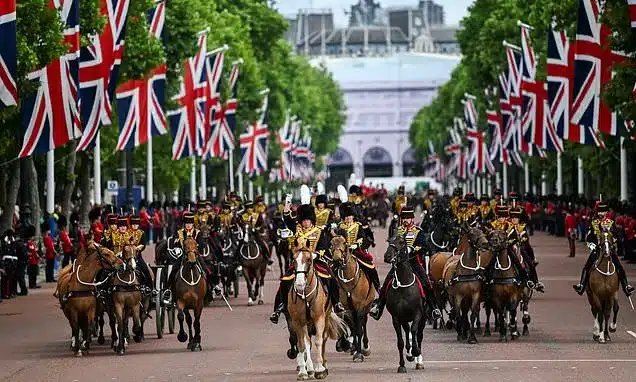
A bronze statue depicting a King’s Troop soldier on horseback faces criticism as a potential trip hazard for visually impaired pedestrians. The sculpture, designed by Caroline Wallace, receives installation plans in St John’s Wood, north-west London, valued at £300,000. Critics highlight protruding horse legs and tail, combined with the absence of a plinth in shared CGI images, as key risks.
Accessibility Concerns Raised
The St John’s Wood Society, dedicated to preserving the area’s architectural standards, expresses worries in its response to Westminster City Council. ‘We have concerns about it being a trip hazard for the sight-impaired,’ the group states. It further notes discrepancies: ‘We note that the CGI does not include a plinth, but the design and access statement indicates that a plinth is included. We are awaiting further information.’
King’s Troop Legacy
The King’s Troop Royal Horse Artillery performs gun salutes for major state events, such as the King’s birthday parade and royal birthdays. The unit, part of the Royal Horse Artillery, occupied the former St John’s Wood barracks for over 200 years until relocating to Woolwich in 2012.
Planning documents explain the statue commemorates the site’s historical ties to the barracks and the troop’s formation under King George VI. Community members in St John’s Wood commissioned and funded the project to honor over two centuries of service and the joy the troop brought to locals.
Community Initiative and Response
Long-time resident and chocolate entrepreneur Clive Beecham spearheads the effort. He emphasizes gratitude: ‘This is simply a community saying, thank you for what you did. We were very sorry to see them go when they left in 2012, so we wanted something to commemorate them. If you were caught behind the King’s Troop, it was the only traffic jam in London that we were prepared to accept.’
Beecham acknowledges the feedback: ‘I totally agree with the concerns and we are working with the country’s foremost accessibility consultants to arrive at a solution with or without a plinth.’