Moroccan authorities have apprehended at least 111 individuals attempting to reach Spain’s North African enclave of Ceuta, following a surge in online calls for a mass border crossing. This latest incident occurs just two weeks after a significant influx of over 72,000 migrants into the territory, an event that intensified political tensions across the European Union and fueled anti-immigration sentiments globally. That earlier attempt tragically resulted in the deaths of at least 96 people.
Heightened Security and Border Crackdown
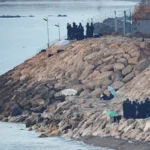
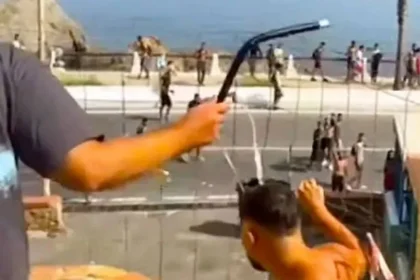
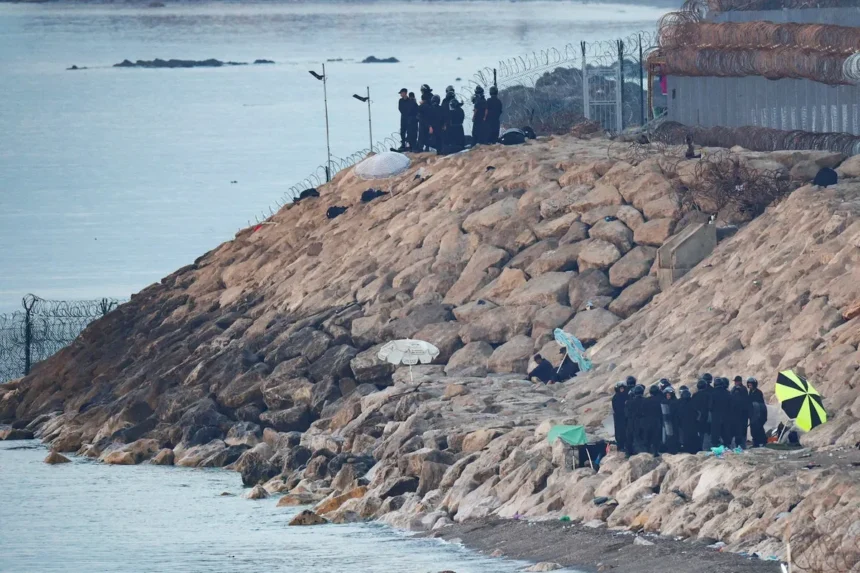
An official from the Moroccan Interior Ministry reported that the detained individuals comprised 109 migrants from sub-Saharan Africa and two Moroccan nationals. They were intercepted in and around Fnideq, a Moroccan city situated directly opposite Ceuta. Reports from Spanish news agency EFE indicated that Moroccan police used tear gas to disperse crowds gathering on hills approximately three kilometers from the border. Observers later witnessed a substantial deployment of police, including riot units and plain-clothes officers, returning from the area.
Both EFE and Spanish state broadcaster TVE stated that Morocco’s Interior Ministry instructed journalists to leave Fnideq without providing an explanation. Meanwhile, across the border in Ceuta, Spanish soldiers were observed guarding supermarkets, and heavily armed police patrolled the main streets. The enclave appeared calmer compared to the chaotic scenes that followed the deadly crossing on July 30.
Spain’s Response and Migrant Situation
In response to the earlier surge, Madrid fortified its defenses by installing a maritime barrier and deploying over 500 additional police officers from mainland Spain. This brought the total security presence in Ceuta to more than 1,600 personnel. Spain’s Interior Minister, Fernando Grande-Marlaska, confirmed that these reinforcements would remain in place indefinitely to restore order and prevent future mass crossings.
The minister also stated that approximately 5,000 migrants remained within Ceuta. Many were seen seeking refuge from the intense heat under makeshift shelters along the urban beach known as El Trampolin. Grande-Marlaska emphasized that individuals entering Ceuta irregularly would not be permitted to stay, travel to mainland Spain, or obtain legal status, with exceptions made only for those demonstrating severe vulnerability. Those without a legal right to remain face deportation to Morocco.
Morocco’s Proactive Measures
Earlier in the week, Moroccan authorities announced they were monitoring social media activity, specifically posts originating from unknown sources that were encouraging a mass crossing on August 15. The government warned that organizers and participants would face legal prosecution. Witnesses observed increased security measures near the border, including police vans equipped with protective shields and numerous checkpoints. Similar security operations were reportedly implemented around Melilla, Spain’s other North African enclave.
Authorities took steps to prevent groups from boarding trains and buses destined for northern Morocco from cities such as Casablanca, Fez, and Kenitra. Despite these efforts, some sub-Saharan African migrants reportedly circumvented checkpoints by traveling through mountainous terrain towards Fnideq. Local schools in Fnideq were repurposed to house security forces deployed to the border region.
Migrant Voices and Warnings
Many young men who arrived in Ceuta during the July 30 influx were seen engaging in activities like fishing, swimming, and washing along Tarajal beach. Driss Sadik, a 22-year-old from Fez who endured a five-hour swim to reach the enclave, advised others against attempting the perilous journey. “The important thing I would advise people trying to cross: Don’t cross now, my brothers. You’re only going to suffer,” he stated.
This sentiment was echoed by 17-year-old Adil Jamil, who noted that arriving in Ceuta did not guarantee a better future. “Those who enter aren’t going to benefit from anything. There will just be more and more of us, and they won’t find a solution for all,” he explained. Jamil described how mass crossings are often organized by the migrants themselves, who coordinate a date, gather in border towns like Fnideq, and attempt to cross together, drawing strength from their numbers.
He further reflected on the difficult choices migrants face, stating, “If I had stayed with my parents, I would’ve died slowly. But if I risk my life, arrive and build my future… it will be better.” His words highlight the desperate circumstances that drive individuals to undertake such dangerous journeys in search of safety and opportunity.