[ad_1]
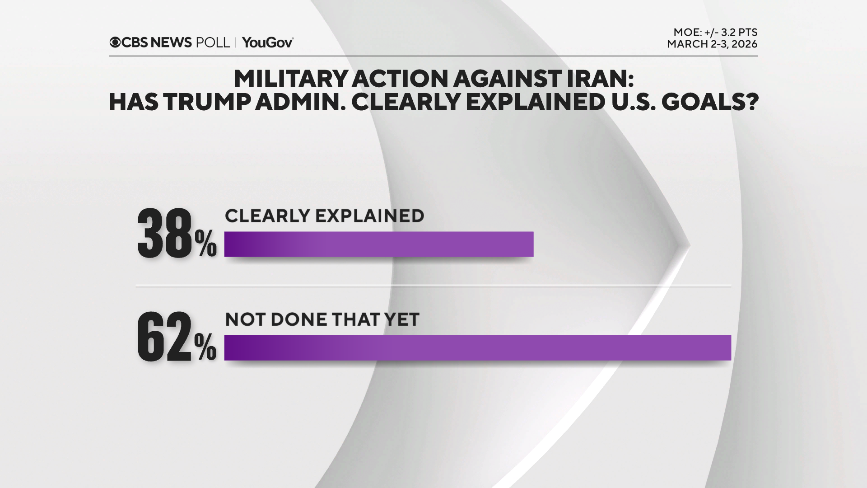
Most Individuals really feel the Trump administration has not clearly defined the U.S.’ targets within the battle with Iran.
Clarification — or the perceived lack of 1 — is linked as to whether individuals help it or not.
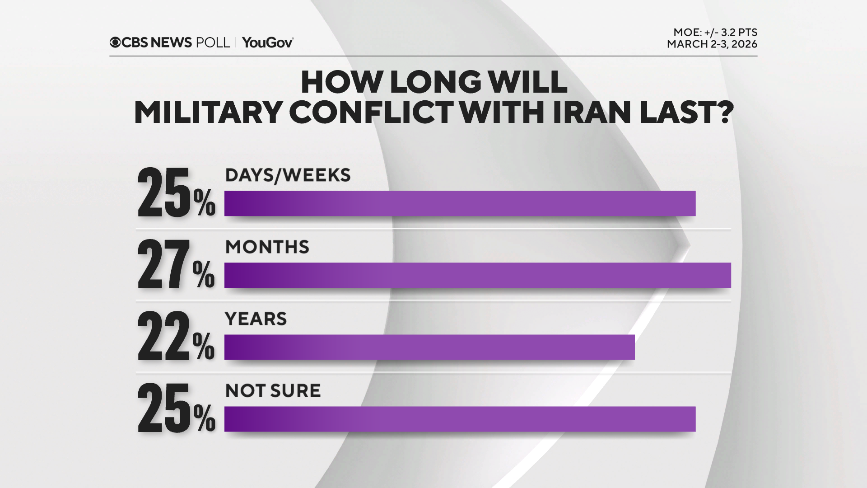
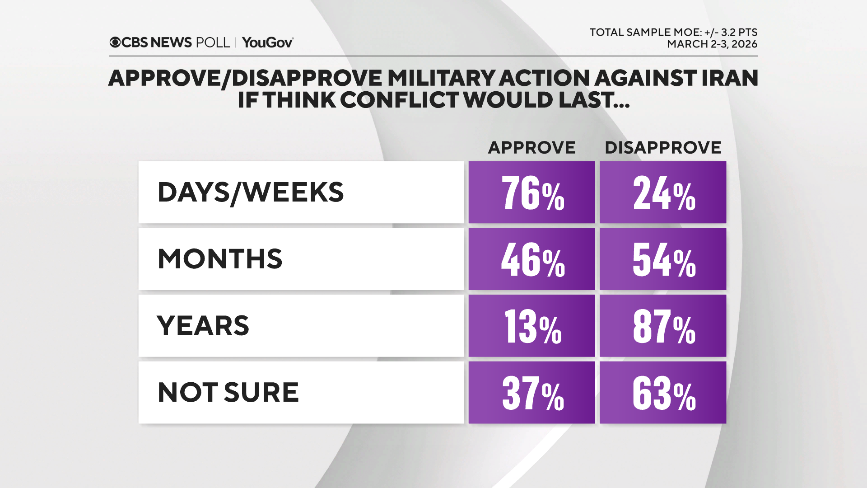
The longer Individuals imagine the battle will final, the extra they disapprove. Half the nation believes it’s going to be months, and even years earlier than it is over.
Once they do not assume the administration has defined, they assume it’s going to final longer or aren’t certain.
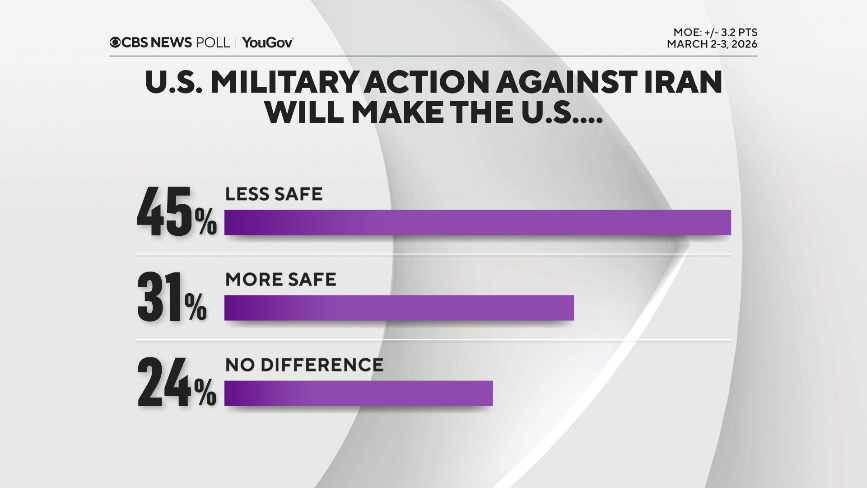
And maybe probably the most fast view is that this: Proper now, extra Individuals really feel the army motion will make the U.S. much less secure than extra secure.
Individuals do have their very own vary of concepts about what the administration’s targets is likely to be, they usually assume there are a whole lot of them.
The individuals who say they assume the purpose is to cease nuclear weapons, cease terrorism or assist the Iranian individuals are typically supportive.
Some additionally voice a extra cynical view, that they assume it is to achieve political benefit again within the U.S.
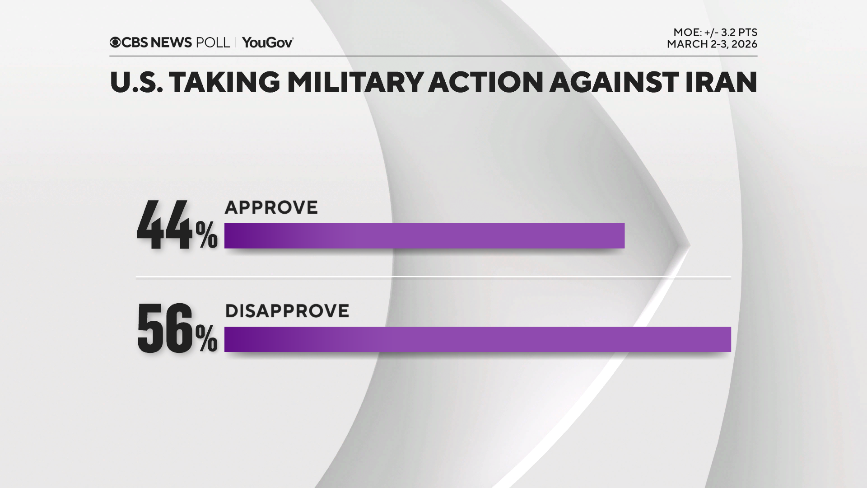
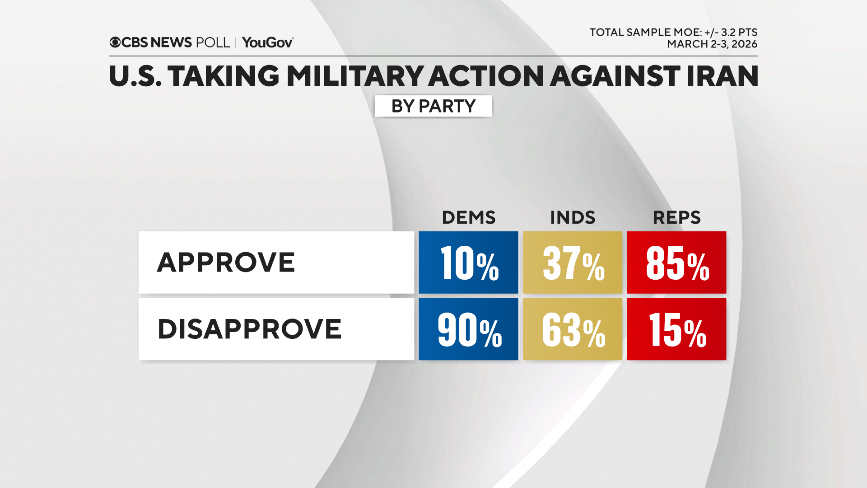
Total, most Individuals disapprove.
However the president’s Republican — and particularly MAGA — base is solidly behind the motion. Most of them assume it’s making the U.S. extra secure.
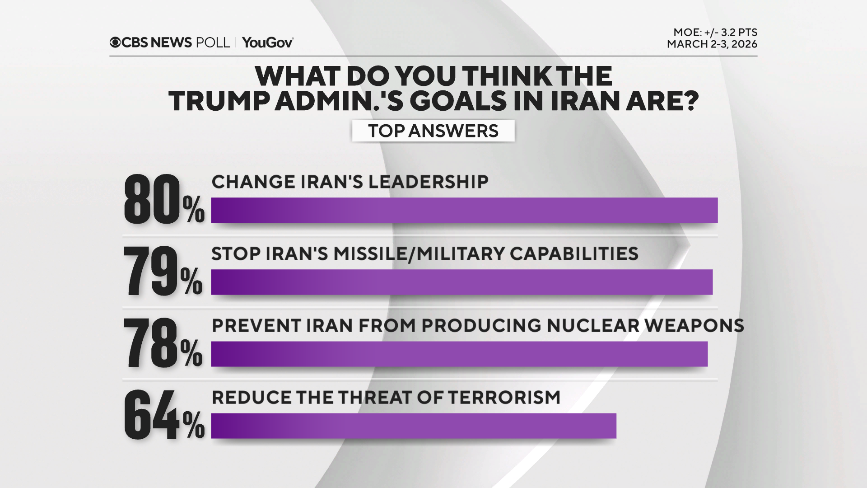
This survey recontacted Individuals first interviewed for our ballot final week that was accomplished previous to the beginning of airstrikes.
Final week, earlier than the airstrikes started, considerably extra individuals mentioned they’d approve of army motion particularly to forestall nuclear weapons than say they approve of the motion typically at this time.
One purpose for the distinction: the individuals who have since moved to disapproval assume the administration has not defined its targets. They usually do not assume it’s going to be a brief battle, and as an alternative imagine it’ll both be lengthy or are unsure about its length.
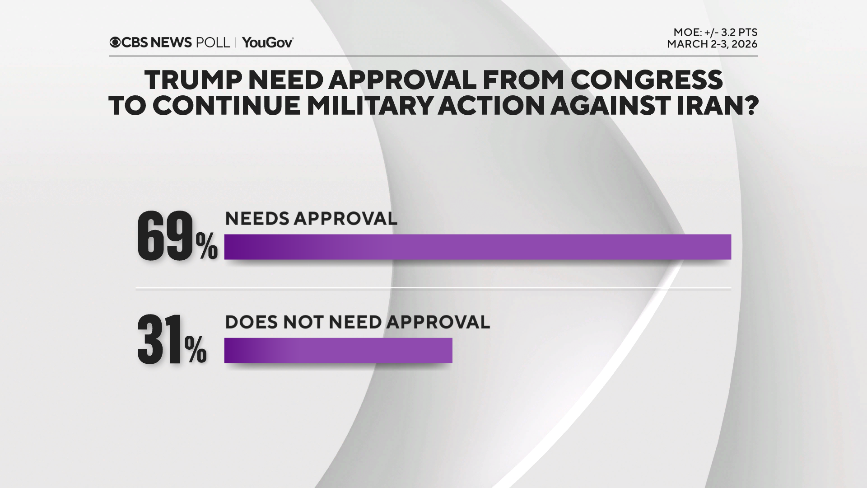
A large two-thirds say the administration ought to get approval from Congress for additional army motion.
(Republicans do not assume that is essential, echoing the views they expressed relating to U.S. army motion in Venezuela.)
This CBS Information/YouGov survey relies on a nationally consultant pattern of 1,399 U.S. adults who have been recontacted March 2-3, 2026, after the beginning of U.S. army motion towards Iran, following an preliminary survey performed earlier than U.S. army motion February 25-27, 2026 utilizing a nationally consultant pattern of two,264 U.S. adults. The margin of error for the full pattern within the recontact survey is ± 3.2 factors.
[ad_2]