Adapting a beloved novel into a film or television series is a delicate balancing act, fraught with challenges. Creators must satisfy existing fans while attracting new audiences, all while translating a narrative from the page to the screen. Given these complexities, it’s often remarkable when an adaptation succeeds. However, numerous attempts have fallen short, leading to widespread reader disappointment. Recently, discussions on platforms like Reddit have highlighted some of the most egregious examples of book-to-screen adaptations that, in the eyes of many readers, have significantly missed the mark.
The Hobbit: A Tale of Two Visions
Peter Jackson’s cinematic interpretation of J.R.R. Tolkien’s The Hobbit frequently appears on lists of disappointing adaptations. While the source material is a cornerstone of fantasy literature, many viewers felt the films deviated drastically from Tolkien’s original narrative. Critics described the movie as an overly long, incoherent “fanfic” that expanded the story unnecessarily, losing the charm and focus of the original book. The decision to stretch a single novel into three lengthy films led to pacing issues and the introduction of plotlines not present in the book, alienating many long-time fans.
Dracula and the Case of the Nerfed Heroine
Bram Stoker’s 1897 novel Dracula is celebrated for its complex female characters, particularly Mina Harker, who actively participates in the hunt for the Count. However, many film adaptations have been criticized for diminishing Mina’s role and agency. Readers point out the irony that the original 1897 novel passes the Bechdel test, a measure of female representation in fiction, while subsequent film versions often sideline Mina, failing to give her the strength and prominence found in the book. This perceived “nerfing” of a key character has been a consistent point of contention among fans.
Confessions of a Shopaholic: A Rom-Com Remodel
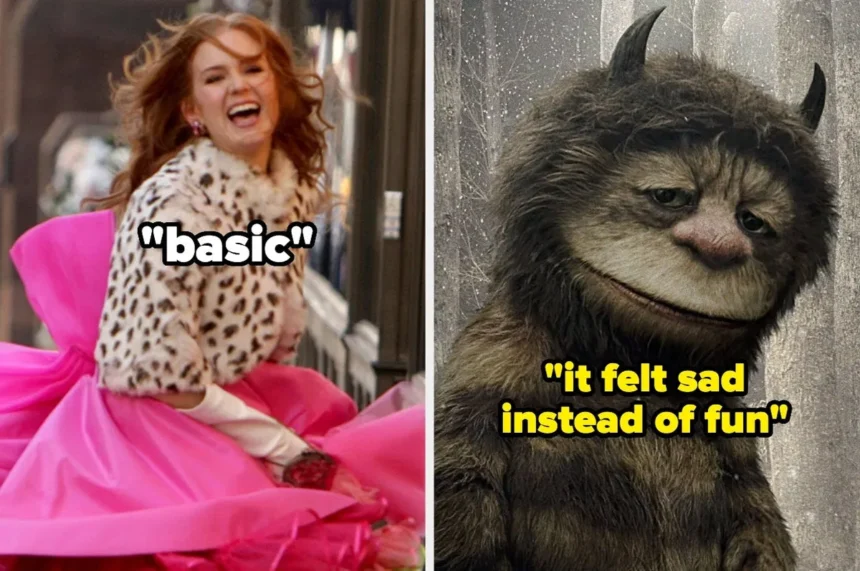
The film adaptation of Confessions of a Shopaholic is another example where the cinematic version bears little resemblance to its literary origins. While the movie retains the protagonist’s name and a few minor plot points, the core narrative and character development are significantly altered. The complex character of Luke Brandon, a pivotal figure in the books, is reportedly transformed into a much simpler, less nuanced character in the film. Readers lament that the adaptation, which could have spawned a faithful film series, instead became a generic romantic comedy, losing the depth and satirical edge of Sophie Kinsella’s novels.
I Am Legend: The Ending Dilemma
Richard Matheson’s novel I Am Legend has seen multiple film adaptations, yet a recurring criticism is the consistent refusal to adhere to the book’s original, thought-provoking ending. The author himself reportedly expressed bewilderment at Hollywood’s fascination with his work, noting that filmmakers consistently avoid portraying the story as written. The original ending offers a profound commentary on societal perception and monstrosity, which test audiences have apparently found less palatable than more conventional conclusions. This divergence from the source material’s thematic core leaves many readers feeling that the adaptations fail to capture the essence of the novel.
Starship Troopers: A Genre Shift
While often praised as a standalone action film, the movie adaptation of Starship Troopers is frequently cited as a poor representation of Robert A. Heinlein’s novel. The book is a complex exploration of militarism, citizenship, and political philosophy, themes that are largely absent or significantly downplayed in the film’s focus on action and spectacle. Although the film has its merits as a piece of science fiction entertainment, its thematic shallowness compared to the source material makes it a prime example of a butchered adaptation for those familiar with the novel.
Jurassic Park: The Lost World – Divergent Paths
Michael Crichton’s Jurassic Park: The Lost World and its film adaptation share only a superficial connection. The movie departs significantly from the novel, excising numerous characters, including key figures from the book, and introducing entirely new ones. The plotlines diverge dramatically, with the film culminating in a chaotic T-Rex rampage through San Diego—a far cry from the book’s more contained ending where characters escape the island by boat, their futures uncertain. This lack of fidelity to the source material leaves the film feeling like a separate story altogether.
Cloud Atlas: A Complex Narrative Transformed
The Wachowskis and Tom Tykwer’s film adaptation of David Mitchell’s Cloud Atlas is a visually ambitious undertaking that attempted to weave together the novel’s intricate, multi-temporal narrative. While the film is lauded for its scale and ambition, many readers found the adaptation struggled to convey the novel’s profound interconnectedness across different eras and reincarnations. The complexity of translating such a unique structure to the screen proved challenging, with some feeling the film simplified or distorted the original’s thematic depth.
The Black Cauldron: Disney’s Disregard for Source
Disney’s animated version of Lloyd Alexander’s The Black Cauldron is widely regarded as a significant misfire. Based on the first book in *The Chronicles of Prydain* series, the film is criticized for stripping away the rich characterization, intricate plot, and thematic development of the beloved fantasy novels. Readers describe the movie as a shallow, generic fantasy tale that bears little resemblance to the depth and quality of Alexander’s original work, which is considered a masterpiece of children’s fantasy literature.
Watchmen: Tone and Intent Lost
Zack Snyder’s 2009 film adaptation of Alan Moore and Dave Gibbons’ seminal graphic novel Watchmen is a point of contention for many. Despite being visually faithful and even replicating panels shot-for-shot, critics argue that the film fundamentally misses the deconstructive and philosophical underpinnings of the source material. The nuanced critique of superheroes and the exploration of moral ambiguity present in the comic are often seen as overshadowed by a more conventional, action-oriented approach, leading to a perceived loss of the comic’s original intent and tone.
The Golden Compass: A Polar Bear’s Plight
The 2007 film adaptation of Philip Pullman’s The Golden Compass (also known as Northern Lights) is frequently cited as a disappointing translation of the first book in the *His Dark Materials* series. Readers found the movie to be confusing and lacking the depth of the novel. The film’s narrative was criticized for being muddled, and many felt it failed to capture the unique world-building and philosophical themes of Pullman’s work. The memorable, albeit brutal, imagery of armored polar bears fighting, while visually striking, couldn’t salvage the film for many who felt it was a pale imitation of the book.
Annihilation: A Creative Pass
While Jeff VanderMeer’s novel Annihilation is known for its unsettling atmosphere and ambiguous narrative, the film adaptation by Alex Garland is often seen as a departure. Some readers consider it a “horrid adaptation” due to its significant changes from the book’s plot and themes. However, many acknowledge the film’s own merits—its unique visual style, surreal horror, and compelling atmosphere—leading them to grant it a pass despite its lack of fidelity to the source material. It stands as an example where the adaptation, while different, achieved its own artistic success.
Artemis Fowl and The Last Airbender: A Low Bar
The film adaptation of Eoin Colfer’s Artemis Fowl is frequently grouped with other notoriously poor adaptations, such as M. Night Shyamalan’s The Last Airbender. Readers express extreme disappointment, suggesting that the Artemis Fowl movie failed to capture the magic and complexity of the book series, often drawing comparisons to other widely panned adaptations as a benchmark for how poorly a story can be translated to the screen.
The Other Boleyn Girl: Missing Nuance
Philippa Gregory’s historical novel The Other Boleyn Girl was adapted into a film that many readers found confusing and lacking in substance. Critics argue that the movie omitted crucial details and relied heavily on dramatic, emotionally charged performances to carry the narrative. The historical nuance and character depth present in the book were reportedly sacrificed, leaving viewers, even those who had read the book, struggling to follow the plot and understand the characters’ motivations.
Killers of the Flower Moon: A Controversial Change
Martin Scorsese’s adaptation of David Grann’s non-fiction book Killers of the Flower Moon: The Osage Murders and the Birth of the FBI has drawn criticism for a significant narrative change. While the film has received critical acclaim, some readers and critics found a specific alteration made by Scorsese to be problematic, altering the focus and perspective of the original account. This deviation from the factual narrative, particularly concerning the central figures of the Osage Nation, has been described by some as “vile” and a misrepresentation of the historical events.
The Handmaid’s Tale: Spoilers and Stagnation
Margaret Atwood’s dystopian novel The Handmaid’s Tale has been adapted into a television series that has divided audiences. While the initial seasons garnered praise, many readers of the book express dissatisfaction with the direction the show has taken. Criticisms include revealing key plot points, such as the “twist,” too early in the narrative and a perceived lack of progression or deviation from the novel’s core themes in later seasons. For many, the book remains the definitive and superior experience, offering a more potent and focused exploration of its subject matter.
Conclusion: The Enduring Power of the Source
The recurring theme across these criticisms is the profound connection readers form with the original literary works. While film and television offer unique storytelling mediums, the challenge of adaptation lies in respecting the source material’s essence—its characters, themes, and narrative integrity. When adaptations stray too far, they risk alienating the very audience that made the book popular, proving that the power and depth of a well-written book often remain unmatched on screen.