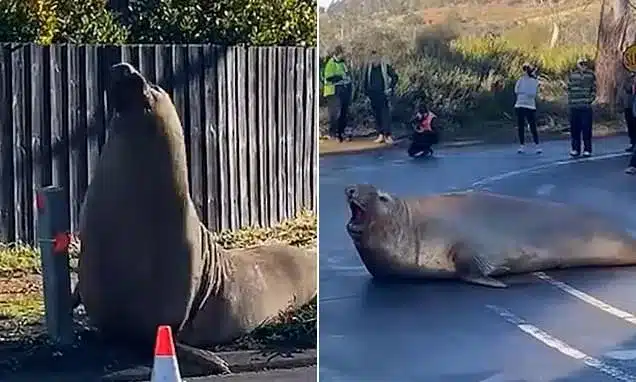
A large male elephant seal, affectionately known as Neil, has once again made his presence felt on Tasmania’s shores, causing significant disruption as he navigates coastal areas. The one-tonne mammal has been observed blocking roads, damaging vehicles, and flattening traffic bollards during his annual return to land for rest and moulting. This recurring behavior has led to him being described by some as ‘ungovernable,’ highlighting the challenges of managing a wild animal of his size in populated areas.
Neil’s Annual Shore Leave
Neil, a young adult southern elephant seal, emerged from the sea in Tasmania last week, a typical behavior for his species as they come ashore to shed their skin and fur and to rest. This period, known as moulting, can last between three to six weeks. However, Neil’s chosen resting spots have repeatedly coincided with areas frequented by humans, leading to unexpected encounters and logistical challenges.
Footage circulating from recent events shows Neil slowly making his way across roads, indifferent to the traffic he is impeding. In one instance, staff from the Department of Natural Resources and Environment were seen attempting to guide the massive seal using poles and cardboard barriers. These efforts were aimed at managing public access and ensuring the safety of both the animal and residents.
Encounters and Public Reactions
One particularly alarming video captured Neil approaching a parked van, with onlookers expressing concern that he might damage the vehicle. The van’s owner was able to make a swift departure, seemingly distracted by a passerby. Such incidents have prompted a range of reactions from the public, with some expressing amusement and others frustration.
Social media commentary reflects this mix of emotions. Some users have humorously referred to Neil as ‘more ungovernable than ever,’ while others have quipped about the potential insurance claims, jokingly asking if there’s a ‘Neil clause.’ The seal’s tendency to interact with or damage inanimate objects, such as traffic bollards, has also been a point of discussion, with videos showing him jumping on them, leaving a trail of flattened poles.
However, not all public reactions have been critical of Neil’s actions. In some recordings, local residents can be heard urging officials to leave the seal undisturbed. One man’s impassioned plea, “Neil will go to the beach when Neil wants to go to the f***ing beach. What’s wrong with these guys?” suggests a sentiment among some that the seal should be allowed to roam freely without interference. Another comment noted, “The one time Neil literally isn’t doing anything,” implying that officials’ interventions are sometimes unnecessary.
Official Management and Safety Advice
Officials from Tasmania’s Department of Natural Resources and Environment have emphasized that their management methods are designed to be safe and do not cause harm to the animal. They state that the well-being of the seal is a top priority, alongside managing public access to areas where Neil is present. Despite these assurances, the interactions highlight the inherent difficulties in coexisting with large wild animals.
To mitigate risks, the public has been advised to maintain a safe distance from Neil, specifically at least 20 meters. They are also cautioned to slowly edge away if the seal begins to move towards them, reinforcing the message that Neil is a wild animal requiring space, respect, and freedom. Warnings often include the reminder: “Neil is a wild animal. He needs space, respect and freedom.”
Understanding Elephant Seal Behavior
Elephant seals are known to come ashore along coastlines for natural reasons integral to their life cycle. Seeing a seal on land is considered a normal occurrence in many coastal regions. Neil himself was born at Salem Bay on the Tasman Peninsula in 2020 and quickly gained a following, even amassing a significant number of followers on social media platforms.
His popularity surged in July 2022 when he spent his annual moult in Hobart. This period is crucial for the seals’ health, allowing them to shed and regrow their fur and skin. The Department of Natural Resources and Environment noted that male southern elephant seals naturally engage in behaviors like play fighting. In areas like Tasmania, where a natural colony might not be present, Neil may be drawn to busier areas seeking interaction, which can inadvertently lead to encounters with human infrastructure and the public.
The department stated, “Neil is now estimated to weigh around 1,000kg, and even small movements from a large wild animal can cause serious injury.” This fact underscores the importance of the safety advice provided to the public and the careful management required by authorities when dealing with such a substantial wild creature.
Conclusion: Balancing Coexistence
Neil the seal’s recurring appearances and the disruptions they cause serve as a vivid reminder of the complexities involved in wildlife management and human-animal coexistence. While his antics provide a unique spectacle and have made him a local celebrity, they also necessitate careful planning and public awareness. The ongoing efforts to manage Neil’s presence aim to ensure his welfare and public safety, navigating the challenges posed by a charismatic, yet powerful, wild animal in a shared environment.