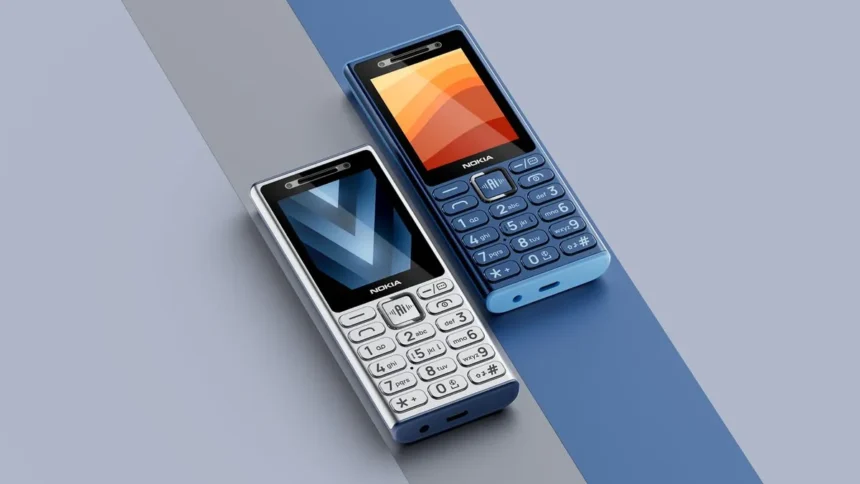
HMD, the company behind Nokia-branded phones, has launched four new retro-styled feature phones that include a dedicated AI button. These devices, aimed at users seeking simpler mobile experiences, are the Nokia 210 4G, Nokia 215 4G 2nd Edition, Nokia 235 4G 2nd Edition, and Nokia 200 4G. While they retain classic features, the inclusion of an AI button has drawn mixed reactions, with many users on social media platforms like Reddit questioning its utility.
Nokia’s Latest Feature Phone Lineup
The new Nokia feature phones build upon HMD’s previous offerings in the segment, blending nostalgic design with select modern conveniences. Unlike smartphones, these devices are not intended for extensive app usage. Instead, they focus on core communication and utility functions, enhanced by features familiar to users of older mobile phones.
Key legacy features present across the range include a 3.5 mm headphone jack and microSD card support for expandable storage. Additionally, the Nokia 210 4G, Nokia 215 4G 2nd Edition, and Nokia 235 4G 2nd Edition come equipped with an FM radio, offering entertainment options without requiring an internet connection.
The Controversial AI Button
The most notable addition to these new handsets is a prominent AI button located on the front of the device. This button is powered by an application called Sikey AI. However, rather than accessing sophisticated generative AI models, its functionality is limited to performing basic tasks on the phone. Users can reportedly use it to initiate calls, activate the flashlight, set alarms, open the camera application, and add reminders.
Nokia states that the AI assistant can also answer simple questions, providing examples such as generating basic recipes or offering sample phrases in foreign languages. This suggests that the AI capabilities, while basic, may leverage cloud connectivity to access a limited AI model. Details regarding the specific AI model and its operational scope remain somewhat scarce.
A significant point of consideration is the AI feature’s subscription model. The AI assistant is offered as a free trial for 180 days, after which its continued use will likely incur a cost, though the exact pricing is not yet disclosed.
User Reception and Criticism
The integration of an AI button into what are essentially basic feature phones has been met with considerable skepticism online. Discussions on platforms like Reddit reveal a prevailing sentiment that the feature is unnecessary and out of touch with the target audience for these devices. Users have described the AI button as “dumb,” “useless,” and “out of touch,” arguing that individuals opting for feature phones typically seek simplicity and a departure from the complex functionalities of smartphones.
Critics suggest that the inclusion of an AI button, even with limited capabilities, contradicts the core appeal of a feature phone, which is often its straightforward operation and reduced reliance on advanced technology. The perceived lack of genuine utility for the average feature phone user appears to be the primary driver of this negative reception.
Advanced Features and Unanswered Questions
Despite the criticism surrounding the AI button, the new Nokia feature phones do offer some advanced capabilities for their class. The Xpress Chat platform enables video calls and voice messages, features not commonly found on basic mobile devices. The inclusion of 4G connectivity across these models also ensures faster data speeds for any internet-dependent functions.
However, several key details remain unknown. The pricing for each of the four new Nokia models has not yet been announced, nor has information regarding their specific availability in different global markets been released. These details will likely influence consumer interest and the overall success of the new lineup.
Conclusion: A Feature Phone’s Identity Crisis?
HMD’s latest Nokia feature phones present an interesting, albeit controversial, proposition. By incorporating an AI button into devices designed for simplicity, the company appears to be attempting to bridge the gap between legacy mobile technology and emerging AI trends. While the intention might be to offer a touch of modern convenience, the user response indicates that this particular innovation may miss the mark for the intended audience. The success of these phones will ultimately depend on their pricing, availability, and whether users find value in the limited AI functionality, or if they will dismiss it as an unnecessary addition to an otherwise straightforward device.