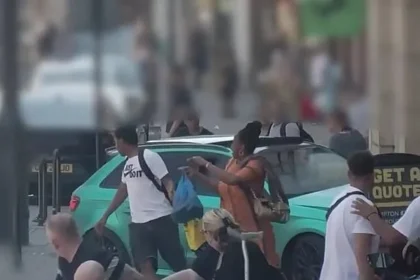
London’s Notting Hill neighborhood is undergoing a significant clean-up operation following the annual carnival, as authorities report a record number of arrests. Streets that hosted the vibrant two-day festival were left strewn with considerable amounts of waste, including food remnants, discarded containers, and other debris, prompting an immediate and extensive cleanup effort by sanitation crews. The Metropolitan Police confirmed that 560 arrests were made over the carnival weekend, a figure expected to rise as processing continues. These arrests encompassed a range of offenses, from drug and weapon possession to assaults, notably including attacks on emergency personnel and sexual offenses.
Carnival Clean-Up Challenges
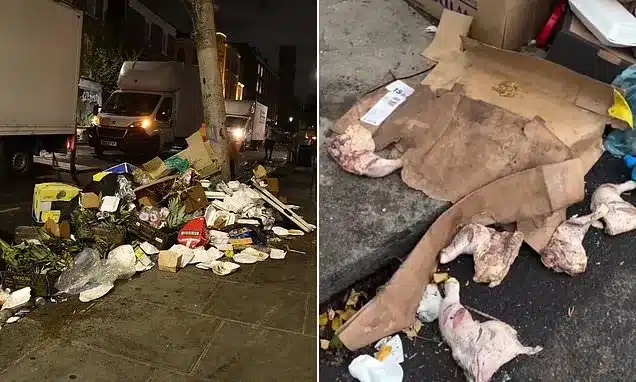
Overnight, cleaning teams faced the daunting task of clearing vast quantities of litter that accumulated throughout the Notting Hill Carnival. Images from the scene depicted streets filled with piles of rubbish, featuring items such as raw chicken carcasses, empty takeaway containers, beer cans, and cigarette butts. Iconic street furniture, like red post boxes, were also found covered in plastic bags and cans, testament to the scale of the waste generated by the large crowds.
The Royal Borough of Kensington and Chelsea shoulders a substantial financial burden for the event’s aftermath. The estimated annual cost for the carnival’s clean-up and associated staffing is around £1 million. While the borough receives approximately £300,000 back through street trader fees, a significant portion of the expense remains a public cost.
Record Arrests and Public Safety Concerns
The Notting Hill Carnival, a major cultural event drawing millions of attendees, also saw a record number of arrests this year. The 560 arrests reported by the Metropolitan Police cover a spectrum of illegal activities. Among the serious incidents, police confirmed two separate knife-related assaults: one stabbing and one slashing. Fortunately, neither of these incidents resulted in life-threatening injuries. The police operation itself incurred significant costs, with last year’s policing budget for the event reaching £15.7 million, an increase from £11.7 million the previous year.
In addition to the arrests for general offenses, the police reported a tragic incident where a man, believed to be in his 20s, died after entering a canal while attempting to evade officers. The man was pulled from the water near Meanwhile Gardens in North Kensington and received CPR, but was later pronounced dead at the hospital. Metropolitan Police Commander Claire Smart acknowledged the tragedy, stating that the Independent Office for Police Conduct would investigate the circumstances surrounding the death.
Economic Impact Versus Costs
While Notting Hill Carnival is estimated to contribute nearly £400 million to the wider economy annually, its associated costs are considerable. Beyond the direct policing expenses, City Hall provided an additional £4.6 million grant for stewards and CCTV, supplementing the nearly £1 million already allocated to support the event. This financial outlay has led to discussions about funding models, with some suggesting the implementation of an admission fee to help offset the substantial public expenditure.
The debate over the carnival’s financial sustainability and public safety continues. Despite organizers asserting the event’s safety and fairness, past years have been marred by violence and significant disorder. Concerns have been raised about drug use, with discarded nitrous oxide canisters frequently found on the streets. The event has also seen tragic incidents in recent years, including murders that have occurred in and around the carnival vicinity, underscoring ongoing public safety challenges.
Looking Ahead
As the clean-up operation concludes and the city returns to normal, the focus shifts to addressing the challenges highlighted by this year’s Notting Hill Carnival. Balancing the cultural and economic benefits of the festival with the costs of public safety, policing, and extensive clean-up operations remains a critical consideration for organizers and city officials. The record number of arrests and the tragic death during the event serve as stark reminders of the complexities involved in managing such a large-scale public gathering.