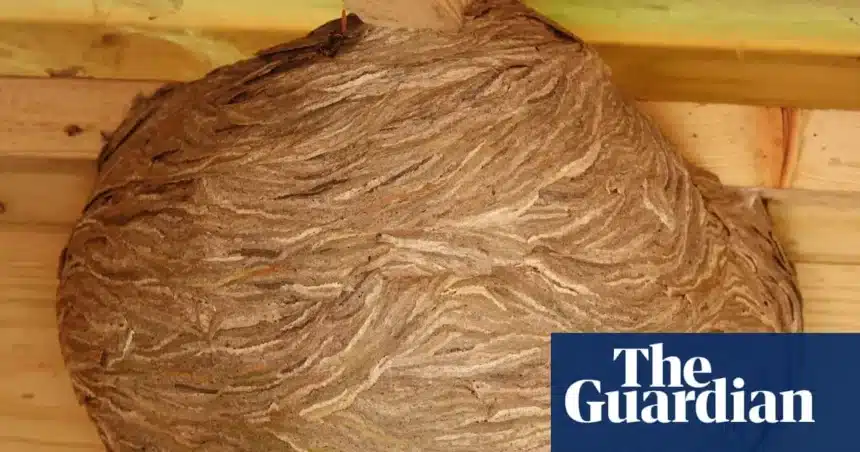
A remarkable natural phenomenon unfolded within a garden shed over a 10-week period, transforming a simple structure into the site of an intricate, football-sized wasps’ nest. The discovery, initially made on June 9th, led to the temporary sealing off of the shed as the colony’s activity intensified. What began as a small, paper “lampshade” evolved into a complex structure, showcasing the industrious nature of wasps and their sophisticated building capabilities.
The Genesis of an Architectural Wonder
The first signs of the burgeoning colony appeared as a delicate paper “lampshade” hanging from a shed beam. Upon closer inspection, the presence of wasps prompted the shed’s doors to be closed, effectively isolating the space for nearly two and a half months. During this time, the shed’s interior became a hub of constant activity, with wasps seen repeatedly entering through a small slit in the rear wall, presumably to contribute to the nest’s construction and maintenance.
It was only when the majority of the wasps’ activity began to subside, signaling the end of the colony’s active cycle, that the shed doors could be safely reopened. The sight that greeted the observers was a testament to the wasps’ tireless efforts: a nest that had grown to the approximate size of a football.
Materials and Construction: A Symphony of Pulp and Paper
The construction of the nest is a fascinating process, relying on a readily available resource: wood. Observers noted that the wasps expanded their search for building materials, sourcing wood from at least nine different locations, each contributing a distinct hue to the final structure. This diverse sourcing resulted in a nest exterior characterized by bands of pulp-paper, alternating in color from off-white to a rich cedar red.
Estimating the sheer volume of work involved is staggering. While the exact number of individual wasps contributing to the nest remains unknown, a large colony can comprise up to 5,000 workers at its peak, with the total number of individuals involved throughout the colony’s life potentially reaching 25,000. The intricate layering of the nest’s exterior offers a glimpse into the meticulous planning and execution involved. It was observed that approximately every 5 centimeters of the nest’s vertical wall is composed of around 36 distinct bands, each representing numerous journeys by the worker wasps to gather and process pulp.
An Interior World: Brood Cells and Social Structure
Beyond the outer shell, the nest’s interior reveals further complexity. Wasps continuously modify and expand the inner layers to accommodate the growing colony and its needs. It is presumed that the interior houses six to ten suspended tiers of brood cells, the nurseries where the wasp larvae are raised. The sustenance for this developing generation comes at a cost to the surrounding ecosystem, with the wasps preying on tens of thousands of garden invertebrates.
The social dynamics within the nest are equally compelling. In a remarkable display of altruism and colony cohesion, adult wasps feed the larvae. In turn, the larvae provide nourishment for the adults, secreting sugary saliva. Presiding over this intricate society is the queen wasp. Her role is crucial; she chemically suppresses the reproductive capabilities of her daughters, ensuring their focus remains on colony tasks rather than their own reproduction. This biological control mechanism ensures that the collective genetic interests of the colony are prioritized.
A Microcosm of Life: Art, Economy, and Family
The completed nest is more than just an insect dwelling; it is a multifaceted entity. It represents the culmination of a summer’s worth of extraordinary effort, a “family saga” played out in paper and pulp. It can be viewed as a “ghost town” once abandoned, a sculptural work of art born from natural materials, and a testament to the hidden “invertebrate economy” of the garden that funded its creation. The entire structure, from its external facade to its internal brood chambers, is a product of instinct, cooperation, and a highly organized social structure, all orchestrated to ensure the continuation of the species.
Lessons from the Shed
The temporary occupation of the shed by this wasp colony offered a unique, albeit inconvenient, opportunity to observe a complex natural process up close. It highlighted the incredible engineering skills present in the natural world, the sophisticated social structures of insect colonies, and the interconnectedness of garden ecosystems. The nest, a temporary monument to a summer’s work, serves as a powerful reminder of the vibrant, often unseen, life that thrives all around us.