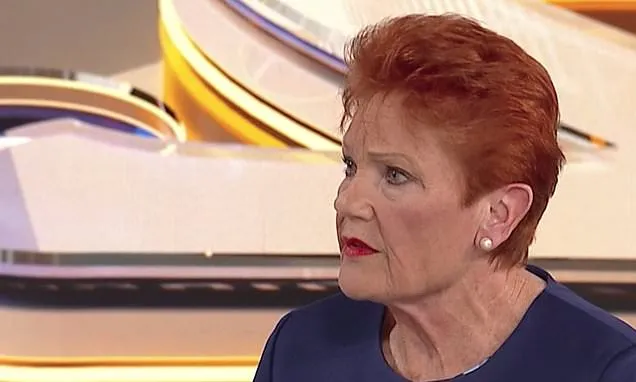
One Nation leader Pauline Hanson has issued an apology to Prime Minister Anthony Albanese following remarks she made about his late mother and her residence in public housing. The apology came after significant political pressure and questioning regarding comments that resurfaced earlier this year.
Context of the Apology
The controversy stemmed from statements Hanson made in January on The Karl Stefanovic Show, where she discussed public housing policies. She referenced the Prime Minister’s mother, who reportedly lived in the same housing commission property for 65 years. Hanson expressed her view that such long-term occupancy in public housing was inappropriate, suggesting a need for time limits to allow others to benefit from the system.
“Housing commission houses should not be there for people to live in them for 30, 40 (years) – and he said his mother lived in the same one she was born in for 65 years,” Hanson stated previously. “Sorry, that is not on, to me. It should be limited time; you have been given a hand up, move it on to the next ones coming through.”
While Hanson initially defended her remarks, stating they were not intended to be distasteful towards Albanese’s mother and were focused on housing policy, she eventually offered an apology when pressed. “I don’t think my comments were derogatory towards his mother at all,” Hanson said. “I was referring to housing commission at that time, so if he’s taken offence to it, well, I’m sorry for that.”
Broader Controversies and Hanson’s Stance
The apology to Albanese also occurred in the context of renewed scrutiny over other past controversial statements made by the One Nation leader. When questioned about previous remarks where she described Aboriginal Australians as “the most primitive race on earth,” Hanson acknowledged that she had “put her foot in her mouth.”
These comments about Indigenous Australians were reportedly made during an interview on the Jamie J Podcast last year, co-hosted by former Liberal candidate and News24 presenter Jaimee Rodgers. The resurfacing of these remarks added another layer of pressure on Hanson to address her public statements and their impact.
Public Housing Policies and Political Discourse
The debate surrounding public housing and its intended use is a recurring theme in political discussions. Proponents of time limits or stricter eligibility criteria often argue that such measures ensure the efficient allocation of resources and prevent long-term dependency, allowing the housing stock to serve a wider range of individuals and families in need.
Conversely, critics of such policies emphasize the importance of providing stable housing for vulnerable individuals and families, regardless of the duration. They argue that moving individuals out of public housing without adequate support or alternative options can lead to homelessness and exacerbate social inequalities. The discussion often involves balancing the principles of social support with fiscal responsibility and equitable access.
Impact and Reaction
Hanson’s apology, though qualified, signals a recognition of the political sensitivity surrounding personal comments, particularly those that could be perceived as disrespectful to family members or that touch upon deeply ingrained social issues. The Prime Minister’s office has not issued a formal statement regarding Hanson’s apology.
The dual controversies highlight the challenges faced by public figures in navigating sensitive topics and the scrutiny they undergo regarding past and present statements. Hanson’s acknowledgment of missteps, particularly regarding her comments on Indigenous Australians, suggests a potential shift in her approach to public discourse, or at least an awareness of the negative repercussions of certain rhetoric.
Conclusion
Pauline Hanson’s apology to Anthony Albanese addresses the contentious remarks about his late mother and public housing. This incident, coupled with her admission of regret over past comments about Aboriginal Australians, underscores the ongoing debates about political rhetoric, social policy, and the impact of public statements on individuals and communities.