The U.S. Army has awarded a significant contract worth approximately $465 million to AeroVironment, Inc. for its LOCUST X3 anti-drone laser system. This advanced weapon, a 30-kilowatt directed energy system, is designed to be mounted on military vehicles and represents a major step in equipping U.S. forces with robust defenses against aerial threats. The system is specifically engineered to counter what the Department of Defense categorizes as “Group 3” unmanned aerial vehicles (UAVs), which are mid-sized drones posing a considerable risk in modern warfare.
Targeting Advanced Drone Threats
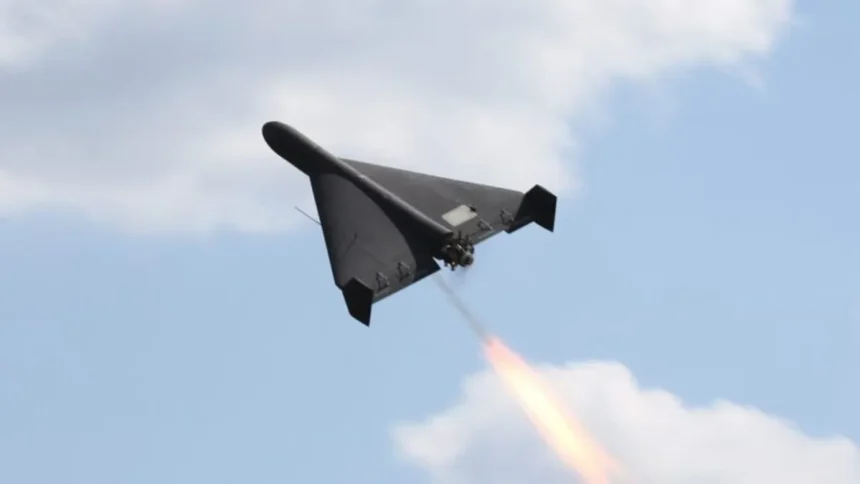
Group 3 UAVs are defined as drones weighing up to 1,350 pounds, capable of carrying a 125-pound payload over distances of at least 8 miles. These types of drones have been observed in recent conflicts, such as those in Iran and Ukraine, where variants like the Shahed drones have been utilized. The LOCUST X3 system is intended to provide a decisive response to these prevalent threats, offering a way to neutralize them efficiently and effectively.
Wahid Nawabi, Chairman, President, and Chief Executive Officer at AeroVironment, Inc., highlighted the significance of this development. “The transition of directed energy from experimentation to an enduring, fielded capability reflects years of collaboration, innovation, and operational success alongside the U.S. Army,” Nawabi stated. This underscores the extensive research and development that has led to the LOCUST X3 moving from testing phases to a production contract.
Familiar Controls for Enhanced Usability
A particularly noteworthy aspect of the LOCUST X3 is its control interface. AeroVironment has integrated an Xbox controller into the targeting system, aiming to simplify operation for military personnel. This design choice acknowledges the familiarity many service members have with video game controllers, potentially reducing training time and increasing the speed and precision of targeting.
John Garrity, vice president of directed energy systems at AeroVironment, Inc., explained the rationale behind this design. “To a young soldier, sailor, airman, guardian that’s using these systems, it’s not unlike what they’re using at their own house for video games,” Garrity remarked. This approach seeks to leverage existing user experience to make sophisticated military technology more accessible and intuitive.
A “Group 3 Killer” in the Arsenal
The designation “Group 3 killer” signifies the system’s specific role in combating these mid-sized drones. Aaron Westman, senior director for business development at AeroVironment, Inc., described the system’s capacity: “It can really kill a lot of threats. Its job is to really, let’s say, thin the herd to be able to kill high volumes of threats.” This suggests the LOCUST X3 is envisioned not just as a single-shot solution but as a capable tool for engaging multiple targets.
The LOCUST X3 is part of a broader strategy by the U.S. Army to establish a multi-layered defense network against various UAV threats, encompassing Group 1 through Group 3. The increasing use of drones in asymmetric warfare has prompted the military to seek advanced countermeasures. The depletion of interceptor missiles in some scenarios has further emphasized the need for alternative solutions like directed energy weapons.
The Future of Anti-Drone Warfare
This production contract marks a historic moment, as the LOCUST X3 is reportedly the first high-energy laser weapon to receive such an award in U.S. military history. Its development and fielding represent a significant advancement in military technology, moving directed energy capabilities from experimental concepts to operational realities.
The system’s portability, combined with its extended range compared to many existing countermeasures, positions it as a crucial asset for forward-deployed units. The ability to effectively counter drones like the Shahed-136, which have been used against U.S. interests, is a primary driver for the adoption of systems like the LOCUST X3. This investment signals a commitment to staying ahead of evolving threats on the battlefield.
Strategic Importance and Broader Implications
The strategic importance of the LOCUST X3 extends beyond its immediate application. It signifies a shift towards energy-based weaponry, which offers potential advantages in terms of cost per engagement and magazine depth compared to traditional kinetic weapons. The contract with AeroVironment, Inc. not only provides the Army with a critical new capability but also fosters innovation in the defense sector.
The development and integration of such systems are vital for maintaining military superiority in an era where drone technology is rapidly advancing and becoming more accessible. The U.S. Army’s proactive approach in securing advanced anti-drone capabilities like the LOCUST X3 demonstrates a clear understanding of contemporary and future battlefield challenges.