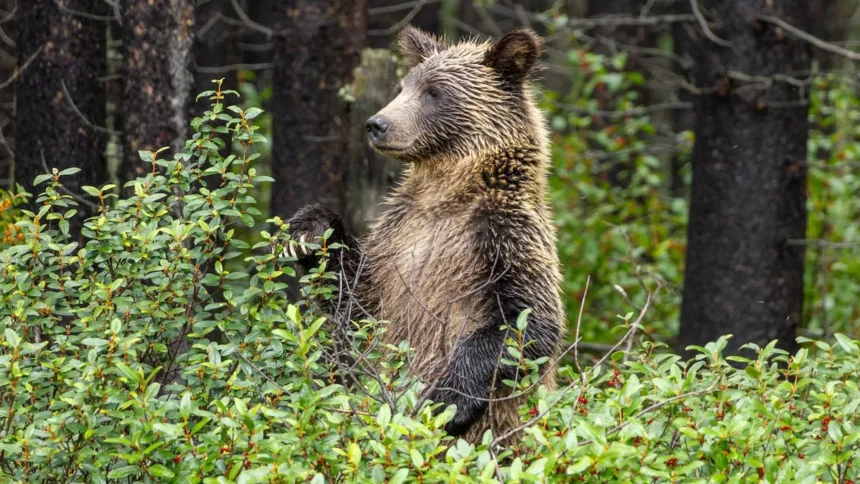
Recent proposals to launch Alberta’s first grizzly bear hunting season in 20 years lack supporting scientific evidence, according to conservation organizations. Advocacy from rural municipalities highlights rising human-bear conflicts, but experts emphasize the urgent need for current population studies, absent since 2018.
Rural Push for Regulated Grizzly Hunt
The Rural Municipalities of Alberta (RMA), representing over 60 rural counties and districts, recently approved a resolution urging the provincial government to introduce a regulated grizzly bear hunt via a draw system. This follows reports of increased human-grizzly interactions in southwestern Alberta, including a fisherman injured by a mother bear with cubs near Cardston last summer.
In 2024, the RMA sought more funding for managing problem grizzlies, but those efforts did not succeed. The group also advocates ending the 2008 Grizzly Bear Recovery Plan in favor of a new management framework.
Conservationists Demand Robust Data
The Alberta Wildlife Federation supports limited grizzly harvests only if backed by a comprehensive management plan. “The regulated hunt would need to be based on sound science that reflects the need to sustain the grizzly bear population while balancing the societal needs for human safety and protection of property,” the federation stated.
Ruiping Luo, conservation specialist with the Alberta Wilderness Association, stresses insufficient evidence for a hunt. “We don’t have current updated population numbers for what the grizzly bear population looks like here,” Luo said. “All of our population estimates are from eight years ago, or older.”
Luo notes that a 2016 study indicated high grizzly densities in the southwest, but current assessments rely on speculation. Without fresh monitoring, rising encounters may stem from habitat loss due to development or more human visitors to bear habitats, rather than population growth. Last year, Alberta Parks issued a rare bear warning for all of Kananaskis Country amid elevated incidents.
Government’s Wildlife Management Approach
The Ministry of Forestry and Parks states its grizzly strategy relies on science and expert input to prioritize public safety, conflict reduction, and sustainable populations. “Alberta’s government is focused on protecting both public safety and wildlife by continuing to manage grizzly bears responsibly,” the ministry affirmed.
Grizzlies remain a threatened species since 2010, with estimates under 1,000 mature adults then. Recent provincial data shows growth to over 1,150, prompting bears into human areas. Hunting has been banned since 2006, except for Indigenous subsistence and case-by-case removals of problem bears via the 2024 Wildlife Management Responder Network.
Challenges in Population Research
Maggie Spizzirri, executive director of Exposed Wildlife Conservancy, argues hunting ignores conflict roots. “Wildlife management decisions must be grounded in current, peer-reviewed science,” Spizzirri said. “Anecdotal observations cannot replace robust data when we’re making decisions about a threatened species.”
Biologist Gordon Stenhouse, who led prior Alberta grizzly research, attributes the study gap to costs and time. “These things are expensive to do, and they’re time-consuming,” he said. His work showed rising numbers, yet monitoring halted. A 2025 internal email revealed the province declined recent study funding.
Stenhouse urges prioritizing research, possibly via cost-effective methods like rancher-collected hair samples for DNA analysis. “I think as a society and as a government, we need to continue to collect data to make good decisions, and to make decisions without data is very risky,” he emphasized.
The RMA and Exposed Wildlife Conservancy back non-lethal measures, including dedicated funding for research, conflict mitigation, and property bear-proofing. In 2024, the province allocated $700,000 over five years for deterring large carnivores near southwestern rural properties.