Unearthed Verse from 1933
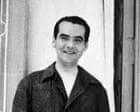
A rare, previously unknown eight-line poem attributed to Spanish poet and playwright Federico García Lorca has surfaced 93 years after its creation. Experts believe Lorca penned the verse in 1933 on the back of a manuscript while composing his collection Diván del Tamarit, a tribute to Arab poets from his hometown of Granada.
The discovery occurred on the reverse side of the manuscript for “Gacela de la raíz amarga,” one of the Tamarit poems. Flamenco singer and Lorca devotee Miguel Poveda acquired it from a German antiquarian bookseller.
Verification and Publication
Lorca scholar Pepa Merlo authenticated the handwriting, confirming its authenticity. The poem will appear in an upcoming book co-authored by Poveda and Merlo, titled Las cosas del otro lado. Lo inédito en Federico García Lorca (Things from the Other Side: The Unpublished in Federico García Lorca).
The Poem’s Themes
Written three years before Lorca’s execution at the outset of the Spanish Civil War, the verse captures his recurring theme of time’s passage:
The clock sings
I count the hours mechanically
Seven o’clock; twelve o’clock
It’s all the same
I am not here
It is the mark of flesh
That I left behind when I departed
So as to know my place
Upon my return.
Merlo highlights how the poem underscores the central role time played in Lorca’s work, even if overlooked due to its location on the manuscript’s backside.
Poveda’s Reaction
Poveda, who spearheaded the transformation of Lorca’s childhood home into a cultural center honoring the poet, expressed profound emotion over the find. “My attention was grabbed when Pepa Merlo said to me, ‘That’s Federico’s handwriting. You’ve got something new by Federico there,’” he shared in an interview with state broadcaster TVE. “For me, it’s a heartfelt gift. It’s all there in those lines, ‘It is the mark of flesh / That I left behind, when I departed / So as to know my place / Upon my return.’”
Lorca’s Legacy and Enduring Interest
The openly gay, forward-thinking author of masterpieces like Gypsy Ballads, Poet in New York, Blood Wedding, Yerma, and The House of Bernarda Alba was killed by a right-wing militia in August 1936. He remains one of the Spanish Civil War’s most notable victims, with his remains still missing, believed buried in a shallow grave near Granada.
As the centenary of his death approaches, fascination with Lorca intensifies. Last summer saw the release of a facsimile edition of his homoerotic Sonnets of Dark Love, long suppressed by family concerns but now reaching broader audiences.