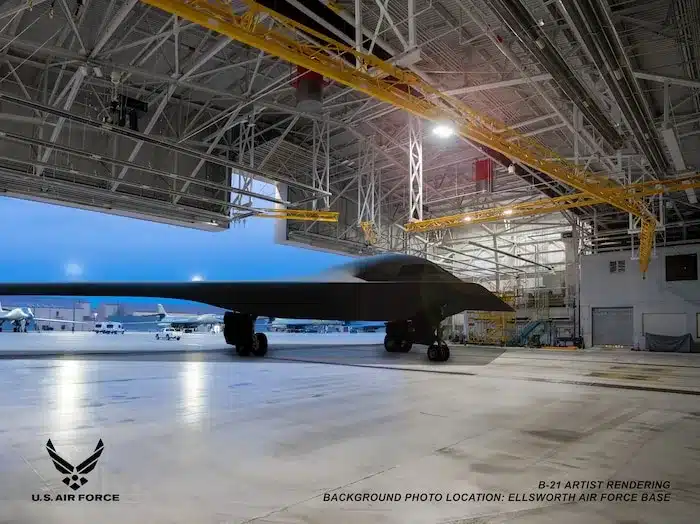
Ellsworth Air Force Base is making significant strides in its transition to the next generation of strategic airpower, marked by a recent visit from the Secretary of the Air Force and the formal acceptance of key infrastructure designed for the B-21 Raider. The base, located in South Dakota, is undergoing a substantial modernization effort to accommodate the advanced capabilities of the B-21, a program central to the nation’s future long-range deterrence strategy.
Ellsworth AFB Gears Up for B-21 Raider Integration
Secretary of the Air Force Frank Kendall visited Ellsworth Air Force Base on June 30 and July 1 to gain firsthand insights into the ongoing preparations for the B-21 Raider. The visit focused on the 28th Bomb Wing’s current operations with the B-1B Lancer and the critical infrastructure development required to host the B-21. During his tour, Secretary Kendall received comprehensive briefings covering a spectrum of topics, from the operational status of the existing B-1B fleet to the extensive construction projects underway specifically tailored for the B-21.
A major highlight of the visit was the formal acceptance of two state-of-the-art facilities: the Low Observable Restoration Facility, valued at $161 million, and the Wash Rack and General Maintenance Hangar, costing $81 million. These facilities represent a significant investment in ensuring Ellsworth AFB can effectively support and maintain the B-21 Raider’s advanced stealth characteristics.
Innovative Infrastructure for Advanced Capabilities
Secretary Kendall emphasized the strategic importance of these new facilities, stating, “Taking ownership of these facilities is a step toward fielding advanced capabilities at scale. The infrastructure completed today is truly innovative, allowing us to preserve the technological edge and deliver the long-range deterrence our nation depends on.” These buildings are not merely general maintenance areas; they are engineered with the specific requirements of the B-21 in mind. Their design will enable maintenance personnel to conduct crucial tasks such as inspecting, cleaning, and servicing the aircraft’s radar-absorbent materials in a controlled, indoor environment. This capability is vital for reducing aircraft downtime and maximizing operational readiness.
Following the acceptance of these facilities, the 28th Bomb Wing immediately deployed fit-out teams. These dedicated personnel are actively engaged in equipping the buildings with the necessary operational tools, including computers, furnishings, and secure equipment, to prepare them for active service. This swift action underscores the urgency and commitment to integrating the B-21 into the base’s operational framework.
Balancing Current Operations with Future Readiness
Colonel Jonathan Keller, Commander of the 28th Bomb Wing, provided Secretary Kendall with a detailed overview of how the wing is adeptly managing its ongoing B-1B operations while simultaneously advancing the construction of B-21 facilities and undertaking other preparatory work. This dual focus is essential for a seamless transition and ensures that the base remains a fully operational strategic asset throughout the modernization process.
Colonel Keller articulated the wing’s impressive feat: “The base is actively flying the B-1 globally while simultaneously building the infrastructure for the next generation of airpower. Accepting the keys to our first B-21 facilities is exciting for our Airmen, our civil engineer teams and the community partners who support our long-range strike mission.” This sentiment highlights the collaborative effort involved and the palpable enthusiasm among the personnel and stakeholders invested in the B-21 program.
A Monumental Construction Effort
The completion of the Low Observable Restoration Facility and the Wash Rack and General Maintenance Hangar signifies the initial phase of a much larger construction initiative at Ellsworth AFB, estimated to cost approximately $2 billion. This extensive investment reflects the base’s pivotal role in the Air Force’s future strategic bomber force structure.
Ellsworth AFB is slated to become home to the B-21 Formal Training Unit, responsible for educating the next generation of B-21 aircrews and support personnel. Furthermore, it is designated as the first main operating base for the B-21 Raider. This dual designation underscores Ellsworth’s strategic importance as a foundational hub for the B-21 program, from training to operational deployment.
The B-21 Raider: A New Era of Airpower
The B-21 Raider represents a significant leap forward in aerospace technology, designed to penetrate advanced enemy air defenses and deliver precision strikes anywhere in the world. As a sixth-generation aircraft, it incorporates cutting-edge stealth technology, advanced networking capabilities, and enhanced survivability features. Its development is a cornerstone of the U.S. Air Force’s long-range strike capability, intended to provide a credible deterrent against potential adversaries in a rapidly evolving global security landscape.
The integration of the B-21 at Ellsworth AFB is a complex undertaking that involves not only the construction of specialized facilities but also the adaptation of operational procedures, training programs, and support systems. The successful completion of the initial construction phases and the ongoing efforts by the 28th Bomb Wing demonstrate a robust commitment to ensuring Ellsworth is fully prepared to receive and operate the B-21 Raider, solidifying its role as a premier strategic bomber base for decades to come.
Conclusion
The recent visit by the Secretary of the Air Force and the acceptance of new, specialized facilities mark a critical milestone in Ellsworth Air Force Base’s transition to the B-21 Raider era. The substantial investment in infrastructure, coupled with the 28th Bomb Wing’s demonstrated ability to manage concurrent operational and developmental demands, positions Ellsworth as a key strategic asset for the future of U.S. airpower and national security. The base’s readiness to host the B-21 Formal Training Unit and serve as its first main operating base highlights its central role in fielding this next-generation strategic bomber.